
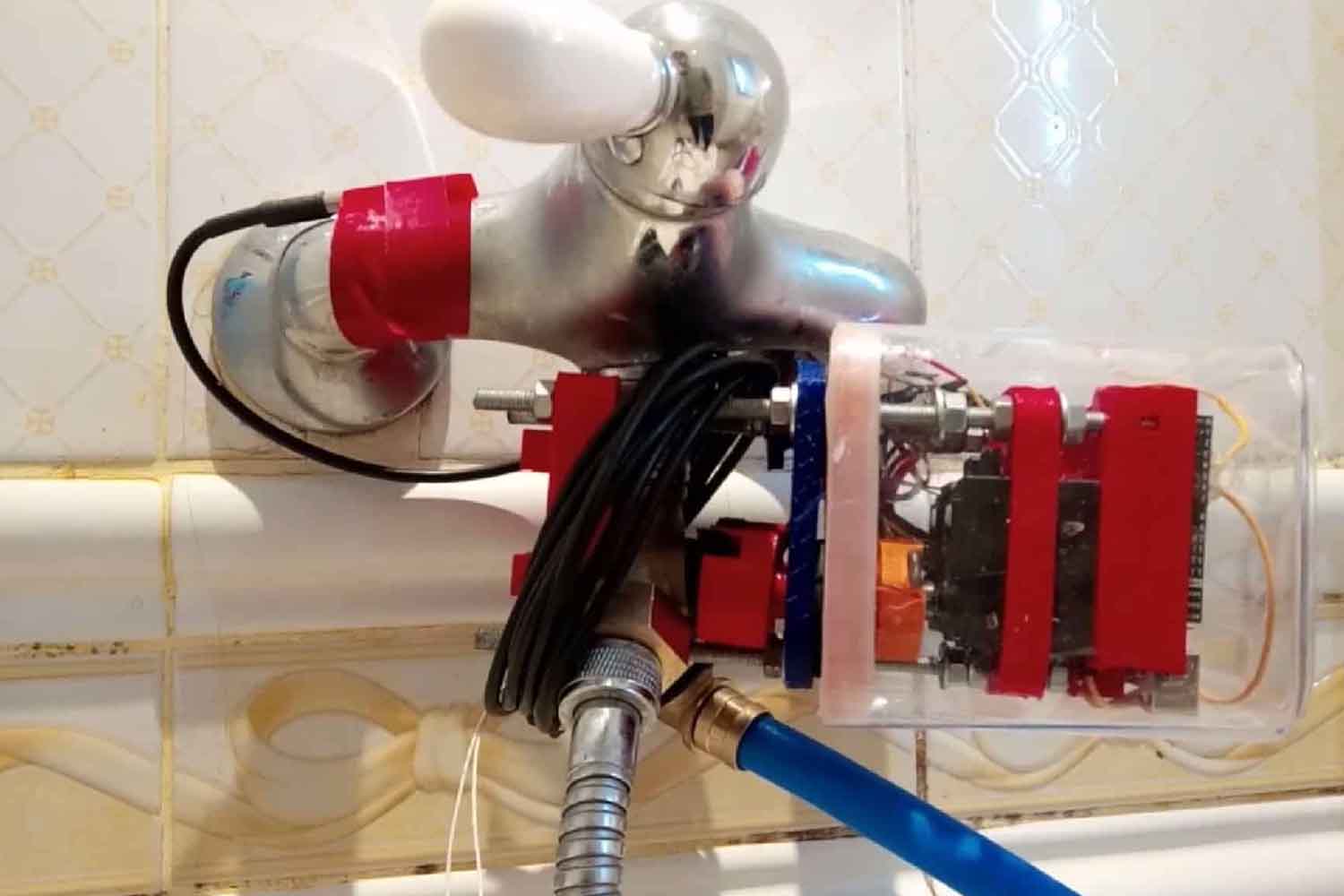
A sensor measures the temperature of the water and, until it is too cold to shower, a valve diverts it to a tank connected to the toilet. When it reaches the desired temperature, the flow returns normally to the shower head. This is how the system invented by GilDIY works, a young DIY enthusiast who in 2022 showed on his YouTube channel how to recover the water that normally ends up in the drain while we wait for it to heat up.
The invention was born from a rather common problem: we open the tap, wait a few seconds, sometimes even a minute, and in the meantime let liters of drinking water flow. Clean water, which could be used for other purposes and which instead goes into the pipes without having even been touched.
How the system that recovers shower water works
To build the device, GilDIY used an Arduino board, a temperature sensor, a servomotor, a valve recovered from an irrigation system and some 3D printed components.
Operation is automatic. Through a potentiometer, the user can choose the temperature at which he wishes to shower. When he opens the tap, the sensor checks the incoming water: if it is still too cold, the system activates the valve and directs it to a separate pipe. As soon as it reaches the set temperature, the valve changes position and allows the water to reach the shower head.
You can then shower normally, while the accumulated cold water is saved for flushing the toilet. No need to remember to retrieve it every time: the device takes care of the entire operation.
The young maker also created the home installation, building a tank with PVC pipes and connecting it to the toilet cistern. He provided a system to manage any excess water and added a second float, so as to integrate the recovery into the operation of the drain.
How much water can you recover by waiting for the shower to heat up?
Even a few seconds can make a difference. According to ENEA, in its advice for reducing water waste, a five-minute shower can consume up to 40 liters of water. Considering a flow rate of 8 liters per minute, waiting just 30 seconds before entering the jet means letting about four flow.
With one shower per day, this would amount to approximately 1,460 liters of water per person per year. This is an indicative estimate: the quantity depends on the flow rate of the shower head, the distance between the bathroom and the heating system and the time it takes for the hot water to arrive.
To understand how useful recovering it can be, just think about the toilet flush. A modern double button cassette can use, for example, three or six liters for each operation. The water collected while waiting for the shower could therefore entirely cover a small drain or a large part of a full one. Recovery becomes even more interesting in homes where you have to wait a long time for the water to reach the desired temperature.
The water is recovered before coming into contact with soap and shampoo
The invention also has another interesting feature: it recovers water before it is used for washing. It is therefore not the so-called gray water, that which comes from showers and sinks after use and which may contain soap, shampoo and other substances. The device intercepts the initial water, still clean, and directs it towards a use for which it is not necessary to use drinking water.
It is a simple principle, however applied to a phase of domestic consumption that often goes unnoticed. Moreover, ENEA has long recommended limiting waste also through more efficient drainage systems, remembering that the old single-button cisterns can use up to 16 liters for each operation.
And the topic also closely concerns Italy. According to Istat, in the water statistics report published in 2026, 8.87 billion cubic meters of water were withdrawn for drinking use in 2024. A precious resource, especially considering that in the same year over a million residents in Italian capitals were affected by water rationing measures.
From prototype to home use
GilDIY didn’t stop at creating a device to show in front of the camera. He brought the project into his bathroom, connecting the shower to the collection system and the latter to the toilet cistern.
Installation naturally requires plumbing and electronics skills, as well as the space necessary for the tank and for the passage of the pipes. Any reproduction must also provide adequate protection against the backflow of water towards the drinking network and comply with the safety regulations of domestic systems.
The project remains an artisanal prototype and no independent data is available on the savings actually achieved in its inventor’s home. The principle, however, is easily understandable and allows you to recover a resource that would otherwise be lost.
In a home, after all, we also use drinking water for activities that do not require this quality at all, starting with flushing the toilet. GilDIY’s invention intervenes on one of the occasions in which we can avoid it, taking advantage of a step that already happens every morning in many bathrooms. Without changing the habits of those who shower, that cold water that we wait to see disappear can find a second destination. And this time the unloading can wait.
