
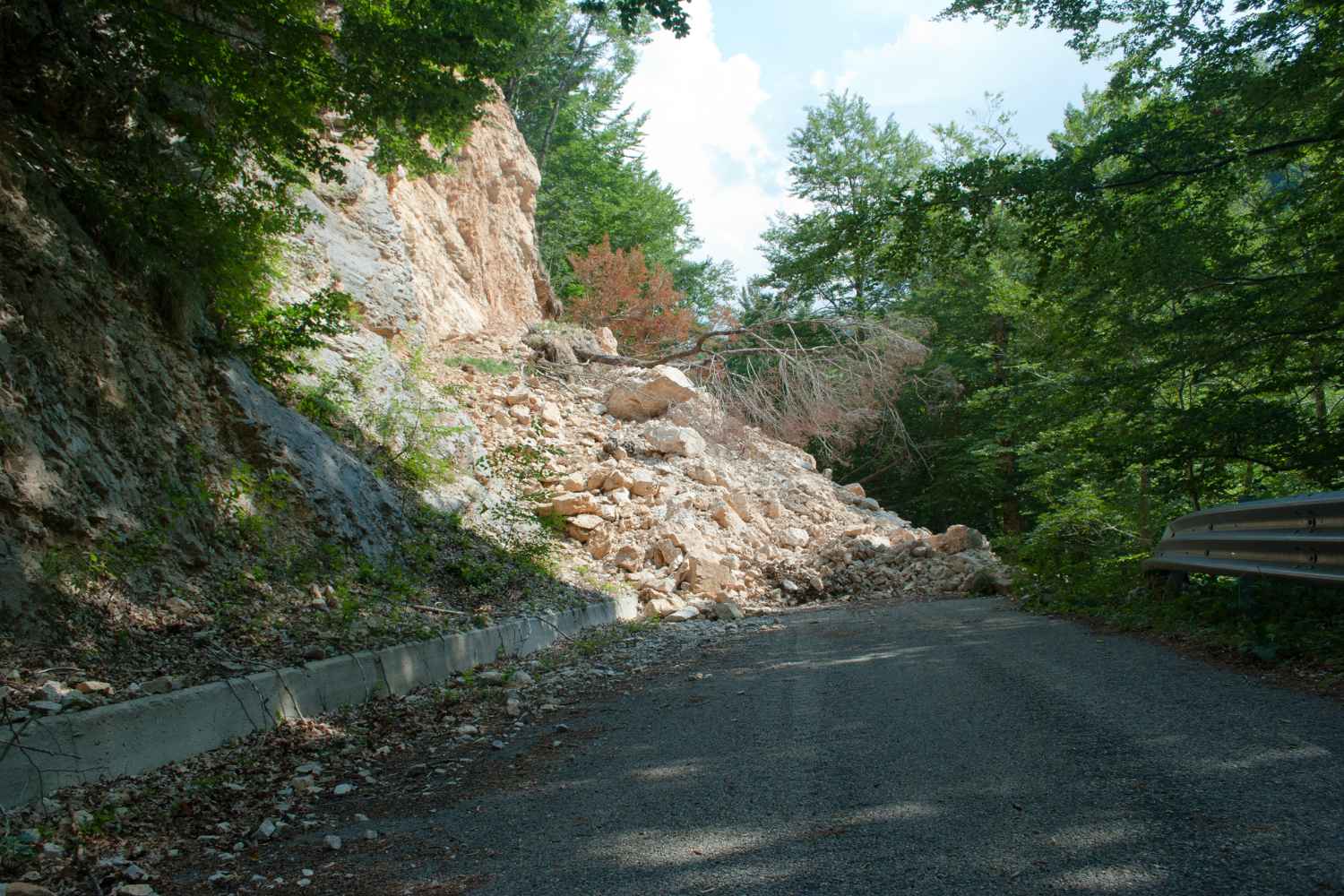
Italy is one of the European countries most exposed to hydrogeological risk. And no, this is not a recent emergency nor an exaggerated perception, but rather a structural condition that we cannot afford to underestimate. According to the latest ISPRA Report (published in 2025), 94.5% of Italian municipalities have areas exposed to risk of landslides, floods or coastal erosion. This scenario is the result of interactions between natural causes (geological characteristics, slope slopes, intense rainfall) and anthropic factors (land consumption, unplanned urbanisation, deforestation, fires).
Cases like that of Niscemi, a city that is dealing with one of the largest landslides in Europe, show us all the vulnerability of our territories and the lack of care and prevention. The data speaks clearly: the surface area of the national territory classified as landslide dangerous has grown by 15% in just three years, from 55,400 km² in 2021 to 69,500 km² in 2024, equal to 23% of the entire national territory.
So what to do? To make our peninsula safer and more stable we need better planning and foresight, but one of the best allies to counter the risk of hydrogeological instability is nature itself.
Forests as a natural shield
Trees in the area are not simply aesthetic elements, which provide beauty and shade, especially in the warmer months; they act as a real natural infrastructure capable of protecting us.
Trees contribute in a concrete way to the stability of the soil: the roots increase the cohesion of the first layers of soil, the foliage intercepts part of the precipitation and the forest soil favors infiltration, reducing surface runoff. These processes are particularly effective in limiting erosion and superficial landslides, among the most widespread in Italy. – explains Chiara Bruni, Ecosystem Restoration Team Leader at Etifor | Valuing Natur (environmental consultancy company, founded as a spin-off of the University of Padua). – This role is also well documented in the scientific literature: recent studies have further confirmed how root reinforcement and vegetal cover can improve the stability of slopes, especially in the superficial layers of the soil. That said, reforestation does not always eliminate risk, particularly where deep geological factors or poor land management have an impact.
In our experience as environmental consultants we have carried out various reforestation and forest management projects also aimed at having positive effects on phenomena such as soil erosion. Through the WOWnature initiative, in Lio Piccolo in the Venice lagoon, since 2022 we have planted over 20,000 trees and shrubs along the embankments of an ancient abandoned fishing valley. The abandonment of fishing activities had triggered a progressive decline in plant cover, and consequently a process of siltation and erosion of the embankments, due to the tide. We have selected native species based on local conditions and restored the ancient trees. Initial monitoring indicates a reduction in erosive phenomena and an improvement in microclimatic conditions, elements that contribute to the stability of the system and the protection of biodiversity in a Natura 2000 network site.
The role of trees in areas at risk of landslides
In an area like Niscemi, can reforestation interventions really reverse already advanced processes of land consumption? Are some tree species more suitable for stabilizing the most fragile territories and protecting coasts from extreme events such as Cyclone Harry? The answer is not so obvious, as Chiara Bruni underlines:
In contexts like Niscemi we must be very clear: reforestation alone is not sufficient to reverse already advanced processes of instability. When a slope is unstable, first of all an in-depth geological assessment is needed. Only on this basis is it possible to design targeted structural interventions, such as water management and land consolidation. Vegetation can contribute, but it is part of an integrated strategy. Another critical point concerns the choice of species. There are no absolute ‘right’ trees: selection must be based on local conditions such as soil, water availability, exposure and salinity. On fragile slopes, mixed systems with native tree and shrub species often work better, creating a more effective root network.
Regarding coastal areas there is also another factor to take into consideration.
In coastal areas, however, the priority is not so much the tree itself, but the reconstruction of dune systems and pioneer vegetation capable of resisting wind and salinity. The risk, when talking about reforestation, is to simplify: planting trees is only useful if it is part of a broad and coherent project just as the European Commission campaign also says: the right tree, in the right place, at the right time” clarifies the expert.
Reforestation after the destructive Vaia storm
The presence of greenery and forests plays a fundamental role in combating landslides and erosion, acting as a natural barrier against these phenomena. As highlighted by experts, forests play a crucial role in stabilizing mountain slopes, particularly in vulnerable areas subject to landslides or mudslides, making communities safer, exposed to increasingly extreme and recurring natural phenomena due to the climate crisis. And in this context there is a particularly interesting case that is worth investigating further: the consequences on the territory (and its vulnerability) of the violent Storm Vaia which hit the Italian North-East, leaving “wounds” that have not yet completely healed.
As Etifor we were immediately involved in the management of the damage caused by storm Vaia in the autumn of 2018, also thanks to the collaboration with various local entities. – says the doctor in Forestry Sciences Chiara Bruni – In those months the portal wownature.eu was born, with the aim of raising funds and supporting concrete interventions in the area. Vaia cut down around 15 million trees and affected over 40,000 hectares of forests: it was not just a meteorological event, but a large-scale loss of the protective function of the forests. This event made clear how closely forest cover is linked to the stability of the mountain territory. In many areas, the sudden loss of forest has altered the balance of the slopes: less soil protection, greater exposure to erosion and more complex management of water runoff. It does not mean that the risk of triggering landslides automatically increases, but the vulnerability of the system increases significantly, especially in the short-medium period following the event. For this reason, after Vaia, the theme was not only forest restoration, but risk management, through integrated interventions on vegetation, soil and hydrological dynamics.
The forest is not just an environmental element, but a protection infrastructure: when the forest disappears, the soil remains uncovered and the territory becomes more fragile. This is why it is essential to develop tailor-made and multifunctional reforestation projects, which involve both local businesses – whose continuity is closely linked to the health of the territory – and the institutions responsible for its management. They are complex and often long-term interventions, but they are the only ones capable of generating lasting impacts.
View this post on Instagram
