
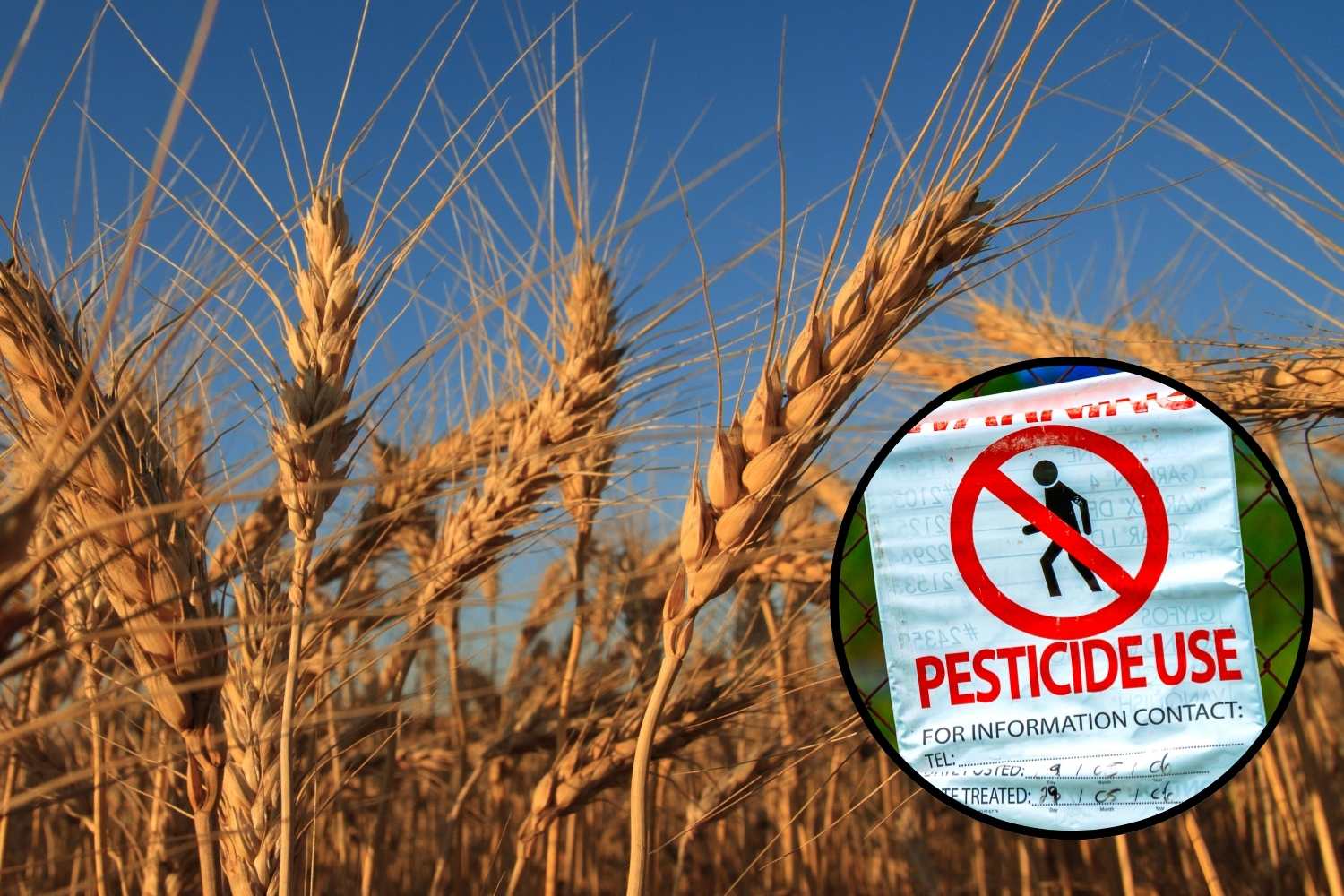
The intensive use of pesticides in agriculture has been at the center of the public debate for years. On the one hand, these substances guarantee more abundant harvests and reduce losses caused by parasites and diseases, on the other they raise more and more serious concerns for human health and the environment. The pesticides, in fact, often end out of target, contaminating soil, air and waters, with chain effects on ecosystems and on our food chain.
A new European study, published on Journal of Hazardous Materials As part of the Soildiveragro project (which brings together researchers from different European countries), it sheds light on the real diffusion of pesticide residues in the wheat fields. The results are far from reassuring.
From the data made available by FAO, we already know that the global consumption of agricultural pesticides has grown significantly in recent years, going from 2.8 million tons in 2010 to 3.5 million in 2022, with a 25%increase. Even in Europe, although with more severe rules, the use of pesticides is increasing: from 402,229 tons in 2010 it reached 449,038 tons in 2022, with an increase of 12%. In 2023, 444 pesticides were authorized in the European Union, while 954 were prohibited or not approved and 43 were being evaluated.
The new study we are talking about today, curated by the University of Vigo as part of the Soildiveragro project, has specifically analyzed the presence of pesticides in the European wheat fields. The researchers examined 188 fields distributed in eight countries, with different climates and soils, of which 93 cultivated in a conventional and 95 organic way. 614 pesticides were assessed.
It should be noted that Italy was not included in the sample of analyzed countries, which included Germany, Belgium, Denmark, Hungary, Serbia and other Northern and Eastern European countries. However, this does not make us feel more calm: the data collected clearly show that the problem of pesticides is widespread and affects the entire European continent.
The most worrying results
The survey revealed that 99% of the conventional fields contained at least one pesticide. 73 different compounds have been identified. The most common are:
Others often detected: Boscalid, Tebuconazolo, Bixafen, Diflufenican and even the Metabolites of the DDT (forbidden for decades).
It was then noticed that the concentrations of pesticides in European wheat fields vary a lot from country to country. The highest levels were found in Germany, with an average of 0.46 mg/kg and a variety of 13.5 different pesticides per field. On the contrary, the regions of Pannonia, in particular Hungary and Serbia, have shown much lower values, with an average of just 0.02 mg/kg.
One of the most surprising data concerns biological fields. Although they are cultivated according to the criteria of organic agriculture, 35 different pesticides have been detected, but only the spinosad was actually authorized for this type of cultivation. This does not mean that these prohibited pesticides have actually been used on those fields but that many phytopharmacies persist in the ground for years, and in some cases even for decades, even after the transition from the conventional to organic. Even more worrying, 31 of the compounds detected were already prohibited at the time of the study, but were still traceable over 40 years after their ban.

The risks of this widespread contamination
The pesticide contamination in the fields does not only concern the ground or the water, but comes to interest the entire food chain. When these chemicals persist in the environment, they can end up in the foods we consume, exposing people to chronic doses over time. Scientific studies have connected this prolonged exposure to a broad spectrum of health problems, which range from neurodegenerative and cardiovascular diseases to respiratory, kidney, endocrine and reproductive disorders, up to different types of tumors.
However, not all pesticides represent the same risk, and some are particularly worrying for biodiversity. Among the most problematic fungicides are Epoxiconazole, Boscalid and Difenoconazole, while among the insecticides that impact most Imidacloprid and Clothianidin, substances known for their harmful effect on pollinating insects and other non -target bodies.
A truly serious problem underlined by Manuel Conde Cid, one of the researchers who conducted the study, in an article on The Conversation:
It is estimated that less than 15% of the applied pesticides actually reaches the target parasite. The rest is dispersed in the environment, contaminating the ground, water and air. This involves significant risks for environmental health, including the poisoning of non -target bodies, the loss of biodiversity and the development of resistance in parasites.
A fact that makes you think, a clear reminder of how urgent it is to rethink the use of these chemicals.
How to reduce risks
The authors of the study underline the urgency to reduce the dependence on highly persistent and toxic chemical pesticides, promoting more sustainable alternatives. Among these include bioinsecticides, natural products of vegetable origin and beneficial microorganisms, which can help control parasites and diseases without seriously impacting the environment.
At the same time, a fundamental role is played by the agricultural practices adopted. The rotation of crops, the reduction of soil processes, the use of coverage crops and certified organic agriculture not only improve soil health, but also contribute to decreasing the need for chemical pesticides. These strategies, if combined with rigorous regulation, represent a concrete approach to protect both agricultural productivity and the health of ecosystems and people.
The Soydiveragro study once again launches an alarm bell: pesticides residues are omnipresent in European wheat fields, including biological ones. The increasingly urgent challenge is to find a balance between agricultural productivity and the protection of human and environmental health.
