
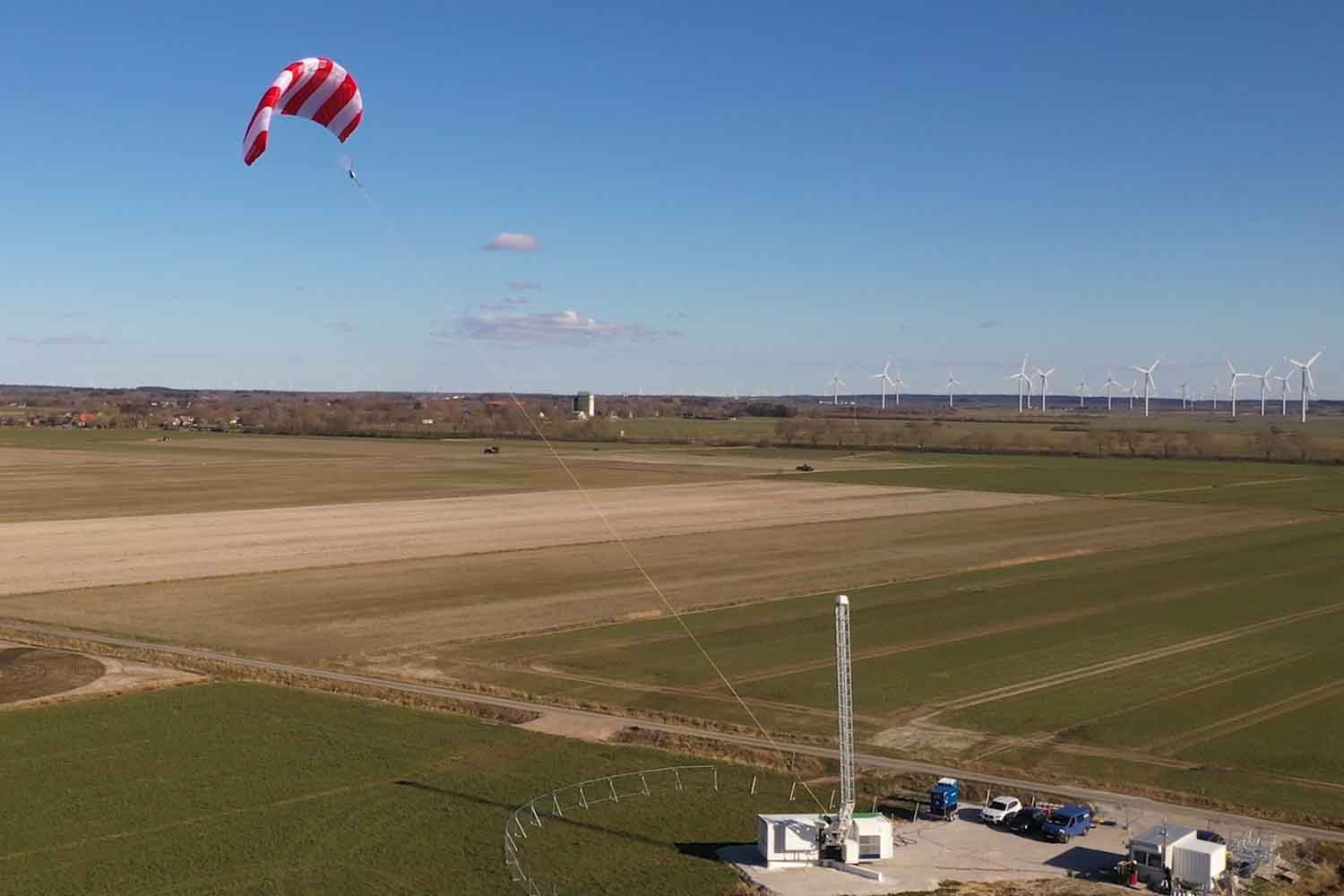
Traditional wind turbines have long been the subject of criticism for their impact on the environment and on the local ecosystem. However, a German startup developed a futuristic alternative, capable of producing energy using the wind at 750 meters high: A flying system that could rewrite the future of wind energy.
Today, most of the wind energy in the world come from large wind farms distributed on large areas of land. However, these plants require immense space: on average, a wind farm needs about an area Ten times higher than a coal or gas plant to produce the same amount of electricity.
This need for open space involves serious environmental consequencesespecially for local fauna. In many regions, the inhabitants protest against the construction of wind turbines, since they represent a danger to birds and interrupt the balance of local ecosystemsdue to the deforestation and modification of the natural landscape.
How the SkySails Power energy kite works
In December 2021, the German startup Skysails power He conducted a first promising experiment on the coasts of Mauritius. The company launched in flight an automated sailsimilar to a giant kite, designed for go up to 400 meters highreaching the limit of its cable, and then go down to 200 meters and repeat the cycle.
During the rise, the cable unrolls and generates kinetic energy. This energy then comes transformed into electricitymaking it possible to produce clean energy directly from the sky. Although it is not the first technology to try to produce energy from the air – just think of the wind drones for domestic use – the Skysails project is attracting attention to international level.
Although it is still a technology in the experimental phase, A single sail managed to feed up to 50 homes in Mauritius. A remarkable result, considering that the system is still in its early development phases.
Key advantages of wind energy at 750 meters
What makes this technology revolutionary is the absence of a fixed structure. Unlike wind turbines, it does not require large space on the ground or particular altimetric conditions. Traditional turbines are in fact more efficient in high areas, making wind energy not very accessible for flat areas.
Skysails sails, on the other hand, can operate everywhere, even in the middle of the oceanwhere the wind is stronger and more constant. This adaptation capacity eliminates geographical limits e drastically reduces energy transport costswhich often represent an important spending item for traditional systems.
With the energy generated directly at the consumption point, Skysail’s technology could make the economic energy cheaper, accessible and widespread.
Challenges and legal limits
Despite the great potential, there is no shortage concerns and regulatory challenges. Since these sails are anchored on the ground but fly hundreds of meters high, they are subject to both aeronautical and territorial regulations.
If the system exceeded The 750 meters highcould represent a danger to air traffic. Furthermore, at the moment there are no specific regulations to manage this new form of energy production. As often happens with innovations, Laws tend to arrive only after technology.
Some experts also raise doubts about the visual impact and possible interference with birds, risks similar to those of conventional turbines. However, researchers involved in the project reiterate that a clear regulation could solve most of these problems.
Despite the initial limits, The future of the wind sails is promising. Skysails Power has already identified beyond 4000 areas in Germany Where it is not possible to build traditional wind farms, but where this technology could work perfectly.
As the regulations will adapt, This innovative solution could become one of the renewable energy pillars of the futureoffering a sustainable, efficient and flexible alternative to conventional wind production.
