
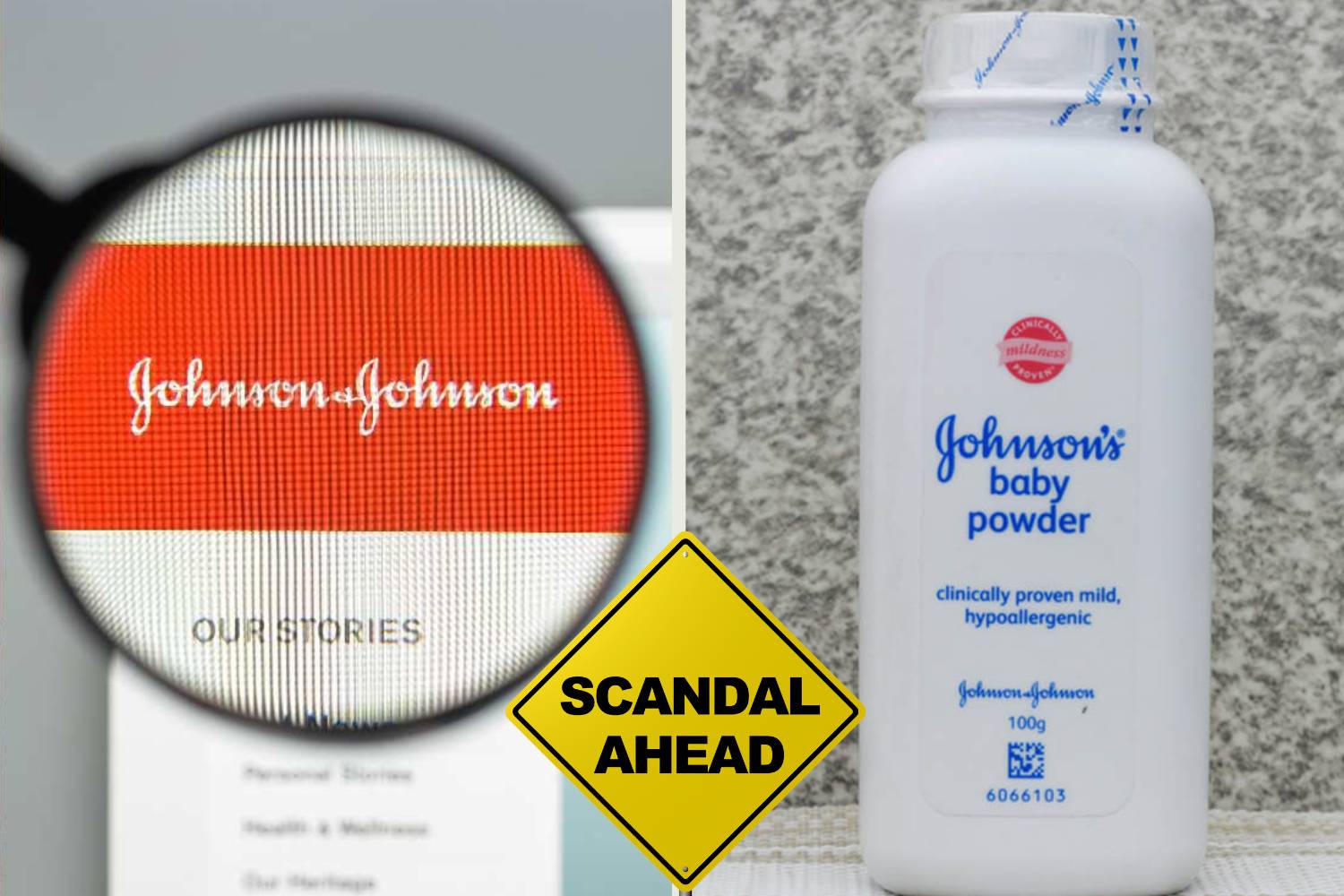
For decades, Johnson & Johnson was the protagonist of scandals that concerned his well -known talc but also drugs and vaccines. Despite the very serious accusations, the company has always managed to save image (and profits). Here’s how
Johnson & Johnson It is one of the most powerful and well -known multinationals in the world. Yet, over the years, it has been overwhelmed by an impressive series of scandals, many of which are very serious. But, despite the accusations, references to products and billions of dollars spent in compensation, the American company managed to maintain a positive reputation in the eyes of most of the public opinion, so much so that in 2025 it was again included by fortunes among the “most admired companies in the world”, for the 23rd consecutive year.
How did he do? The answer is not only in good communication. Johnson & Johnson has been able to put in place a complex, effective and, in some respects, ruthless strategy.
But let’s start from the beginning, summarizing the main scandals that have seen it the protagonist.
The Tylenol case
In 1982, seven people died in Chicago after taking capsules of Tylenol Extra-Strengh contaminated with cyanide. The news went around the world and seemed destined to kneel Johnson & Johnson, who produced the drug.
The company reacted with a drastic decision: it withdrew 31 million Tylenol packs from the market, for a cost of approximately $ 100 million. He collaborated with the health authorities, maintained a transparent attitude and launched new packaging “tampering proof”, which then became the standard in the sector.
The case, despite his gravity, was transformed into an example of good crisis management and Johnson & Johnson even ended up strengthening his public image. A detail often mentioned: the head of the FDA that minimized the responsibilities of the company then went to work for one of its communication agencies.
The talc of asbestos
This is undoubtedly the most striking case, of which we have treated amply even in previous articles on Greenme. For decades, the Talc Johnson’s Baby Powder was a symbol of the care of babies and children, actually also used by adults. Starting from the 2000s, however, several legal causes have accused the company of having sold talcis contaminated with asbestos, a highly carcinogenic substance for years.
Several women with mesothelioma or ovarian tumors have denounced the company, claiming that they have never been warned risks. In 2018, a court of Missouri sentenced Johnson & Johnson to pay 4.7 billion dollars to 22 women. The company has always denied that its talc was dangerous, but In 2023 he decided to collect the product globally.
To avoid the payment of thousands of compensation, Johnson & Johnson also attempted a controversial legal move: he created an ad hoc company to absorb all the causes and then made him declare failed, a strategy known as “Texas Two-Step”. The maneuver slowed down the processes but also attracted strong criticisms.
Risperdal
Then there was the case of the Risperdal, an antipsychotic drug used to treat disorders such as schizophrenia. Starting from the years 2010, however, Johnson & Johnson has been accused of not having adequately warned patients of the possible side effects, including the Gynecomastia (breast development in men).
Many patients, including teenagers and adults, sued the company claiming to have suffered permanent physical and psychological damage. In Pennsylvania, a court sentenced Johnson & Johnson to compensate a patient with 8 billion dollars, then reduced on appeal. The legal causes connected to the Risperdal cost over 2 billion dollars.
The company continued to sell the drug and, despite having paid fines and compensation, has never admitted significant responsibilities.
Dependence on opioids
Another black chapter in the history of the multinational is the trial for opioid addiction in the United States. Johnson & Johnson has been accused of having misunderstood highly habitant pain relievers in a deceptive way, contributing to the health crisis that caused over 500,000 deaths per overdose. In 2019 a historical process began in the state of Oklahoma, the first of over 2,000 legal causes intended by local and federal authorities.
According to the accusation, the company would have conducted a “cynical brain washing campaign” to increase sales, minimizing the risks of dependence. Johnson & Johnson rejected the accusations, claiming to have always respected the law. However, in 2021 she was sentenced to pay compensation and cease the production and distribution of the opioids involved in the affair.
The anti-covid vaccine
During the Covid-19 pandemic, Johnson & Johnson developed a single-dose vaccine based on viral carrier. After the first enthusiasm, rare cases of thrombosis emerged in some young women who had received the vaccine, bringing the health authorities of different countries to temporarily suspend their use.
In the United States, the FDA added a warning on the possible onset of thrombosis with trombocytopenia (TTS). The European Union preferred to focus on Pfizer and modern. In the end, Johnson & Johnson voluntarily interrupted the distribution of the vaccine, focusing on other sectors.
Also in this case, the company has avoided a real reputational crisis, perhaps also thanks to the general perception that the situation was under control and that it was rare and statistically acceptable events.
But now let’s try to answer the initial question: how did Johnson & Johnson be saved from all these serious scandals?
Like Johnson & Johnson survived the scandals
Faced with scandals that would sank many companies, Johnson & Johnson managed to preserve their reputation thanks to a combination of well -calibrated strategies:
In summary, Johnson & Johnson has shown that, with the right resources and a well -oiled strategy, it is possible to survive – and even thrive – even in the midst of a real storm of scandals.
