
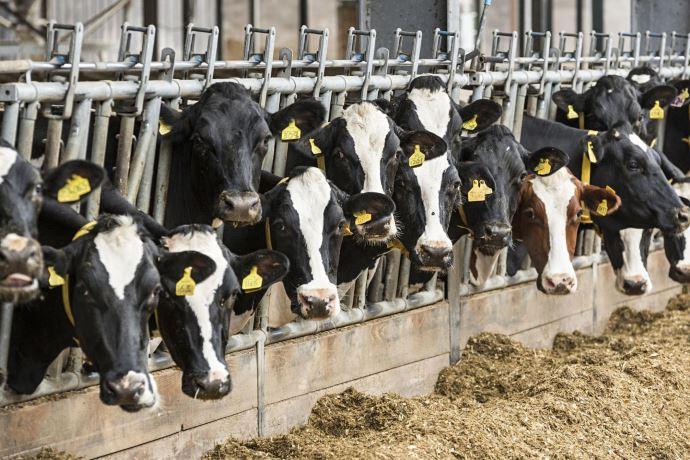
Italy is witnessing a significant change in the way of understanding breeding. Spoltorein the province of Pescara, San Vito al Tagliamentoin Pordenonese, and Castenedoloin the Brescia area, have taken a historical step, becoming The first municipalities to approve the motion promoted by Greenpeace, Isde, Lipu, Earth! And WWF for the conversion in agro-ecological key of the intensive farming system. A strong signal that starts from the territories, and which could trigger a transformation on a national scale.
The initiative
The motion, made available to municipal administrations throughout Italy, is an act of address that aims to raise awareness of citizens and economic categories on the need to rethink the livestock sector. The goal is to promote a debate that may encourage adoption of national legislation. A bill in this sense, called “Besides intensive farms. For an agro-ecological transition of zootechny“, It was presented in Parliament last February, but is currently stalled.
Constitutional bases and international commitments
The text of the motion has its roots in fundamental principles of the Italian Constitution. In particular, he recalls the Articles 9which protects environment, biodiversity and ecosystems, 32which guarantees the health of citizens, e 41which places a limit to the economic initiative, prohibiting activities that can damage health and the environment. In addition, the motion recalls the Paris agreement, which invites all production sectors, including the agricultural-zootechnical one, a Reduce greenhouse gas emissionsand to the European legislation on climate. Another key element is the link between intensive farms and the spread of zoonosisdiseases transmitted from animals to humans, which represent a serious threat to public health.
An unsustainable model
The associations promoting the motion launch a clear alarm: the current Italian zootechnical model, increasingly oriented towards large industrial concentrations, is no longer sustainable. This system, in fact, is putting to the test the small and medium -sized farms, which struggle to compete and risk disappearing. At the same time, intensive farms have a significant environmental impact, contributing significantly to air pollution, waters and soil.
The pollution numbers
The zootechnical sector is responsible for over two thirds of the national ammonia emissions, a gas that contributes to the formation of fine dust (PM2.5)among the main atmospheric pollutants. According to the European Environment Agency, the PM2.5 has been responsible for tens of thousands of premature deaths in Italy in recent years. In addition, intensive farms are one of the main causes of nitrogen pollution, a problem that led Italy to be sanctioned by the European Union for the failure to comply with the nitrate directive. The framework directive on the waters has also been disregarded several times, with our country that has not yet reached the quality standards provided for water bodies.
The bill “In addition to the intensive farms”
To reverse the course, the promoting associations presented a bill that outlines a transition path to a more sustainable zootechnical system. The proposal, supported by a large parliamentary front and civil society, aims to enhance small farms, while promoting the ecological conversion of the larger ones. A key element is the moratorium on the opening of new intensive farms and on the increase in the number of animals raised in the existing ones. The proposal also provides for the creation of a fund to support the transition and establishment of a partnership table between all the subjects involved, from breeders to the institutions, to define a national reconversion plan.
The role of the Municipalities
In this scenario, the municipalities play a fundamental role. As institutions closest to citizens, they can promote local policies that favor environmental sustainability, public health and the development of agriculture more respectful of the environment and animals. The approval of the motion by Spoltore, San Vito al Tagliamento and Castenedolo shows that the change is possible, and that it starts from the territories.
