
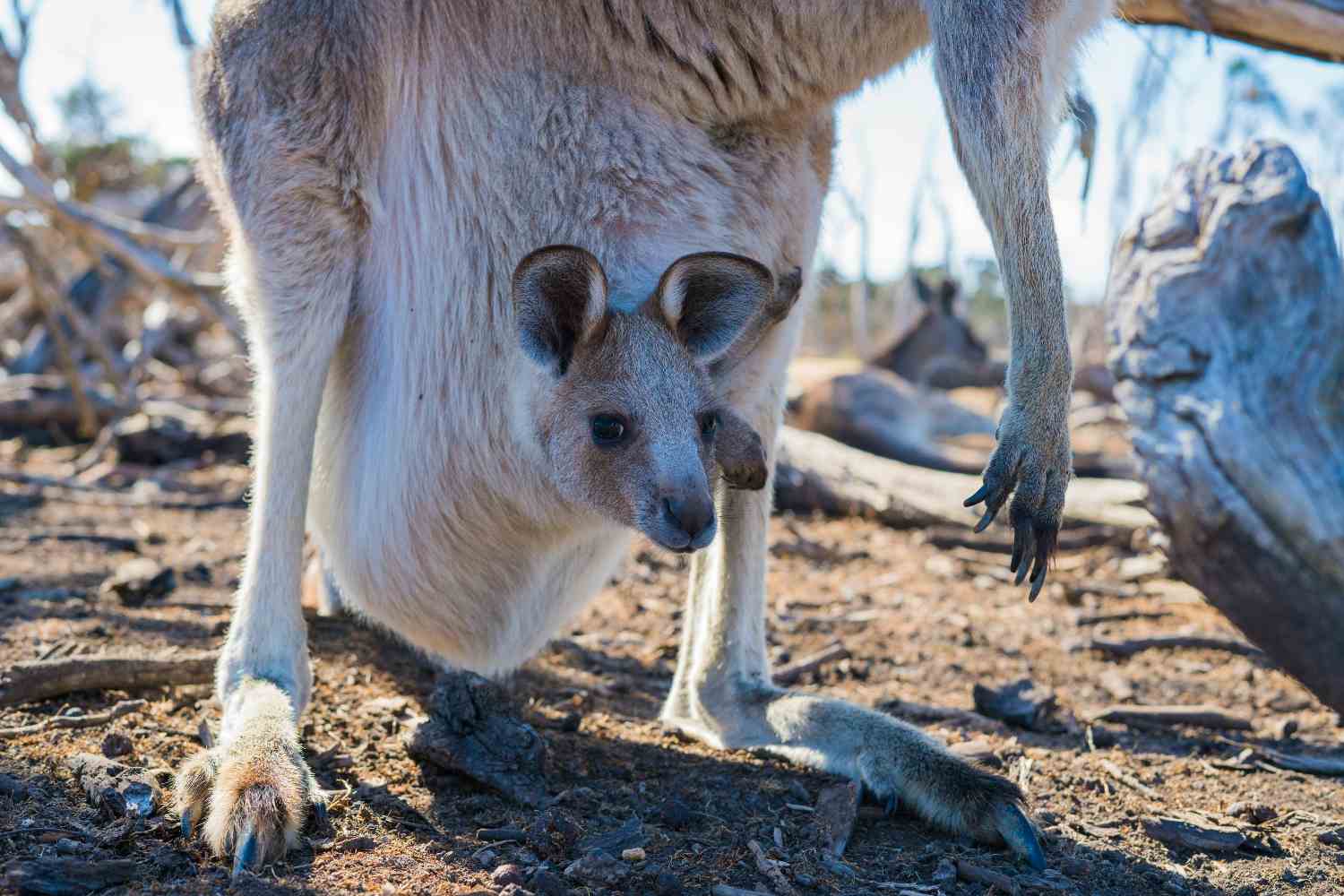
In nature, survival often requires extraordinary adaptations. Among these, one of the most fascinating is the so -called embryonic diapausea capacity that allows some species of pause the pregnancy Until the environmental conditions are favorable.
This phenomenon is particularly known in kangaroobut also involves beyond 130 species of mammals. In the case of the canguro females, after mating and fertilization, the embryo develops only up to an initial stage and then enters a phase of dormant.
In practice, pregnancy is suspended: the embryo remains in stand-by, without attaching to the uterus. This allows the mother of optimize its resourcesfocusing on the puppy already born or waiting for more favorable moments to complete a new gestation.
A survival mechanism
There duration of the break It can vary from a few days to several months, as in the case of Tammar Wallabycapable of suspending pregnancy up to 11 months. Some animals, such as the bearsi ferreti deer And even the wardrobeuse this system for Synchronize birth with the most suitable seasons to the growth of children.
In many species, the diapause is activated immediately after childbirth: the female mates again, but breastfeeding in progress Blocks temporarily The development of the new embryo. In others, like i minkthe fertilized egg is paused waiting for i days stretchensuring that the little ones are born in spring, a milder period full of resources.
Although the embryonic diapause has been known for over a century, the molecular mechanism At the base it is still the subject of study. Each animal group seems to use different hormones To activate or maintain this break, but recent discoveries indicate that the Communication between uterus and embryo could follow a model similar even between distant species such as the mouseThe mink and the Wallaby.
