
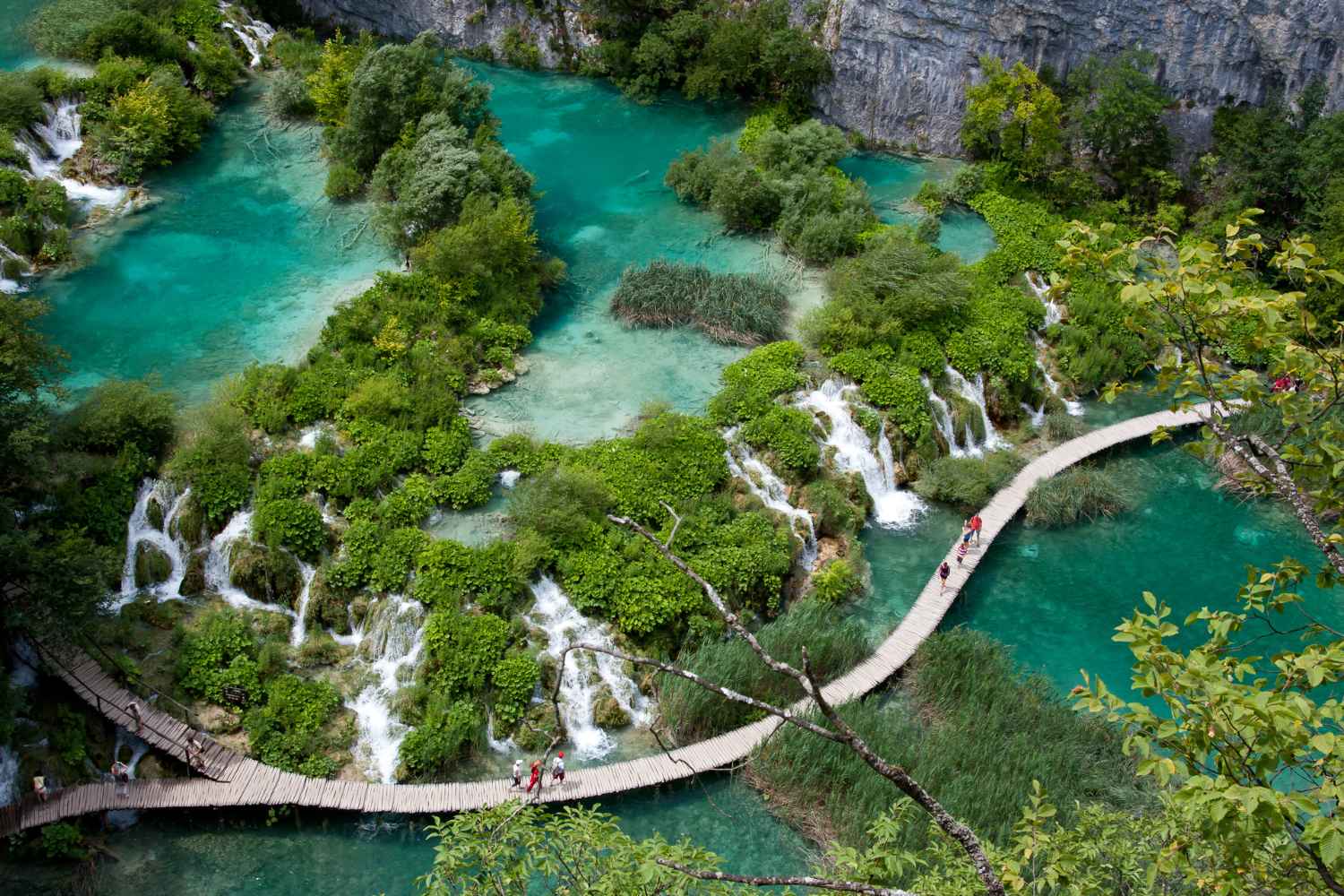
It is one of the most suggestive places in Europe and, perhaps, of the world that is worth visiting at least once in life. It is no coincidence that it is part of the UNESCO World Heritage List. Is the Plitvice Lakes National Park (in Croatian Nacionalni Park Plitvička Jezera), an area of 29,685 hectares, rich in natural wonders, flora and fauna, and breathtaking landscapes characterized by a system of lakes linked to each other by waterfalls.
Not all areas are accessible to visitors, but there are many kilometers of green paths and wooden bridges available, suitable for exploiting and walks in the midst of nature. But the real flagship of the park are the 16 lakeswhich are found in succession and are connected to each other by waterfalls. Very close to Italy, just 168 km from Fiume and 140 from Zagreb.
View this post on Instagram
The enchanting plitvice lakes
The Plitvice Lakes National Park is included in the broader context of the Dinarica karst area, characterized by karst forms and rare phenomena of surface water courses and a strong link between the surface and the subsoil through the numerous cracks. Hence the extraordinary nature of the place.
An important role in this linked structure of lakes is played by the tank that provides and distributes the water. The tank is very permeable, characterized by numerous karst forms of the subsoil (caves and pits) and the surface (doline and fields). However, it is devoid of superficial courses. The limestone leaders rise in these areas, where the highest peak is also located (Seliški 1279 m). Their peculiarity lies in the fact that after walking in the subsoil for a stretch, the water meets a obstacle, a waterproof rock area, which forces her to emerge on the surface forming the numerous streams, which in turn feed the lakes.
The rich biodiversity of the park
The Plitvice Lakes Park is famous for the 22 species protected by the law on the protection of the nature of the Republic of Croatia. Among them the most important is the Scarpetta di Venere (CYPRIPEDIUM CALCEOLUS), the most beautiful orchid in Europe. Another peculiarity consists of carnivorous plants, including the Rosolida (Drosera Rotundifolia) and the minor bladder grass (Utricularia minor), a very rare water carnivorous plant.
In this green paradise 157 species of birds live, 50 species of mammals including ghiri, toporagni, common country mice, curls, martore, faine, wild boars, 20 types of bats, 321 species of butterflies (76 daytime and 245 night) and other animals, including the brown bear, the wolf, the lynx and the roe deer. However, its symbol is the bear, even if the richness of the fauna is very vast.
How to visit the Plitvice Lakes National Park
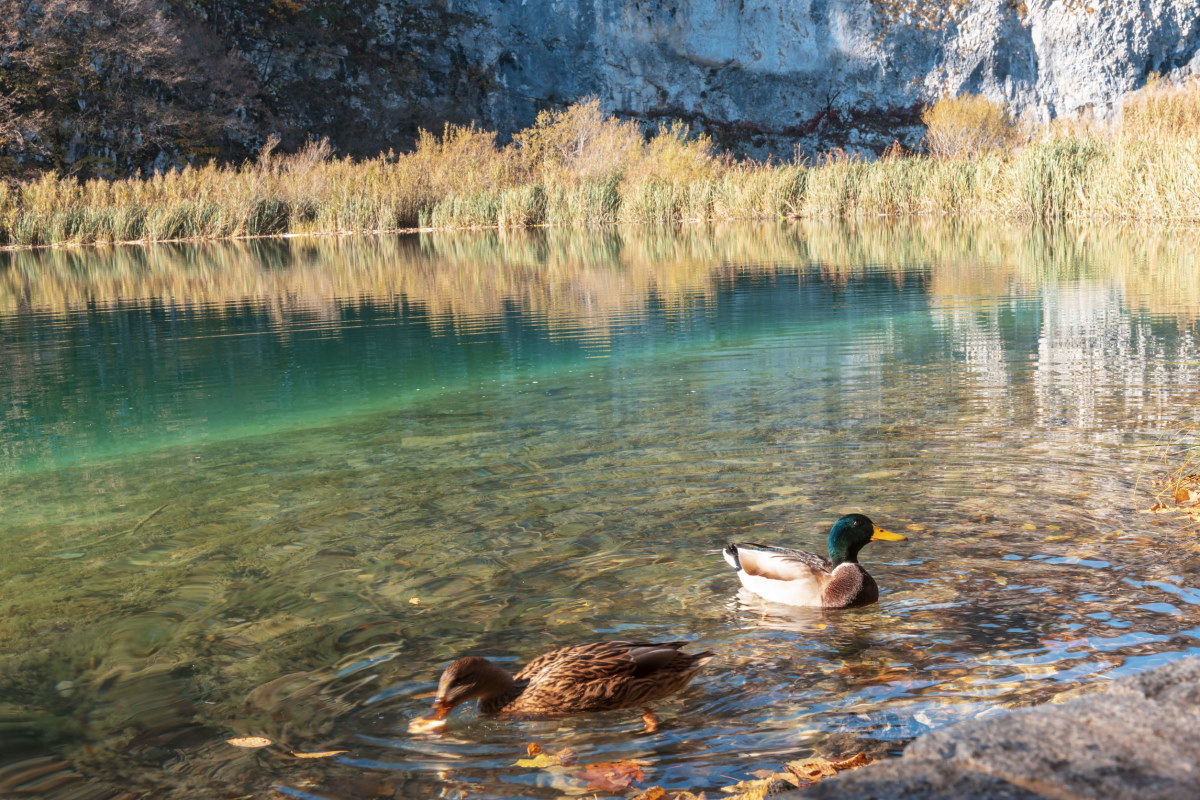
The Plitvice Lakes National Park is open all year round, but the best time to admire it is certainly the late springwhen you fall the lakes and waterfalls abound in water, but also in autumn natural shades are a real show.
To visit the Croatian park, in addition to the organized walks, there are i panoramic trains with which it is possible to reach some remote points of the park and enjoy the beautiful panoramas of the lakes from the appropriate views. In addition to the Trenini, there are also electric ferries “Kozjak”, “Fardo”, “Vidra 2”, “Lija”, “Medo”, “buk” and “slap” that sail for the largest lake, the Kozjak lake, thus connecting the lower lakes with the upper lakes.
View this post on Instagram
All the activities that can be done in the park
How to get to Plitvice from Italy?
To reach Plitvice lakes from Italy, there are several travel options, depending on the city of departure and personal preferences. Here are the main ways:
Car
The car is the most comfortable and flexible means to visit the Plitvice lakes. From northern Italy, like Trieste, the distance is about 250 km and the journey lasts about 3 and a half hours. The most common route is via the A4 motorway in Italy, crossing the border in Rabuiese and continuing on the A7 in Slovenia to Zagreb. From Zagreb, continue on the A1/E71 and then on the D522 to Udbina, to finally take the D1 towards the Plitvice lakes.
By bus
There are bus connections from several Italian cities to Plitvice lakes. For example, buses start from Trieste who pass through Rijeka and Karlovac before arriving at the park. The trip lasts about 7 and a half hours. It is advisable to buy tickets in advance to avoid long expectations.
Flight + local transport
Another option is to fly to Zagreb, which is the closest international airport to Plitvice lakes. From Zagreb, you can take a bus direct to the park, with a duration of the trip of about 2 and a half hours. Bus tickets can be purchased online or at the Zagreb bus station.
By train
There are railway connections from Trieste to Zagreb, but there are no direct trains up to Plitvice lakes. Once in Zagreb, you need to take a bus to reach the park. The train journey can be longer and less convenient than other options.
Organized tours
For a more comfortable and guided visit, it is possible to participate in organized tours that start from cities such as Zagreb or Split. These tours include transport, guide and entry to the park, offering a complete experience without having to worry about logistics
Useful info
The entrance ticket to the Plitvička Jezra National Park contributes to its maintenance and protection. It is valid for one or two consecutive days and includes transport with electric boat and panoramic train, as well as an insurance policy. If you stay in one of the park hotels, you can extend the validity of the ticket via the reception. Tickets are available online and must be printed or downloaded on the mobile phone, with validation at the entrance. It is recommended to buy the ticket in advance to reduce waiting times. In case of availability, tickets can also be purchased directly at the ticket offices at the entrance.
How much does the entry to Plitvice lakes cost?
Prices vary according to the seasonal and time period (up to 16 or from 16 per closing) and range from a minimum of 10 euros per person (adults) to a maximum of 40 euros per person in the period from 1.06 to 30.09.
In Croatia there are 7 other national parks, including the Krka National Park, known for its fascinating seven waterfalls.
