
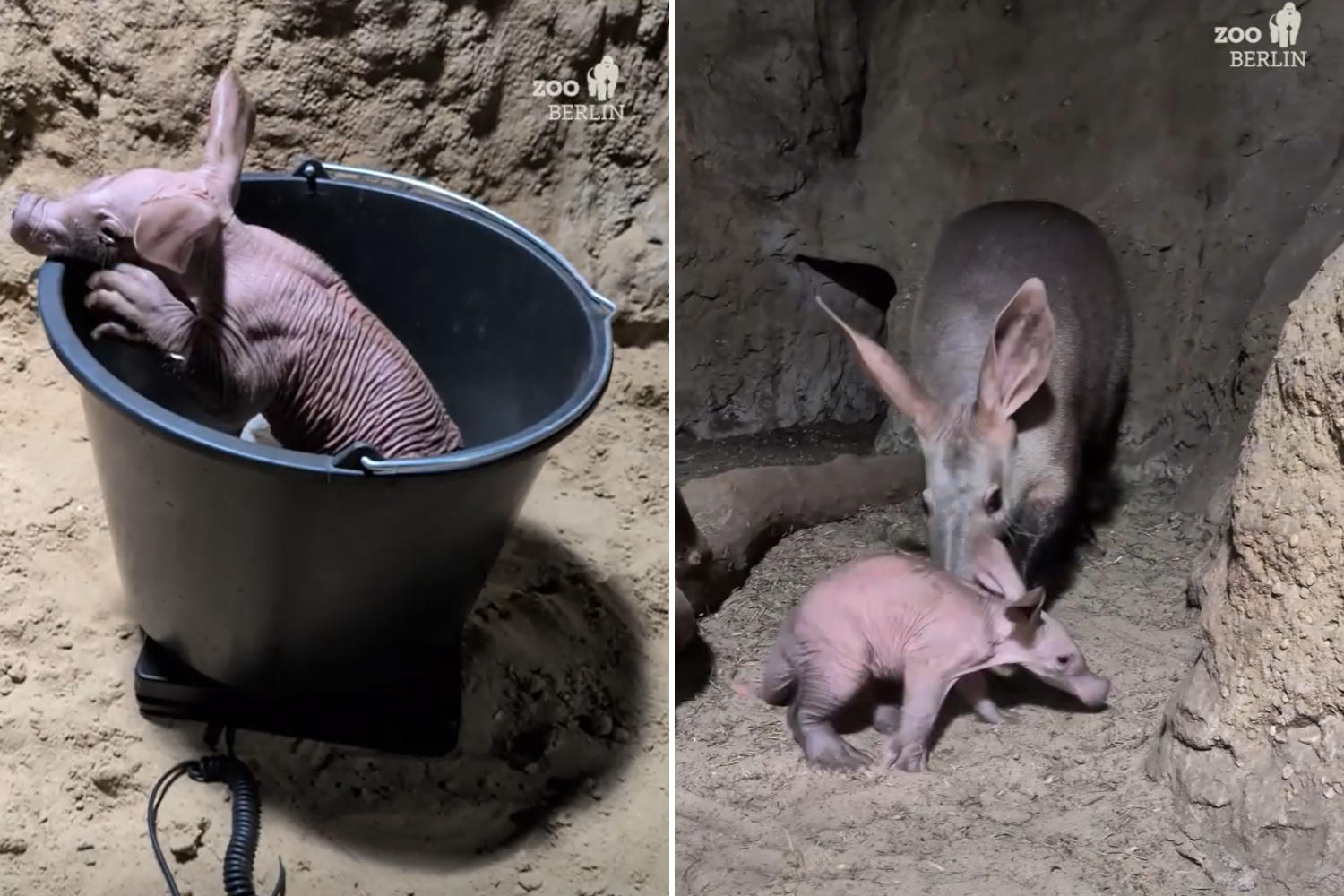
A small and enigmatic inhabitant has entered the world of wildlife hosted in Germany. Berlin Zoo has announced the birth of a baby aardvark, which was born on July 11th. The baby, whose sex has not yet been officially determined by vets, was born to mother Memphis and father Kito, joining his older sister Frieda, born just last April.
View this post on Instagram
Mom will decide when to let him out
With a weight that has already reached three kilograms just a few weeks after giving birth, the offspring is growing in excellent health. For the moment the puppy remains protected inside the den for the birth together with Memphis, who begins to allow herself to go out more and more frequently in the enclosure of the Night House. It will be up to the mother alone to decide when to let her little one cross the threshold of the cave for the first time.
The aesthetics of the newcomer evoke fairy-tale and bizarre suggestions, almost recalling the creatures of a Nordic saga due to the large and drooping ears, the elongated trunk and the sharp claws. In nature, aardvarks are nocturnal mammals originating from the African continent that feed mainly on ants and termites and which, once they reach adult development, can reach a total weight of as much as sixty-five kilograms.
The transformation into an audience star and the fate of captivity
The enthusiasm of the structure and the visitors is sky high, with the widespread hope of being able to see the anteater’s first moves and explorations within the exhibition area in the next few days. However, behind the festive narrative of the event, lies an unavoidable reality. From its first hours of life, this specimen was transformed into a media star and an attraction to be shown to the paying public. The animal will grow up immersed in the spotlight of the zoological structure, moving its steps within fenced paths and conditioned by the human clock, far from the vast wild spaces of African territories.
His life expectancy, which in conditions of captivity can reach the threshold of twenty-three years, will be spent entirely sheltered from the dangers of nature but also completely devoid of true freedom. The little aardvark is thus preparing to become the new symbol of the German zoo, enchanting adults and children as it embodies the profound contrast between the wonder of conservation and the fate of a life dragged inside an artificial enclosure.
