
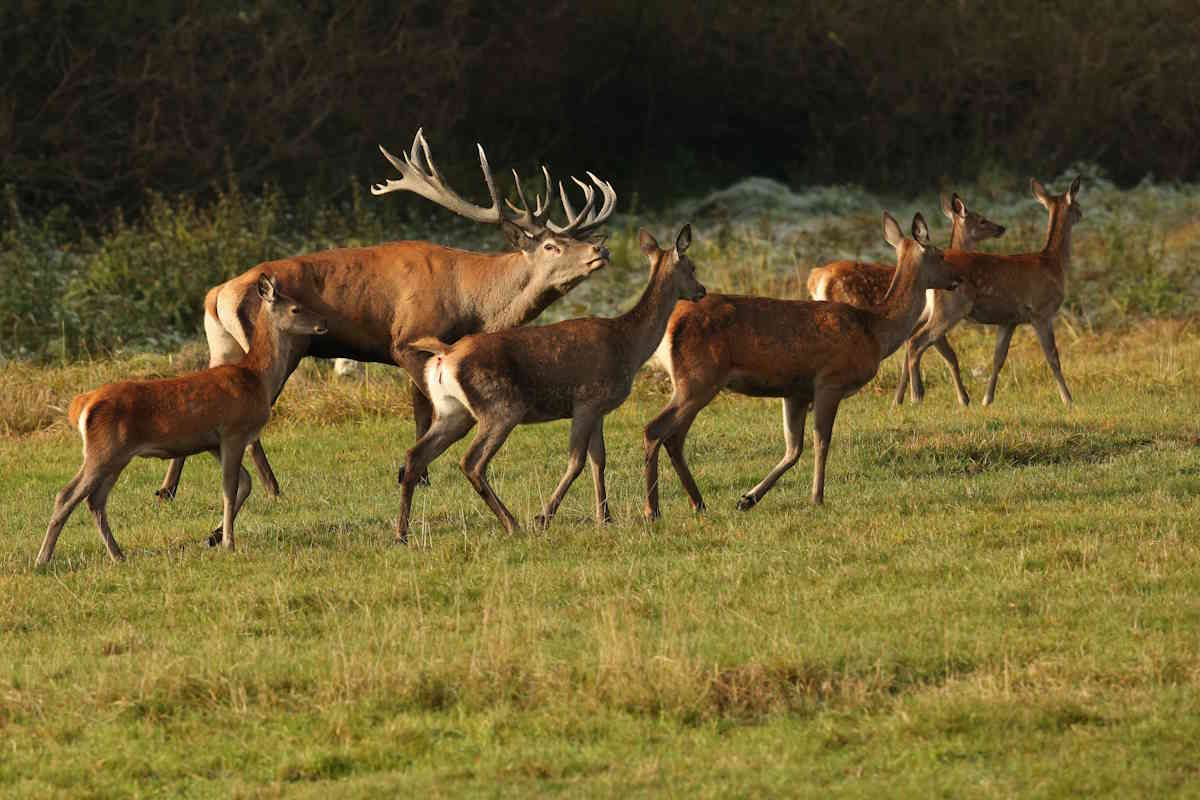
It is official: i 469 Abruzzo Cervi (of which 142 puppies) sentenced to death by a regional resolution.
The Regional Administrative Court of Abruzzo has in fact taken note of the termination of the effects of the act of Giunta Marsiliothus decreeing the storage. A decision that represents a symbolic and concrete victory for environmental associations Lav, Lndc-Animal Protection And WWF Italiawho had appealed to the administrative judge after the resolution had been suspended by the Council of State in November 2024.
The lawyers of the associations, while considering the procedure superfluous, have still filed a defensive memory to consolidate the reasons expressed in recent months. The Region, on the other hand, has chosen not to produce any documentation in support of its position. It is a fact that speaks for itself, showing a certain weakness on the merits of the choices made, let the environmental and animalistic associations know.
View this post on Instagram
Unprecedented mobilization and civil victory
The attempt to Authorize deer hunting in Abruzzo He triggered a collective reaction that has few precedents in the Italian environmental landscape. Over 140,000 citizens have signed a petition to stop the demolition. Sit-in followed, events and interventions by scientists, researchers and personalities from the cultural world, all united in asking the Region for a rethinking.
“It was no longer necessary to move forward in front of the TAR,” explain the recurring associations. “The suspension of the resolution made it definitively inapplicability”. However, the strongest message comes from collective determination: Wildlife is a common heritageand civil society is no longer willing to accept drastic solutions such as indiscriminate breaks.
Agriculture and Fauna: sustainable solutions are needed
The case has rekindled the debate on the difficult coexistence between agricultural activities and wildlife. The discontent of some categories of farmers, who complain of damage to crops and livestock, has been ridden politically but, according to the associations, without ever reaching concrete and effective solutions. Hunting, they claim, is not the answer.
“Science shows that prevention is much more effective than the demolitions,” reiterate Lav, Lndc and WWF. Electrified networks, fences, optical and acoustic bollards are tools already used in different regions with encouraging results. The associations are said to be ready to collaborate, but they remain firm: If you return to propose violent solutions, you will resort to justice again.
According to data of theHigher Institute for Environmental Protection and Research (ISPRA), over 70% of the agricultural damage caused by wildlife can be prevented with non -lethal passive and active measures. The associations also remember that selective hunt is not only not very effective in reducing fauna pressure, but it can even worsen ecological imbalances.
In the case of deer, the absence of natural predators should be managed with long -term planned interventions, not with emergency measures. The request is now that of establishing permanent technical tables between the region, scientists, associations and productive categories, to deal with the theme in a structural and scientifically founded way.
