
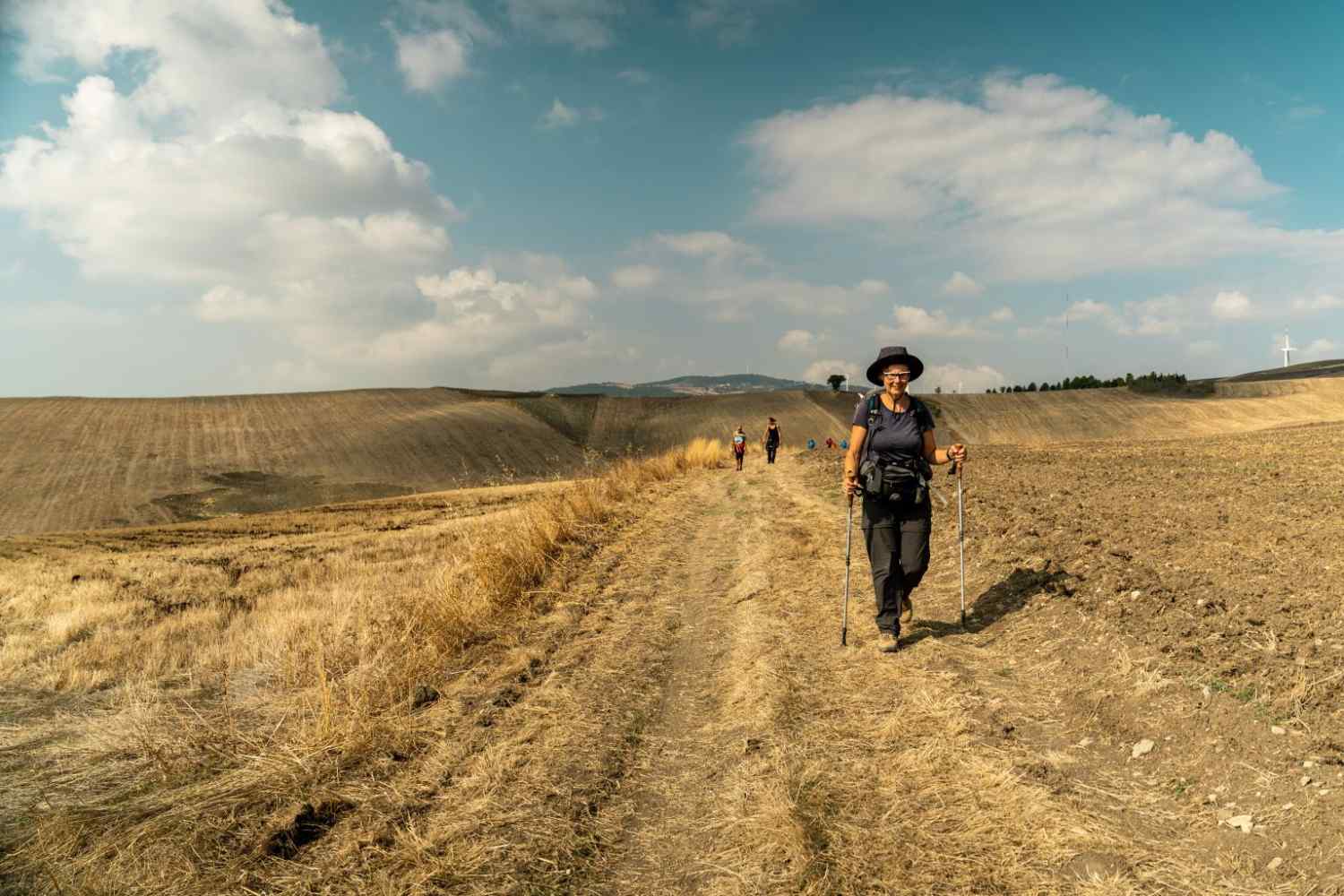
There Via Francigena del Salento becomes a symbol of inclusion And sustainabilitythanks to a project that involves schools, institutions, local communities and local experts. To be the background to the initiative was the recent conference held at the Pizzofalcone Relais Masseria in Supersano, an integral part of the review Music_andando for the Via Francigena.
The undisputed protagonists of the event were the students of the Comprehensive Institute Bottugno-Nociglia-Sporsano-San Cassiano, actively engaged in an educational path that has transformed the discovery of the territory into an opportunity for growth. Giusy Di Seclì, school manager, underlined the training value of the project, highlighting how school can become a concrete tool to make young people rediscover their own cultural roots.
The project aims to make the cultural and religious paths accessible to everyonewith particular attention to the needs of People with disabilities. According to Anna Throne, president of the Via Francigena Pugliese association, a new cultural paradigm must be adopted in which accessibility is not an addition, but a founding principle. Making the places of memory usable means promoting tourism that favors the meeting between cultures, religions and peopleexpanding the horizon of the local heritage.
A concrete example of environmental and inclusive education
To reiterate the centrality of the territory was Fabio Lazzari, president of the order of agronomists and forestry doctors of the province of Lecce, who spoke of the rural landscape as an educational and regenerative resource. He underlined the role that professionals such as agronomists and forestry can play in the design of Sustainable itinerariesable to connect memory, identity and innovation.
A particularly significant intervention was that of Carmen Leo, contact person of the Lecce territorial school office, who illustrated the activities carried out and future prospects. According to Leo, this initiative represents a concrete example of environmental and inclusive educationcapable of merged teaching with the values of sustainability.
The project shows how the Via Francigena del Salento can become a replicable model for other Italian realities: a path where school, culture and accessibility they advance togethertracing the way to a more human and respectful tourism.
