
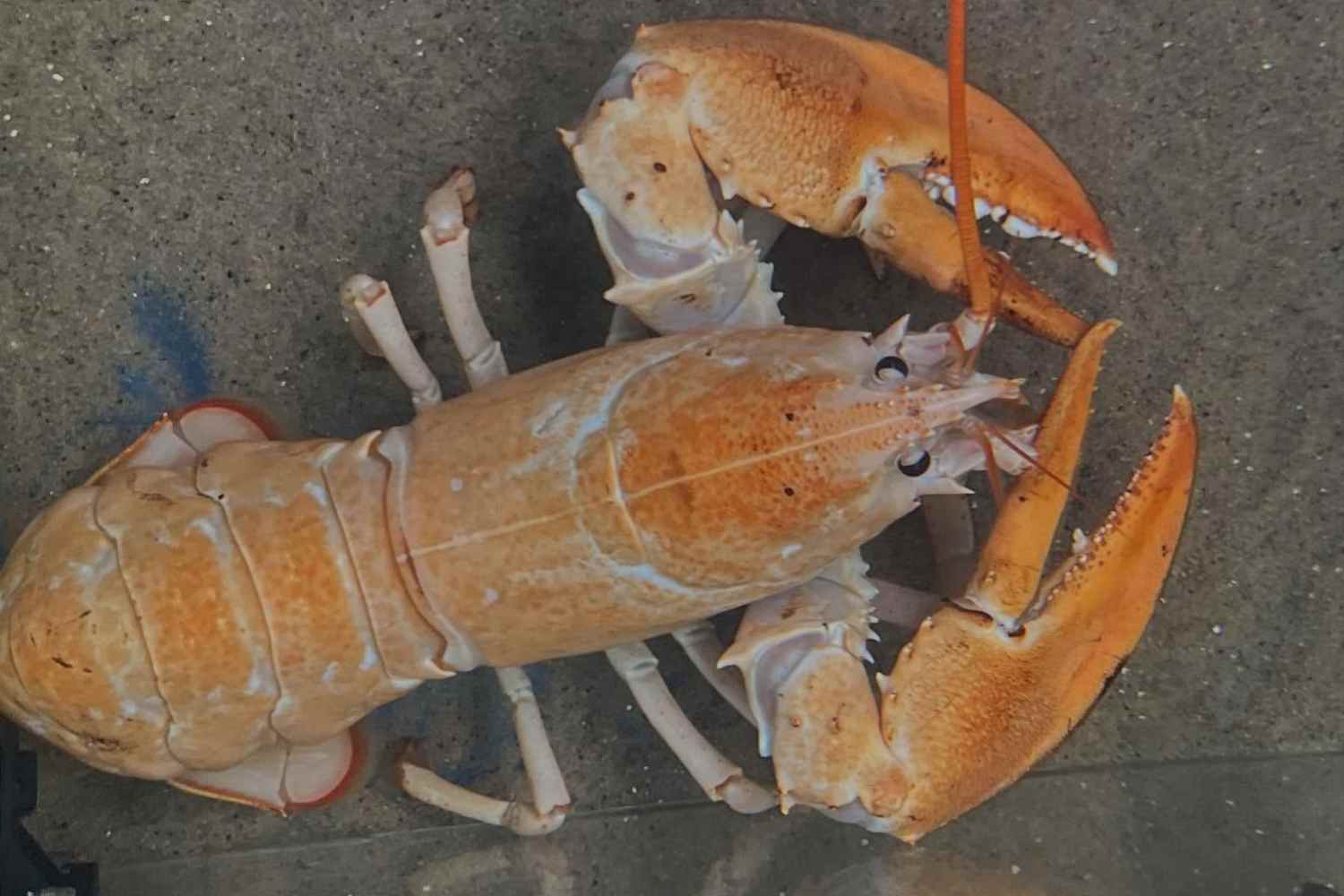
A story with a happy ending that comes from Rhode Island, where an extremely rare golden lobster was saved from the pan and found a new safe house at the Biomes Marine Biology Center in North Kingstown.
A marine treasure saved in extremis
View this post on Instagram
The splendid golden lobster owes its salvation to its exceptional rarity. The Nordic restaurant in Charlestown, in fact, has decided to donate this precious crustacean to the center of marine biology instead of serving it to customers, recognizing the scientific and educational value of such a particular specimen.
“Blue lobster is everyone’s favorite, but there is something in the golden lobster who really captures attention,” explains Mark Hall, owner of the Marino center. “Most people think it is a different species of lobster.”
A very rare genetic mutation
Thanks to @Thenordic_ri for donating in Beautiful Gold Lobster and Bartender Joel for Driving it over to Us. Not to be …
Posted by Biomes Marine Biology Center on Saturday, May 31, 2025
The extraordinary golden color of this crustacean is the result of a genetic mutation that occurs in just one specimen every 30 million lobsters. It is an even rarer condition than the already exceptional blue lobsters, making this specimen a real treasure of nature.
Hall is keen to clarify that golden rhastics should not be confused with the orange ones, which despite being rare are slightly more common and have a darker orange color.
A gesture of great environmental sensitivity
The rescue of the astice took place in a completely spontaneous way. The Nordic restaurant contacted the “Da Nothing” marine center last Tuesday to offer the donation of the animal. In less than an hour, Joel Humphries, a bartender of the restaurant and accidentally a former volunteer of the aquatic center, delivered the lobster in his new home.
An educational star
The golden lobster is already proving to be a real attraction for visitors to the center, in particular for young students. During the visit of about 50 pupils of fourth grade on Thursday morning, Hall was able to hear the enthusiastic reactions of the children in front of this extraordinary marine specimen.
The Biomes Marine Biology Center, which houses marine animals of the Narragansett Bay and the Atlantic Ocean, represents an important educational center where visitors can observe closely the local marine biodiversity and learn the importance of conservation of aquatic ecosystems.
The crustacean now lives safely in its new environment, where she will be able to inspire thousands of visitors and students, contributing to environmental education and awareness of the extraordinary biodiversity of our oceans.
A small gesture that reminds us how important it is to protect the treasures of nature, even when they are so rare that they seem almost legendary.
