

Full of nutrients, such as vitamin A, C, iron and calcium, the spinach They are easy and faster to cultivate; If you choose the right ones for sowing in succession, moreover, you could enjoy leaves throughout the year.
Once you know how to grow the spinachyou may collect your caught leaves at home within six to eight weeks. It is a really versatile vegetablesto be savored raw with the new leaves cut into salads, or as a sauce of pasta, soups and stews.
How to grow spinach
There are several options for grow spinach, You can grow them indoors or outdoors, in pots on a terrace or in a courtyard, among other crops in the garden or in raised beds. Below, we will guide you through all the options.
But are the spinach easy to grow? If you’ve ever wondered if the spinach are easy to cultivate, the answer is yes; It is a very easy vegetable to sow and cure, which takes about six weeks to grow from sowing to harvest. (Read also: Spinach: 10 vegetarian and vegan recipes for all tastes)
When to plant spinach?
The best time for the cultivation of spinach It is during the fresh climate of spring and autumn. Two different types are distinguished:
Here are some tips for the cultivation of spinach twice a year:
Seed spinach
Before starting sowing, you decide Where do you want to cultivate spinach since some of the smallest varieties are particularly suitable for containers.
To be successful in cultivation, before sowing, enter the ground of the compost It is a general fertilizer. This will help spinach to grow well and also prevent the leaves from having a bitter taste. It is important to plant the right varieties in a rich and organic soil, wet but well drainedto which to provide a lot of humidity and fertilizer.
Winter spinach cultivars need a sunny position; The varieties of summer spinach are, however, suitable for partial shadow areas.
Here are some useful tips:
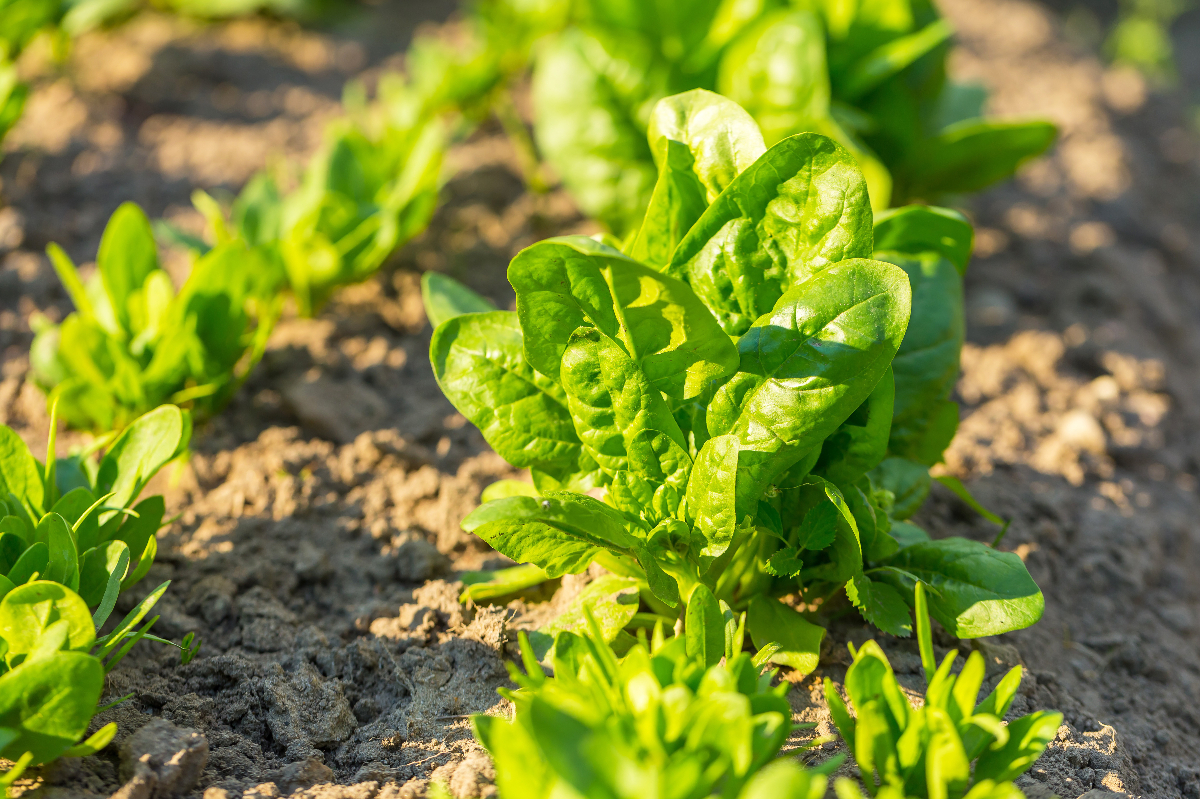
Cultivation in raised beds
The choice of cultivation in raised beds can circumvent the problem of poor soil, or the wrong type of soil to allow crops to grow successfully, since spinach prefer a Land from neutral to alkaline.
The raised beds offer good drainage and are also easily manageable, to be filled with organic soil and compost.
Sow spinach seeds not too deep, each row about 14 inches away. When the seedlings are large enough to be handled, thin out about 3 inches from each other. Innate and fertilizes regularly. (Read also: Frozen spinach contaminated by Cadmio, immediate call in Italy)
How to cultivate spinach in pots
For grow spinach in pot Choose a wide vase, so you can distance spinach plants, and quite deep.
Here are some Useful tips:
One of the greats advantages of the cultivation in container It is that it is easy to extend the growth season. Many plants will benefit from the additional heat found in the house.
How to cultivate spinach in the house
It’s easy Cultivate the spinach indoors in the house or on a window sill. If you cry in the autumn, place the vases on a more sunny windowsill since there are fewer hours of sunlight. Do not let the plants become too cold or too hot, so do not place them directly on a radiator, for example.
If you cry in spring, however, it positions the vase in a point where it will get some shadow.
Sow spinach seeds in a container at least 6 inches deep and plant the seeds at a depth of 1/2 inches, with each distanced plant of about 3 inches from each other. Keep spinach plants well watering, even if it is important.
Recommended varieties and consciousness
For those who approach the cultivation of spinach for the first time, some varieties prove particularly reliable and easy to manage. The ‘winter’ giant variety is ideal for autumn sowing thanks to its resistance to cold and vigorous growth. For spring and summer cultivations, ‘Matador’ and ‘Space’ are varieties that resist well in the heat and slow in the mounted seed. ‘Butterfly’ is perfect for those who want leaves to consume raw, while ‘Bloomsdale’ offers very decorative curled leaves as well as tasty.
The practice of consciousness can significantly improve the results of cultivation. The spinach associate very well with the tomatoes, which offer natural shading during the hottest months, and with the radishes, which help to loosen the soil favoring the radical development of the spinach. Lattuga also represents an excellent cultivation partner, having similar needs in terms of soil and irrigation. Instead, avoid growing spinach near fennel, which can negatively influence growth.
Take care of crops
To cultivate spinach it is important to take care of crops. As? Protect the spinach plants from the cold Sow in autumn, covering them with a fleece or cloche.
Shadows spinach crops when it is hot to prevent the land is dry; In addition, to protect the tender spinach plants with the heat of the sun, you can insert them near a coverage or another plant that grows in height and that makes enough shadow.
Protect the young spinach seedlings from snails and birds; In addition, remember to water them and fertilize them regularly, trying to avoid wetting the leaves. (Read also: The food you should include every day in the diet to lose weight and abdominal fat)

Common diseases and parasites
Like all horticultural crops, spinach can also be subject to different phytosanitary problems that it is important to recognize promptly. Peronospora represents one of the most frequent diseases, manifesting with yellowish spots on the upper page of the leaves and a gray-violacean mold on the lower one, particularly during humid and fresh periods. The Oidio, on the other hand, looks like a dusty whitish patina on the leaves, favored by conditions of high atmospheric humidity but dry soil.
Radical rot is another serious problem that affects the radical apparatus, causing the yellowing and drying of plants, often due to too humid or poorly drained soils. To prevent these fungal diseases, it is essential to guarantee good air circulation between plants, avoid wetting the leaves during irrigation and not exceeding with the humidity of the soil.
Among the most common parasites we find aphids, small insects that feed on the sap of plants causing foglias and slowing down of growth. Fogliare miners create serpentine galleries characteristics inside the leaves, compromising its aesthetic aspect and photosynthetic function. In addition to the snails already mentioned in the main guide, even the lamps can create significant damage, especially during night hours and in conditions of high humidity.
Spinach collection
If you follow the advice on How to cultivate spinachshould be ready for collection between 6 and 10 weeks after sowing. If you seeds in succession in spring and autumn, you can have spinach to collect throughout the year.
The summer cultivars, generally, can be collected from May to October, while the winter varieties Pthey are gathered between October and April.
For collectiontake a few leaves at a time from each plant. This will allow plants to continue producing throughout the season.
Another advice is Cut the individual external leaves When the plants are 3 inches high, and allow the internal leaves to continue growing for subsequent crops. Or cut the whole head when the plant is 6 inches high, and wait several weeks for regrowth and a second harvest.
The Baby leaves They are excellent for use in salad, while mature leaves can be cooked in soups, stewed, pasta or risotto. Furthermore, the Baby leaves can be used immediately after collection, because they have an intense and much better flavor, and if they advance they can be kept in the refrigerator up to a maximum of 14 days.
On spinach You may be interested in:
