
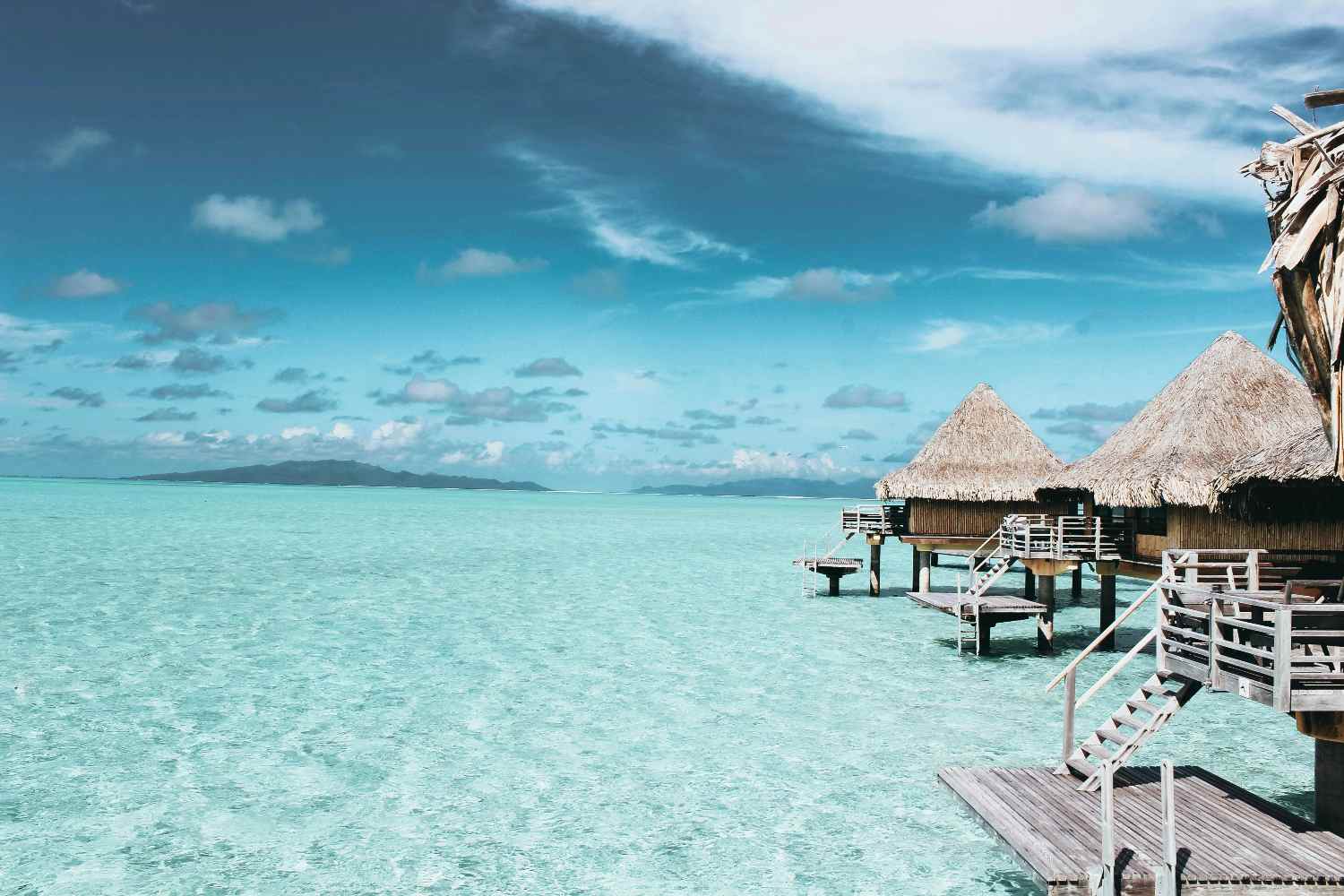
During the last edition of the United Nations Conference on the Oceans (UNOC)news has arrived that marks a turning point in the protection of marine ecosystems: the French Polynesia announced the Creation of the largest protected marine area planet.
A symbolic and concrete gesture together, which elevates this Pacific archipelago for example worldwide Environmental leadership. The protected area will extend on Almost 5 million square kilometersor on the entire exclusive economic area of the territory. To get an idea of the proportions, it is an extension superior to India and Argentina put togetherequal to about Two thirds of Australia.
Of these, 1.1 million square kilometers have already been classified as high or full protection areaswhere only sustainable activities such as the traditional fishingtheecotourism and the scientific research. By 2026the government has undertaken to expand these highly protected areas of others 500,000 km².
The restrictions planned include the Absolute prohibition of deep train fishing, underwater mines and the use of fish aggregation devices (FAD). This approach aims to safeguard a single marine biodiversity, which includes healthy coral reef, whale, sharks, sea turtles And many other species.
Over 90% of citizens support the expansion of protected marine areas
The president of French Polynesia, Moetai Brotherson, underlined how this gesture represents the natural evolution of a millennial management of marine resources, founded on ancestral knowledge. But now the goal is also to adapt to International standard of the IUCCNwhich require clear commitments in terms of conservation, resources and monitoring.
The support of the population was decisive: a survey conducted in 2025 showed that over 90% of citizens supports the expansion of protected marine areasrecognizing in them a profound cultural value.
Despite the enthusiasm, it is clear that to achieve the global objective of 30% of protected oceans by 2030a collective commitment will be needed. At the moment, only 8.3% of the oceans It is protected. However, thanks to the commitment of small islandslike French Polynesia and Samoa, the route is being traced towards a real global ocean sustainability.
