
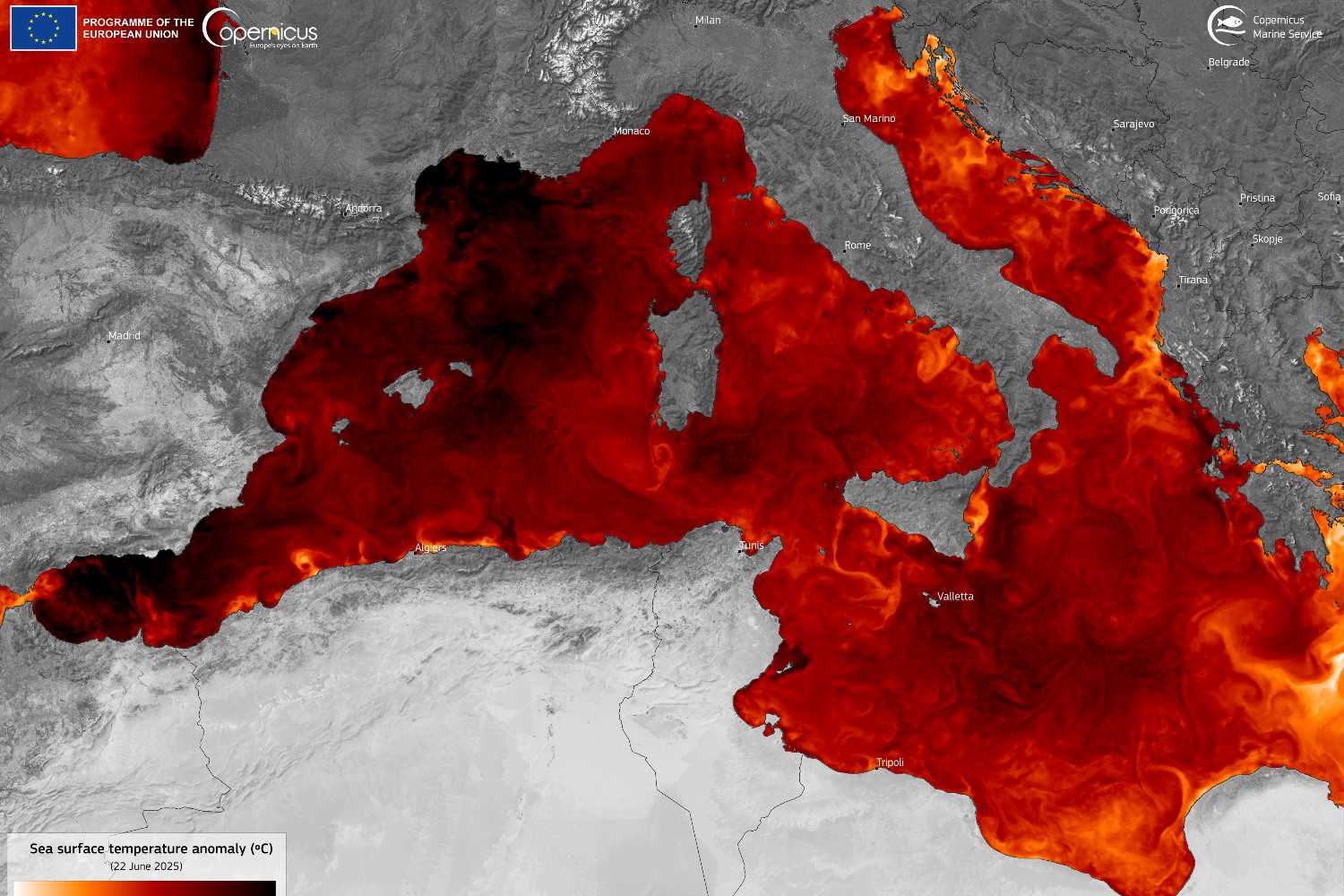
The summer 2025 began with a Extreme climatic event which involves not only the atmosphere, but also the Mediterranean Seanow warmer than you would expect also at the end of July. The data processed by the European Service Copernicus show thermal anomalies over +5 ° C compared to the seasonal average in vast areas of the western basin, in particular between Sardinia, Balearic and Tyrrhenian Sea. This situation is part of what experts define Wave of marine heat or Marine Heatwavea phenomenon aggravated by climate change.
The consequences
The consequences of this marine overheating are not negligible. First of all, excess heat moves to the atmosphere, contributing toIncrease in temperatures also on the mainland. This involves an increase in therelative humidityespecially in coastal areas and large cities, bringing with it tropical nights (minimum temperatures above 20 ° C) and conditions of intense heat.
But it is not only the climate that is affected. The marine ecosystems they are put under pressure from these conditions. The increase in water temperature favors phenomena such as the algal floweringthe Moria of Bentonian fauna and the proliferation of Invasive alien speciesincluding typical tropical waters. In the Adriatic, as already happened in the past, there is the risk of mucilagea gelatinous substance that can make many bathing areas impractical.
Even from the meteorological point of view, a unstable season: hot waters act as a energy tankfavoring the formation of violent thunderstorms, hailstorm And Downburstespecially in Northern Italy and in the internal areas of the Center-South. The Mediterranean, in fact, can become “fuel” for intense phenomena, especially if stimulated by Atlantic disturbances.
Finally, the general picture represents a clear Climate alarm bell. The anomalous sea temperatures I am not an isolated fact, but the light of an increasingly unstable system. If there are no adaptation strategies and a drastic reduction of emissions, the risk is to assist with growing frequency to increasingly extreme and devastating events, both for the environment and for our daily lives.
