
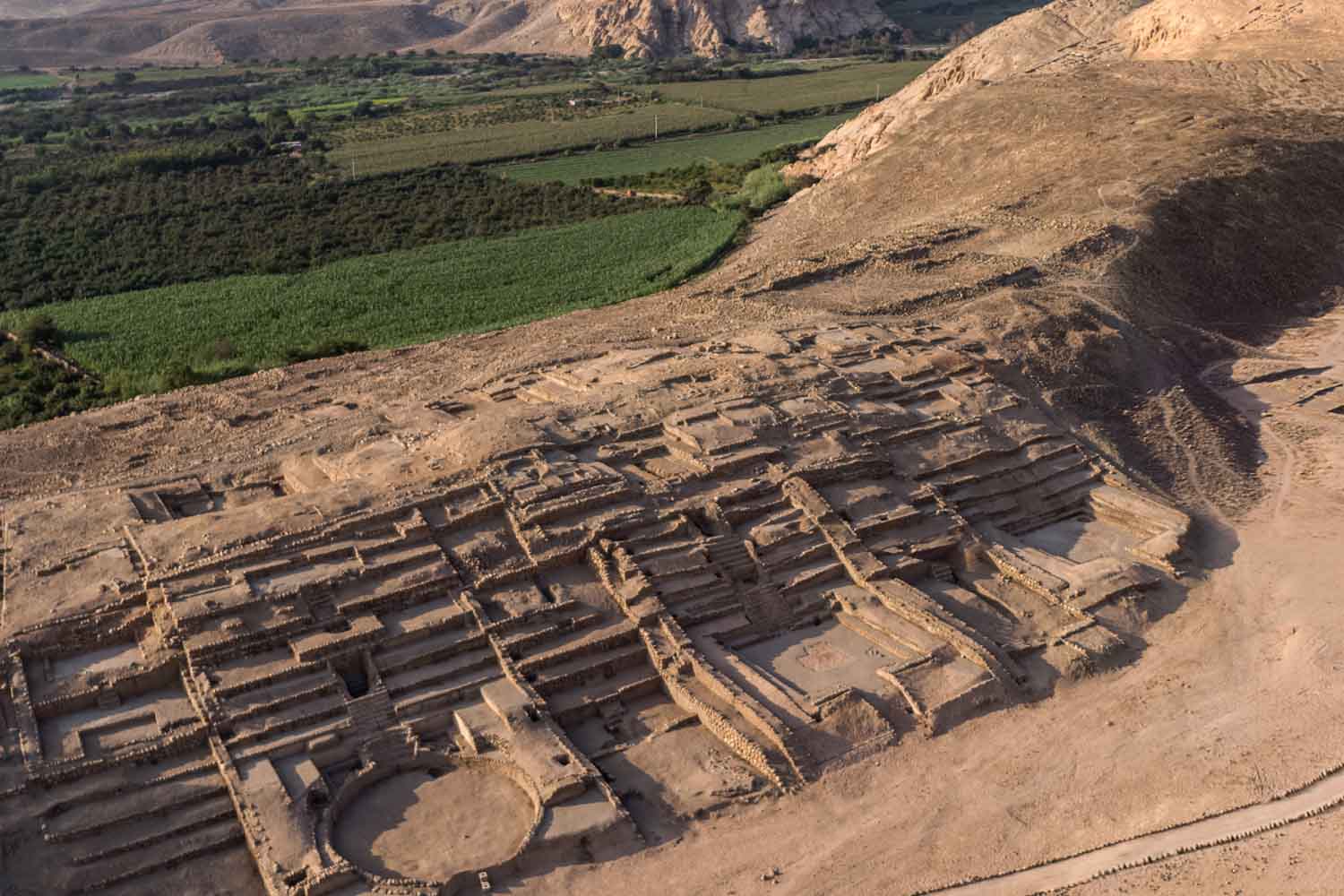
In the heart of the North of Perua 600 meters above sea levelamong the arid hills of the province of Barrancaan ancient city has re -emerged from the ground. Is called Peñichas at least 3,500 yearsand is destined to change forever the way we look at the history of American civilizations.
It is not just an agglomeration of stone and mud, but a Urban center designed with extreme intelligencebuilt in a strategic position to resist floods and climatic instability. The announcement is the archaeologist Ruth Shadydirector of the archaeological area of Caral and scholar of what is considered the oldest civilization of the Americasflourished beyond 5,000 years ago.
Not just CAL
From the archaeological excavations they emerged Stone and mud structuresincluding a construction circular placed on a slope. But the most narcotic discovery comes from Aerial filming made with drones: around the main structure, other buildings have been identified according to a Urban and coherent urban design.
All this shows that Peñic It was not built at random: the city came planned to face extreme climatic eventspositioned at the top precisely to avoid the risk of floods and thought how commercial hub crucial.
His birth, according to archaeologists, would coincide with one Decline phase of Caral’s civilizationtied to deep climate change. Peñico would be the evolutionary fruit: an urban and economic rebirth based on the extraction and sale of thehematitemineral used for ritual and artisan purposes.
The city, therefore, represents a Extraordinary example of human adaptation to the environmenta case ante litteram of ecological resilience And sustainable organization.
A millennial civilization between the coast and the Andes
Located between the coastal strip of the Pacific and the first hits of the Ande PeruvianPeñico was a flourishing center in a coeval era to the great civilizations of theAncient Egypt and of the Mesopotamia. An autonomous reality, capable of survive climatic crises And regenerate through new urban and productive urban strategies.
The archaeological site was officially open to the public on 3 July 2025and adds to the other places symbol of Caral’s civilization: the Sacred City of Caralthe marine village of Áspero and the agricultural and coastal settlement of Vichama. Peñico thus enters the network of sites that can be visited which testify to the complexity and ecological foresight of the ancient Andean cultures.
Today, this new stage in Peruvian history represents An ancient but very current lesson: already millennia ago, humanity knew design with naturenot against it.
