
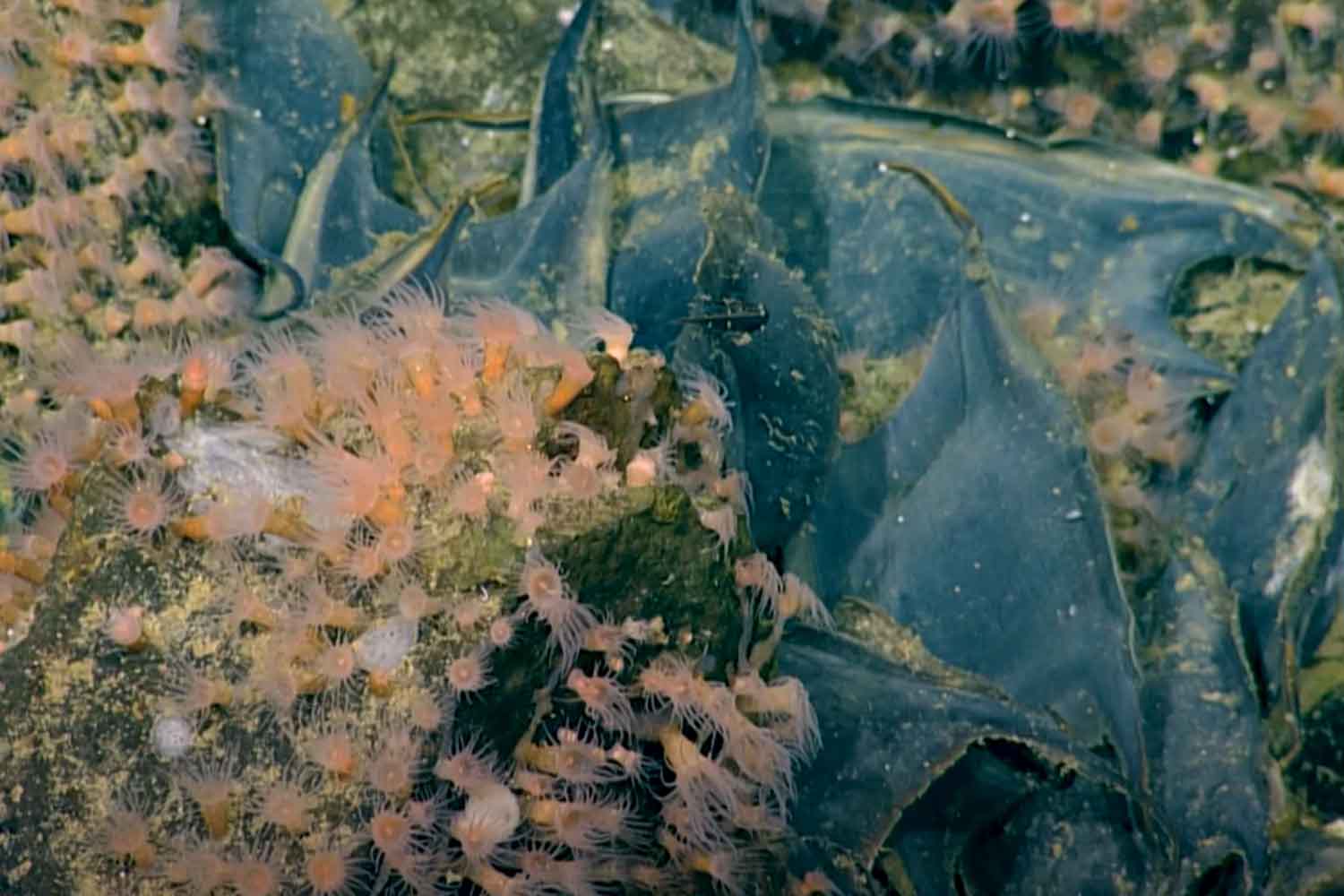
A team of marine biologists discovered something extraordinary during an expedition near an underwater volcano: almost one million giant eggseach long approximately 50 centimetershave been identified near a geothermal area. This exceptional discovery is arousing great enthusiasm in the international scientific community, since The eggs do not correspond to any known marine species. The possibility that it is a New form of life It represents an important turning point in the study of ocean biodiversity.
An extreme and mysterious habitat
The area where the eggs were found is located near one submerged active volcanic areaan extreme but extraordinarily fertile environment from a biological point of view. The heat released by the volcanic mouths, combined with the minerals released in the water, creates Unique conditions that attract rare marine organisms. It is precisely in this ecological niche that researchers have identified The huge eggsthanks to the help of underwater robots. The eggs were concentrated en masse and seemed to belong to one species completely unknown to science.
The close observation left the experts forbid: none of the known forms of marine life has eggs of this dimensions. It could be a large marine reptile still unknown or a huge fish adapted to live in extreme conditions. To date, None of the eggs has been associated with an identifiable animal in existing biological registers.
Genetic analyzes
To try to clarify the origin of these anomalous eggs, researchers are conducting Detailed genetic analysis on some specimens taken. The first results suggest that they could belong to one species that lives exclusively in high pressure and temperature oceanic environmentsclose to the submerged volcanoes. The eggs, half a meter long, exceed any other known marine egg And they seem designed to ensure survival in extreme habitats.
According to biologists, the enormous size of the eggs indicates one reproductive strategy different from those notes: the mother creature probably deposits Few very large eggsinvesting many resources in the growth of offspring capable of resisting the destructive agents present around the volcano.
A discovery that opens new paths in the study of deep marine life
This discovery, called “historical” by scientists, could radically change Our understanding of reproductive strategies in the underwater world. The new information collected show that The oceans still hold unknown species that populate places that are difficult to access and not very explored. The researchers now intend to plan New scientific missions To withdraw further samples, monitor the development of eggs and deepen the genetic study of the environment in which they are located.
In particular, the interest focuses on relationship between the submarine volcanic activity and marine biodiversity. The heat of the subsoil generates microhabitat that escape the classic logic of known marine ecosystems. Understanding how life adapts to these extreme environments could also have important implications for astrobiology and the research of extraterrestrial life.
The next step will consist of deeper explorations and systematic of the areas around the volcano, to better understand The complexity of the submarine ecosystem in which the eggs were laid. These extreme environments offer the opportunity to discover New forms of life and unpublished biological adaptations. Scientists are convinced that our planet still keep unexplored corners rich in surprises And that understanding life in the abysses is only at the beginning.
