
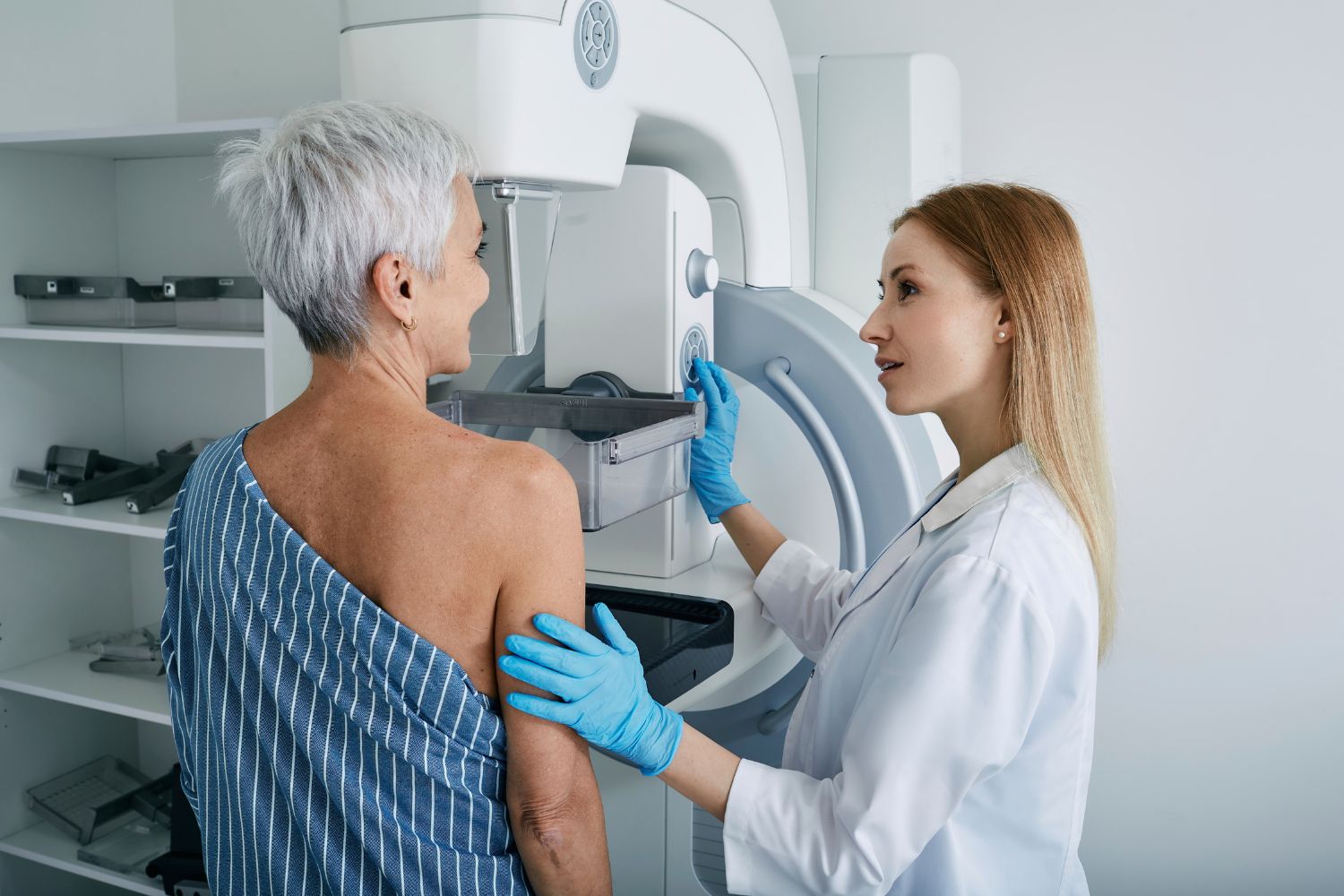
Also theArtificial intelligence against breast cancer: a new model of IA developed by Microsoft In collaboration with theWashington University (USA) and other international institutions, proved to be able to diagnose it with one precision never reached before.
The research, led byAi For Good Lab Of Microsoftevaluated if artificial intelligence could help make it clearer, more accurate and reliable it breast cancer screeninga disease that still affects many people, remaining the Most common tumor among women all over the world.
Breast cancer and today’s challenges
According to the Italian Association of Medical Oncology (AIOM) In women, in fact, 59.3% of all the new tumors scheduled for 2024 consisted of 5 more frequent types, of which the first is still the breast with 53,060 cases (followed by colorectal with 21,230 cases, lung with 12,940, endometrium with 8,650, and thyroid with 8,320 cases).
But – and this is excellent news – it continually increases the Survival at five years from the diagnosis, which, As reported by the Italian Association of Cancer Research (AIRC)it is 88%, one of the highest percentages recorded in malignant tumors.
In Italy, as in many European countries, they are planned programs of screeningfree in the age group considered more at risk (50-69 years), but still recommended to all women, especially after 40 years.
These consist of one Annual mammographyeven in the absence of risk factors (such as a diagnosis of breast cancer in a very close relative like a mother or sister), one often associated with an ‘breast ultrasound.
Screening has Mortality significantly reduced due to the pathology, thanks to the increase in early diagnoses, revealing the key tool for fighting this plague.
However, in very dense breasts, cancer can escape screening, and the condition is in itself a breast cancer risk factorso much so that, in case of doubt, often the magnetic resonance imaginga much more sensitive technique. So sensitive, however, as to present many a few False positivewith significant increase in anxiety for unnecessary patients and biopsies.
Artificial intelligence in the fight against breast cancer
In 2023, one research He had identified how to understand if breast cancer could spread to other parts of the body, thanks to new technologies based precisely on the AI.
The model of IA proposed today, called FCDD (Fully Convolutional Data Description), proved to be capable of identify anomalies in magnetic resonances. In practice, instead of trying to learn the appearance of every possible tumor, the model learns the appearance of normal breast scans and reports any anomaly.

This approach is Particularly effective in real screening contexts – explain the researchers – where the tumor is rare and the anomalies are very varied. On a set of data of over 9,700 breast magnetic resonance tests, the model has been tested in both high and low prevalence scenarios, including realistic screening populations in which only 1.85% of the scans had a tumor.
FCDD has exceeded traditional IA models in identifying neoplasms, drastically reducing false positives. In contexts similar to screening, he instead reached twice the positive predictive value of the standard models and has reduced false alarms of over 25%.
(…) Unlike most artificial intelligence models – writes Microsoft – FCDD is not limited to providing a “yes” or a “no”, but generates heat maps which visually highlight the suspected position of the tumor in the two -dimensional projection of magnetic resonance imaging. These explanatory maps have confirmed the retrospective annotations of expert radiologists with one precision of 92% (AUC Pixel for Pixel), far overcoming other models
Furthermore – fundamental aspect for each scientific tool – the model has maintained high performance without the need for re -training, both on an external data set available to the public and on an independent interior, suggesting a strong potential for a wider clinical adoption.
This model is more than a simple technical result. It represents a step forward towards the use of artificial intelligence in clinical work flows, providing support for triage, reducing the time dedicated to normal cases and concentrating the attention of radiologists where it is more important. By improving the specificity with high sensitivity thresholds (95-97%), the model could help reduce unnecessary calls and biopsies, breeding the emotional and financial load of patients
But it’s not all over yet, there is still a lot of work to do: as researchers specify, in fact, the model must be prospectively tested on wider and diverse clinical populations.
We are very optimistic about the potential of this new artificial intelligence model, not only for its greater accuracy compared to other models in the identification of the cancerous regions, but also for its ability to do it using only a minimum amount of image data from each exam – concludes Savannah Partridge, main author of the work – it is important to underline that this artificial intelligence tool can be applied to abbreviated tests of magnetic resonance Mammaria with a contrast medium, as well as to complete diagnostic protocols, which could also help reduce both scan times and interpretation times. We are excited to undertake the next steps to evaluate their usefulness in improving the performance of radiologists and clinical work flows
The code and the methodology have been made accessible to the research community, available to this linkand the work was published on Radiology.
Sources: Microsoft.com / Radiology
