
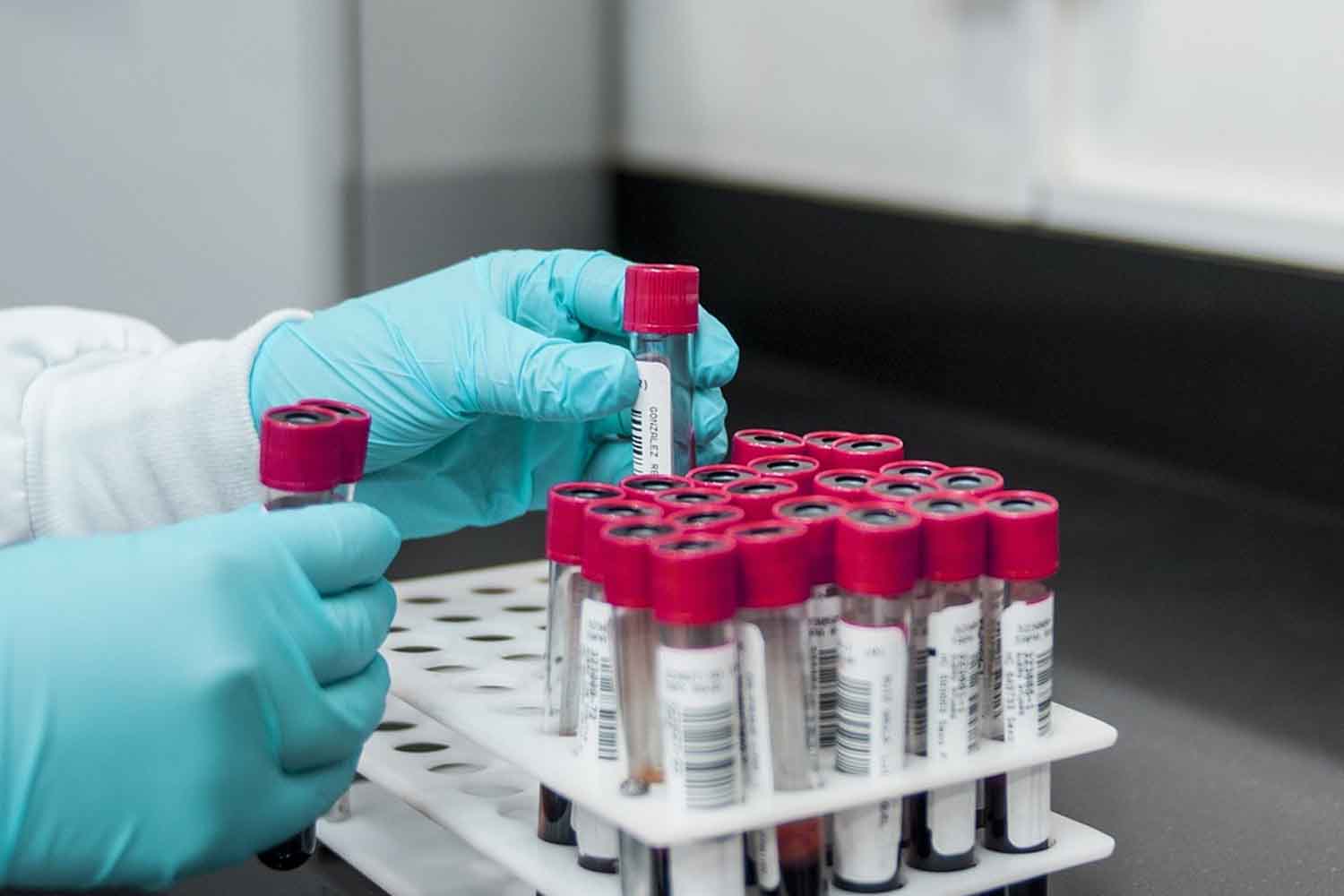
Identifying cancer when it is still invisible: it is no longer science fiction, but a concrete possibility. A new study conducted by researchers from the Johns Hopkins University School of Medicine suggests that, thanks to an innovative multicancro blood test, it is possible to detect tumor mutations in the blood up to three years before the appearance of the first symptoms. A discovery that could radically transform the way we face diagnosis and oncological prevention.
The key to the research is the use of a MCED (Multicancer Early Detection), a new generation test designed to identify changes of changed DNA changed by tumors in the bloodstream, even when these are still microscopic.
The study was based on the samples collected as part of the ARIC project (Atherosclerosis Risk in Communities), a cardiovascular investigation that began in the 80s in the United States. Analyzing the blood samples of 26 people who had developed a tumor within six months from the withdrawal and comparing them with those of 26 healthy subjects, the researchers applied sophisticated sophisticated techniques of sequencing the DNA to the highest sensitivity.
Initially, the test identified tumor signals in 8 of the 26 sick subjects. But what really surprised the scientists was to discover that in 4 of these 8 cases, the same mutations were already present in samples taken over three years before the official diagnosis. A figure that changes the rules of the game in the fight against cancer, as Yuxuan Wang, the main author of the study and professor of oncology at Johns Hopkins: explained:
Three years in advance they mean having precious time to intervene, when tumors are less advanced and more easily cared for.
Detect the tumor DNA: a needle in the straw made visible by new technologies
The tumors, even in the initial stages, release small quantities of free tumor DNA (CTDNA) in the blood. Training it is a colossal challenge: it is like looking for a needle in the haystack, where the entire human genome is straw and fragment changed the needle.
Thanks to technological progress, today it is possible to perform extremely detailed analyzes also on tiny genetic traces. However, the challenge remains sensitivity: how early and with what precision can we detect the presence of a tumor? This is the question that the new generation of test mced answers.
Unlike traditional diagnostic tools, which focus on a single type of cancer (such as breast mammography), multicancro tests are able to identify dozens of different tumors with a single blood sample.
According to Bert Vogelstein, co-director of the Ludwig Center and co-author of the study, “this research fixes new sensitivity parameters for MCED tests and demonstrates their potential in the early diagnosis of cancer”.
From idea to clinical practice
Although the Johns Hopkins test represents a huge step forward, it is not the only one in the development phase. Different universities and research centers are exploring similar approaches:
However, the integration of these tests in mass screening programs remains a challenge, especially when it comes to testing dozens of tumor types with a single exam.
Despite this, the ideal scenario is now on the horizon: a simple annual blood exam could become the new standard, providing a timely alarm on the presence of cancer cells before the symptoms are manifested, as Nickolas Papadopoulos, professor of oncology and co-author of the study observes:
Identifying tumors with years early compared to clinical diagnosis can significantly improve the chances of healing, of course, remains to be established the correct clinical process to be followed in the event of a positive outcome.
The research was published in the magazine Cancer Discovery And it marks a fundamental step towards a future in which early oncological monitoring will become part of the health routine, opening the doors to a new paradigm in the fight against cancer.
Don’t you want to lose our news?
You may also be interested in:
