
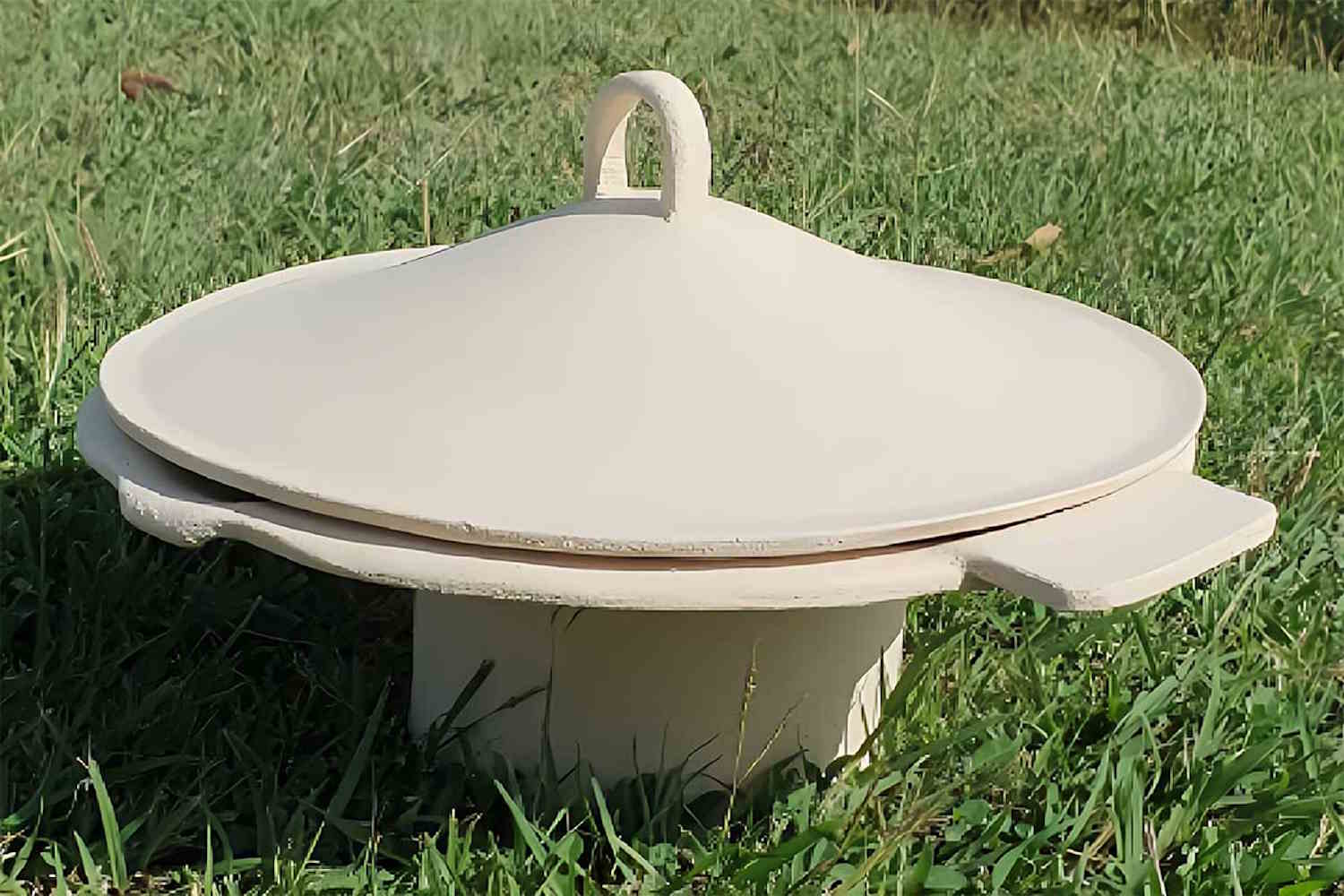
In Martinica, French overseas territory located in the Caribbean – where the sea is not lacking but drinking water yes, a French student created something that could really make the difference: a small terracotta device capable of transforming sea water into drinking water, without the need for electricity or complex technologies. A low-tech idea, simple but incredibly effective.
To conceive him was Tanguy Delaunay-Belleville, student at the École Supérieure d’Arts Appliqués de Bourgogne, who put together craftsmanship and ingenuity to respond to a real problem: the deficiency of water in the coastal and insular areas. The project has already obtained several awards, and is competing for the James Dyson Award 2025.
A system that works with the sun and local materials,
The operation is simple and does not need electric current or complex systems. The device is made up of two refractory ceramic containers and a conical -shaped lid. Just pour sea water into the first container and heat it with a source of natural heat, for example the sun.
The water evaporates, leaving behind salt and impurities. The steam rises, condenses on the lid and slips into the second container, where it is collected in the form of clean and safe water to drink. In practice, it is a solar distiller at an almost zero cost.
Tanguy developed the first 1 -liter model, starting from simple sketches, cardboard models and 3D drawings. Then, thanks to a semi-industrial molding technique, he obtained a large-scale replicable prototype. But that’s not all: the production involves local artisans, ceramists and pots, enhancing traditional knowledge and creating work in the area.
A project that likes
World Wide Water convinced not only the jurors of the competitions, but also the lenders. The project won the French Tech Trech Trech Martinique, obtaining a subsidy for sustainable innovation, and has already collected more than 100,000 euros in funds.
Tanguy now looks for a partner to improve the technical and commercial aspect and bring this invention where there is more need. Countries like India, already affected by serious water crises, have shown concrete interest.
The beauty is that you don’t need advanced technology. It only serves sun, sea water and a little terracotta. This makes the device perfect for isolated contexts, poor or affected by water emergencies. It is not science fiction: it is already reality.
Don’t you want to lose our news?
You may also be interested in:
