
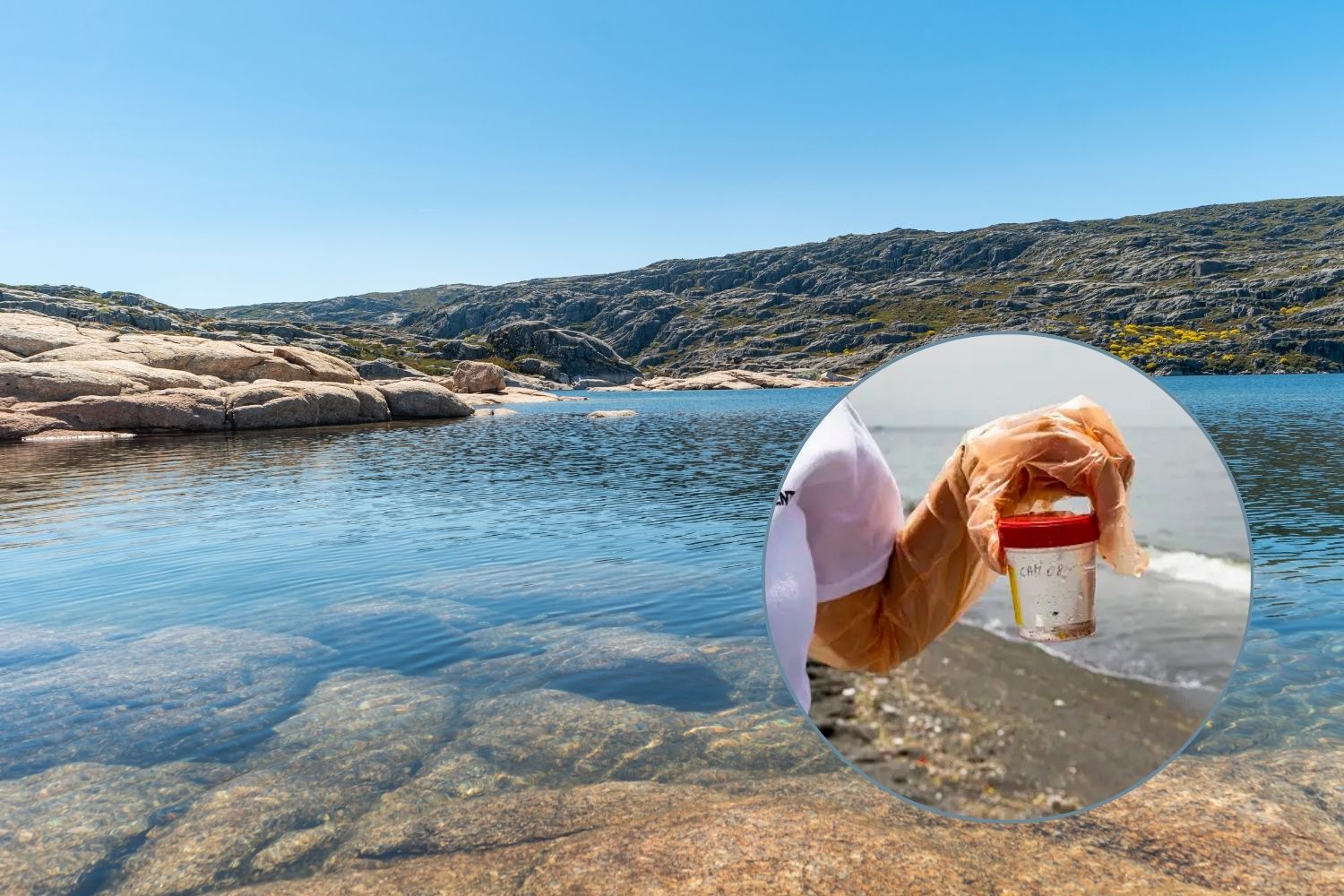
Pollution, maladepuration and climatic crisis continue to put the sea and Italian lakes at risk. It is the alarm launched by Legambiente with the budget of the 2025 summer campaigns of Goletta Verde and Goletta dei Laghi: out of 388 samples made in 19 regions, 34% was beyond the legal limits.
For coastal waters, 35% of the points analyzed by Goletta Verde were polluted or highly polluted (on average one every 80 kilometers of coast). In the lakes, the golet of the lakes detected values beyond the limits in 30% of the samples.
Mouths of rivers and canals: the most critical points
The mouths remain the weak link: 54% of the samples taken near sea or lake opportunities have levels of pollution beyond the norm. On the contrary, in open waters the percentage of criticality drops to 15%. But the data that worries most is that 56% of the monitored mouths, not controlled by the authorities and therefore not bathing, are located near free beaches. In Italy, over 220 km of sandy coast are not subjected to official monitoring.
Added to this is the fact that the Mediterranean records record temperatures: between June and July 2025 the average of surface waters has touched 25.4 ° C, the highest since 2016. An increase of half a degree compared to the average of the decade, which endangers biodiversity and feeds extreme weather events.
We talked about it here: the Mediterranean is a broth: thermal shock in Sardinia (with + 5 ° C beyond the seasonal average)
Sea and mouth
Out of 263 championship points along the over 7,500 km of Italian Costa, 8% were judged polluted and 27% heavily polluted. The main problems had the mouths of the rivers, where 58% of the analyzes (69 out of 119) had a negative result, being polluted (15) or highly polluted (54).
In addition, 71% of the mouths monitored by Goldo Green (85 out of 119) correspond to the coast of coast not championship by the competent authorities and of these 47 were beyond the limits of the law.
An anomaly – explains Andrea Minutolo, scientific manager of Legambiente – who is often justified by the competent authorities with the fact that the mouths of the rivers are not bathing and that it is taken for granted that they are polluted. This is the real difference between the samples performed by the competent authorities to establish the bathing of a stretch of coast, and those performed by Legambiente who aim to identify the critical issues due to a poor or absent purification that threatens the quality of the sea.
Lakes
44 The lakes championships from Goletta dei Laghi in 11 regions that led to the withdrawal of 125 water samples subjected to microbiological analysis. 30% of the samples (38 out of 125) was beyond the legal limits. Specifically 9 were the samples deemed polluted and 29 those strongly polluted. In addition to the microbiological analyzes, physical chemical analyzes were also performed during the goal of the 2025 lakes on 7 lakes:
All within the limits the conduct analyzes that concerned the values of nitrogen, nitrites, nitrates, phosphorus, chlorides and sulphates in the Calabrian lakes and which are all in the range of higher quality classes; Nitrogen and phosphorus in Lake Trentino. In addition, attention was paid again to the microplastics in the lakes thanks to the national stage carried out on Lake Orta.
The maladepuration knot
To date, in Italy, 4.4%of the polluting load generated by more than 78 million equivalent inhabitants or is not connected (0.7%) or is treated with individual systems (for 3.7%). It is a load of almost 3 and a half million equivalent inhabitants that is not treated safely (with secondary or higher treatment systems).
To these are added the loads that flow to the treatment plants that are currently in the infringement procedure with respect to the requirements of the waste water directive which, from the easily available updates on the Mase website, amount to 855 agglomerations, relating to more than 26 million and 800 thousand equivalent inhabitants that correspond to 34% of the total load generated in Italy.
Let’s not forget – underlines Legambiente – that 4 infringement procedures weigh on Italy for failure to comply with the waste water directive (91/271/EEC). The last (2017/2181) is still being investigated, the first three have already resulted in the sentence of condemnation and in particular the first, dating back to 2004, has reached the pecuniary sanction. To date, according to the Court of Auditors, over 210 million euros have been paid only for the fine deriving from the first infringement procedure, while the judgment of the Court of Justice for the second infringement has reached March 2025 and the fine amounts to 10 million euros plus a penalty of over 13 and a half million every 6 months of delay for the implementation of the plants.
Legambiente’s appeal
The Association asks for a national plan for the protection of coastal and internal waters, with:
The good news
Among the positive notes: the sighting of dolphins during navigation to Maratea, the operation of the “tartodog” dog units in the search for marine turtle nests, educational activities aboard the golet and monitoring on microplastics in the lakes.
Legambiente’s message is clear: without a structural and timely intervention, the health of our waters and ecosystems that inhabit them will be increasingly compromised.
