
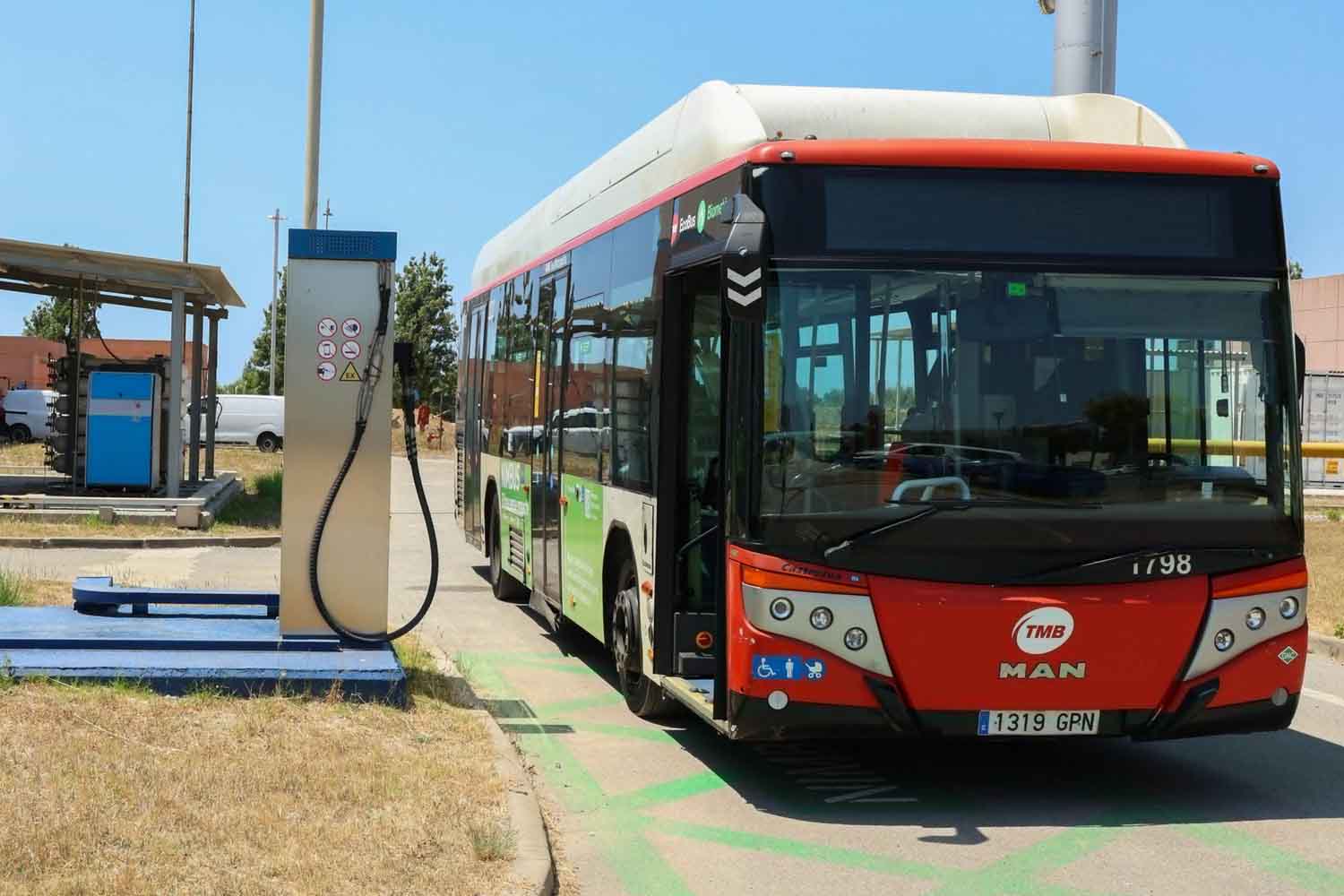
For a few months, along the V3 line of Barcelona, which connects the port to the Parc of the Castell de L’Oreneta, a very particular bus circulates: it works thanks to the biomethane produced by the city wastewater. After two years of experimentation, the vehicle officially entered service and represents an important step in the fight against urban pollution. According to data, the bus reduces CO₂ emissions by traditional methane vehicles, a fossil fuel still widespread in public transport.
This innovation is the result of the Nimbus project, started five years ago with the aim of making the most of the potential of the city’s wastewater. The initiative is supported by Veolia (company that manages the distribution of water in Barcelona), by Tmb (the public transport company), by the autonomous university of Barcelona and the European Life program, which finances projects related to the sustainable production of Biomethane.
How the Nimbus project works
The heart of the project is Baix Llobregat’s purification plant, located west of the city. Every day it takes about 400 thousand cubic meters of waste water, managing to regenerate over 95%. This purified water is then used for different purposes: agricultural and urban irrigation, street washing and, in periods of drought, even for the production of drinking water.
Residual sludge instead become agricultural fertilizer, but above all, during the fermentation process, about 500 cubic meters of biogas per hour are generated. A part of this gas is used to feed the same system, while the rest, since 2023, has been transformed into Biomethane intended for public transport.
Normally, only the methane is extracted from the biogas, separating it from the CO₂. The Barcelona plant, on the other hand, adopts a more advanced technology: the CO₂ is combined with hydrogen from renewable sources and in turn transformed into biomethane. In this way more energy is recovered and the environmental impact is further reduced.
It should be noted that the biomethane, although deriving from sewage waste, has no smell. Indeed, the researchers had to artificially add a odorous substance, similar to that of domestic methane, to make any gas leaks identifiable.
The future of Biomethane buses in Europe
Five years after starting, the Nimbus project is considered a success and now aims to extend the use of biomethane to 300 other methane buses of the city fleet, composed in total from 1,100 vehicles. The other vehicles are already electric and will continue to represent the main pillar of sustainable mobility, since more efficient and less expensive than Biomethane buses.
The idea is therefore not replacing electric buses, but avoiding scrapping the methane of scrapping early, prolonging their life thanks to a renewable and cleaner fuel. In particular, Biomethane buses will be intended for the longest peripheral areas and journeys, where electrical vehicles still have limitations.
The biomethane is also growing throughout Europe. In Stockholm it is already used by a large part of the buses, while city like Madrid and London have started pilot projects. In other countries it is mainly used for domestic heating. However, production still remains low compared to the natural gas needs. Just think that in Italy, in 2024, only 0.4 billion cubic meters of biomethane were produced, compared to a national consumption of almost 60 billion cubic meters of natural gas.
Presentm Els Principals Results of the Projectte #LifenimbusA Project Europeu Cofinançat Pel Program Life que transform Fangs de Depuradora en combustible Verd.
Aquest Autobús Pot Arribar in Recórrer Més de 14.000 km/an ambiomatà I, en consent, Reduir en 28 … pic.twitter.com/sz4ufcehzu
– Aigües de Barcelona (@aiguesbcnclient) June 19, 2025
Don’t you want to lose our news?
You may also be interested in:
