
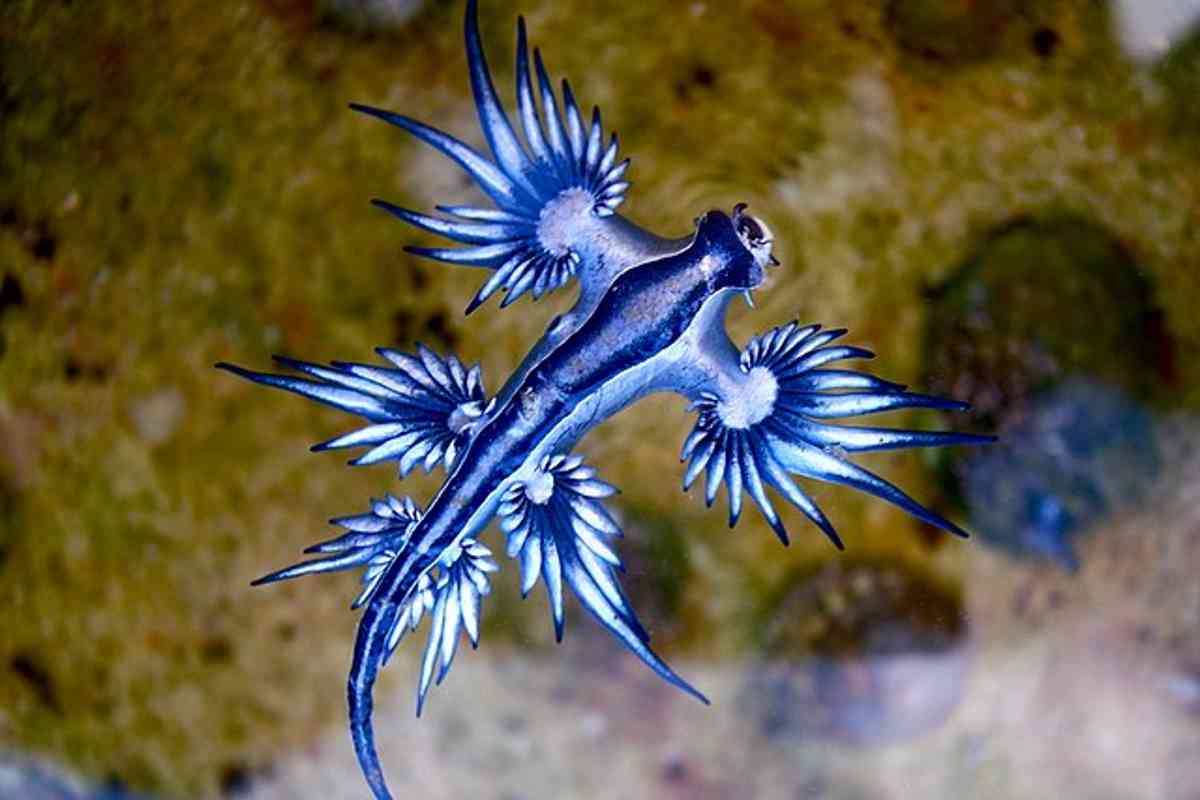
We have already told you about the “blue dragon” (Glaucus Atlanticus), a mollusk as fascinating as it is dangerous. Despite the harmless aspect, it is in fact poisonous: its toxicity remains active even after death and can cause nausea, vomiting, skin lesions and severe pain. For this, if you come across a specimen on the shore, it is essential to immediately notify the other swimmers and never touch it.
Well, in recent weeks the blue dragon has been spotted in different locations in Spain: from Playa de Santa Bárbara in Andalusia, where six specimens have appeared, up to Famara on the island of Lanzarote, with six other sightings. At Guardamar del Segura, near Alicante, the presence of the mollusk pushed the authorities to temporarily prohibit bathing and activate preventive surveillance. After new checks, the alert went down at yellow level and the beaches were reopened.
The mayor José Luis Sane invited citizens to the maximum caution: in the event of sighting it is necessary to immediately warn rescuers or authorities, while in the event of accidental contact, the affected area must be rinsed with salted water and then immerse it in hot water, going immediately to the emergency room or to the nearest sanitary center.
There was no lack of opposite opinions: on El Pais Biology professor at the University of Cadiz, Juan Lucas Cervera, said that closing entire beaches due to the presence of some specimens is excessive, because in fact the risk for human beings is limited. Better, however, be careful!
Sources: The Opinion de Malaga/AS
