
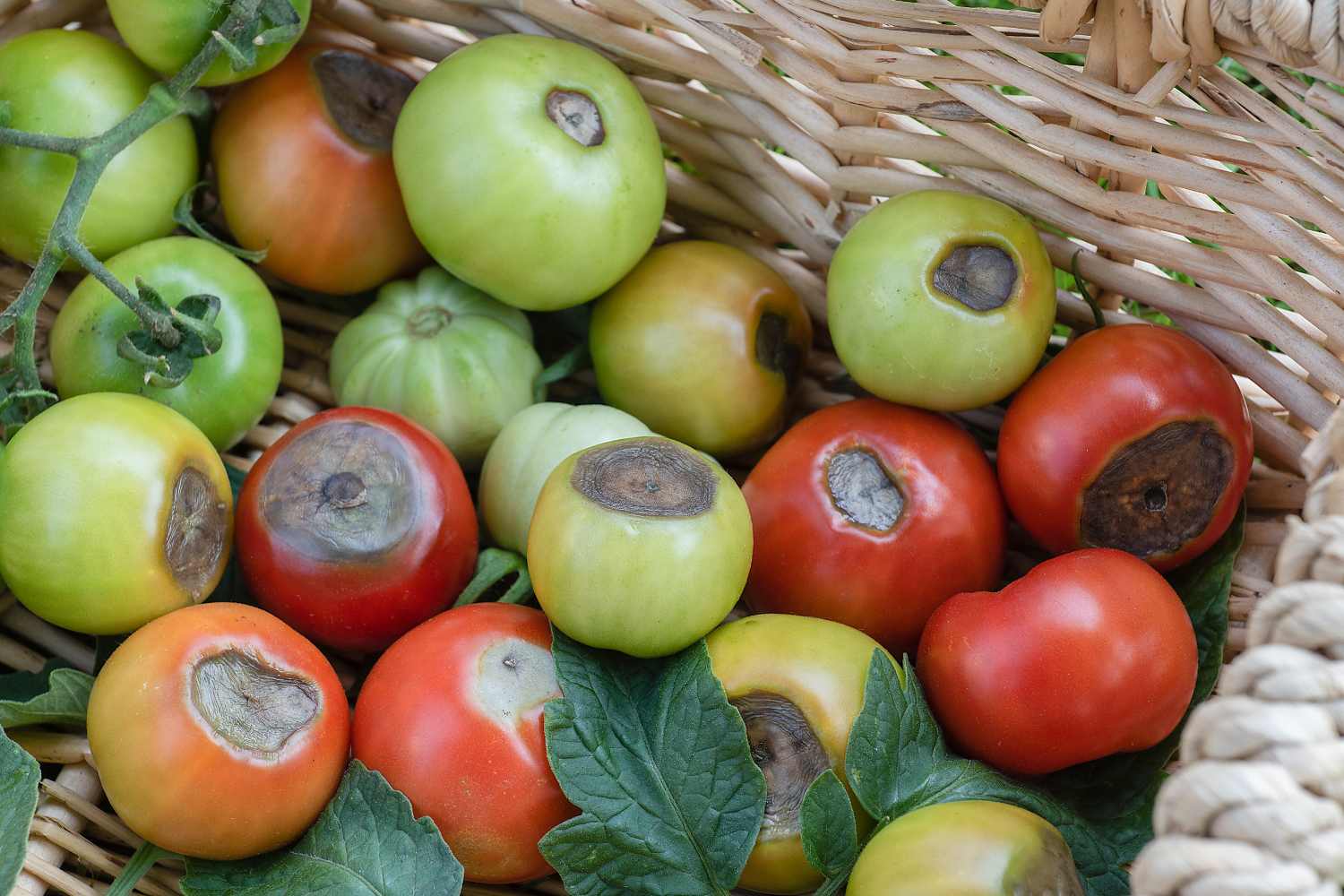
The apical rot of tomato is definitely one of the most frequent problems in Italian gardens, a problem that occurs with particular intensity during the summer months. A condition, known popularly as a “black ass”, which is not caused by parasites and pathogens, but by a physiopathy, or a physiological alteration of the plant caused by both environmental and nutritional factors.
The most evident manifestation of the disorder consists in the appearance of a necrotic lesion in the distal part of the fruit, the one opposite to the petiole: the area initially affected assumes an opaque appearance, and then necroctize and become intense black color. The affected area becomes progressively depressed and leathery, making the tomato that cannot be marketed and unsuitable for consumption.
The deep causes of the problem
Understanding the causes of apical rot is fundamental to set effective preventive strategies.
First of all, the lack of football. Calcium is an element that in the tomato plant is transported together with the water in the evapotranspirative flow, playing a very important role in the formation of cell walls and in the maintenance of the structural integrity of the vegetable tissues. If calcium is missing, the tomato suffers.
The paradox that often confuses the Ortolani is that the deficiency of calcium rarely depends on its actual absence in the ground, because generally the calcium element is present in the ground, but not always available: the availability of this element depends closely on the conditions of humidity of the substrate and the capacity of the roots to absorb it effectively.
Water stress represents the main trigger factor. When the plant deals with a period of water deficiency, it implements survival mechanisms that favor organs equipped with stoma, mainly the leaves, at the expense of the fruits, which, being without stoma and therefore of breathatory activities, succumb. The mechanism explains why the leaves appear healthy while the fruits show apical necrosis.
More sensitive varieties and predisposing conditions
Not all tomato cultivars show the same susceptibility to apical rot. The most affected tomatoes are the elongated ones, such as the San Marzano, particularly appreciated for the production of preserves and peeled. Even the heart varieties and small tomatoes have greater vulnerability than the smooth round varieties of medium-large size.
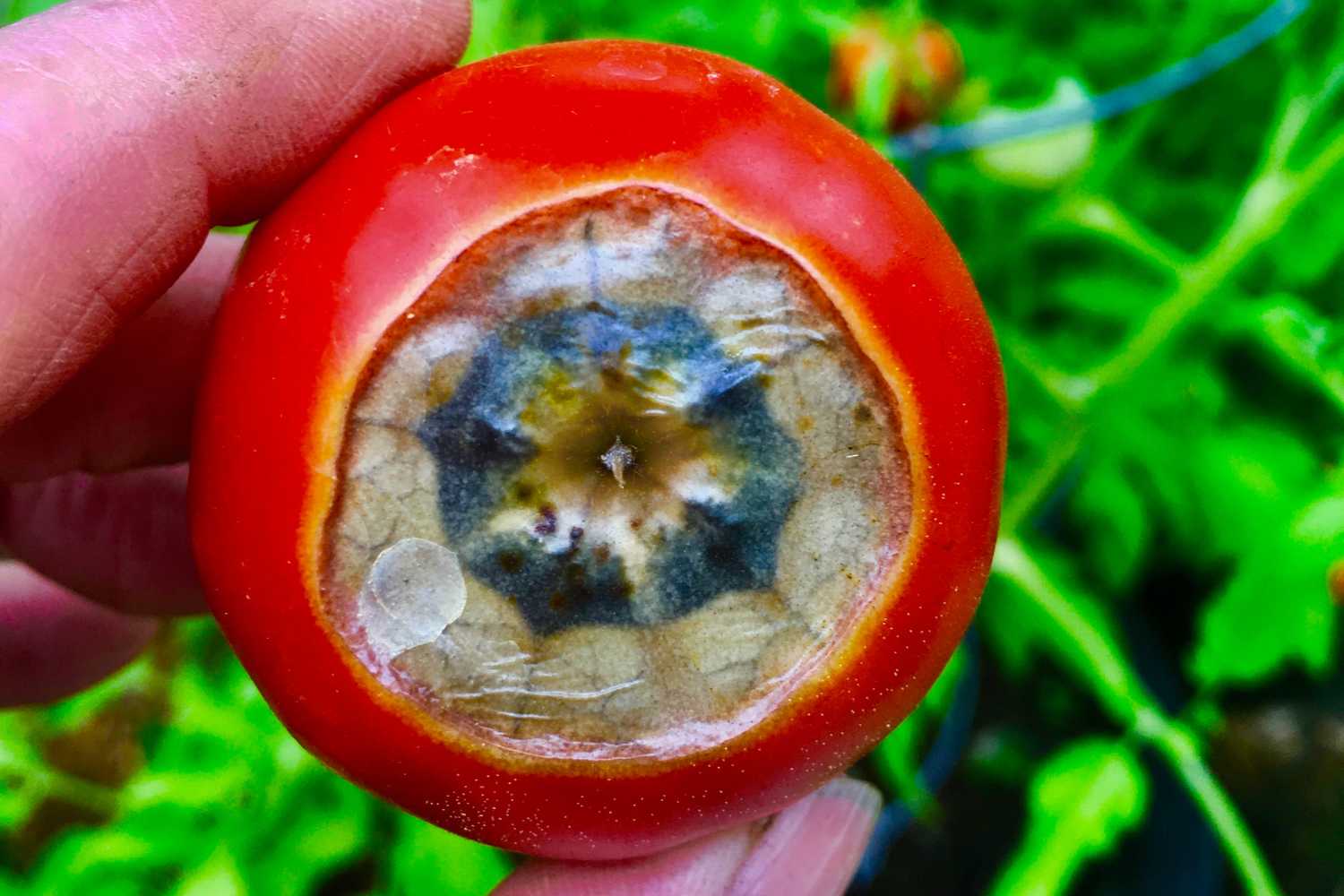
As mentioned, environmental conditions play a decisive role in the onset of physiopathy. The environmental conditions that favor rot are high temperature and low atmospheric humidity: that’s why during the months of June and July, when vegetative growth reaches its peak and daytime temperatures are high, the risk increases considerably.
Preventive strategies and crop management
The prevention of apical rot requires an integrated approach that considers different aspects of cultivation. As previously underlined, irrigation represents the key factor: it must be regular and constant, without it being any alternation between periods of drought and excessive water supply. The principle is very simple: irrigate little and often.
To solve the problem, you could consider the implementation of a drop irrigation system, which will allow optimal control of the water supply, ensuring constant humidity of the soil without creating the usual and harmful stagnation.
Also mulching is a good preventive method, given that it will contribute to keeping the humidity of the soil more stable, reducing on one side the evaporation and protecting the radical apparatus from excessive temperatures on the other.
As for the management of fertilization, particular attention will be needed: excessive fertilization could in fact give problems to the plant, in particular in relation to nitrogen and potassium. The excess of nitrogen would stimulate too vigorous vegetative growth, while potassium could interfere directly with the absorption of calcium, creating ionic antagonism phenomena (Ionian antagonism is a case that occurs when the excessive presence of an ion – in this case, potassium – makes it difficult or prevents the plant from absorbing another ion – even if the latter is present in the ground).
Healing interventions and football additions
When the apical rot is manifested on the first fruits, it is still possible to safeguard the rest of the harvest through targeted interventions, such as a timely administration of calcium in rapidly assimilable forms, action that can correct nutritional imbalance.
To treat the apical rot of tomato we can produce an easy calcium supplement in the house for plants, which provides for the following:
Systemic approach and good practices
The effective management of apical rot requires an overview that considers the interaction between plant, soil and environment.
We start from the ground, the preparation of which must provide for the well -decomposed organic substance, which will improve the soil structure and its ability to retain humidity without creating stagnation.
Do not underestimate the importance of the shadow: during the most critical periods, a shaded position of the plants in the hottest hours will be able to reduce excessive breathability stress. This practice, combined with regular irrigations in the early hours of the morning or in the evening, will help maintain an optimal water balance.
Last advice: remember not to immediately remove the fruits affected by the apical rot. Leaving them on the plant until complete maturation will allow you to convey the physiopathy on the already compromised fruits, protecting those in formation.
Don’t you want to lose our news?
