
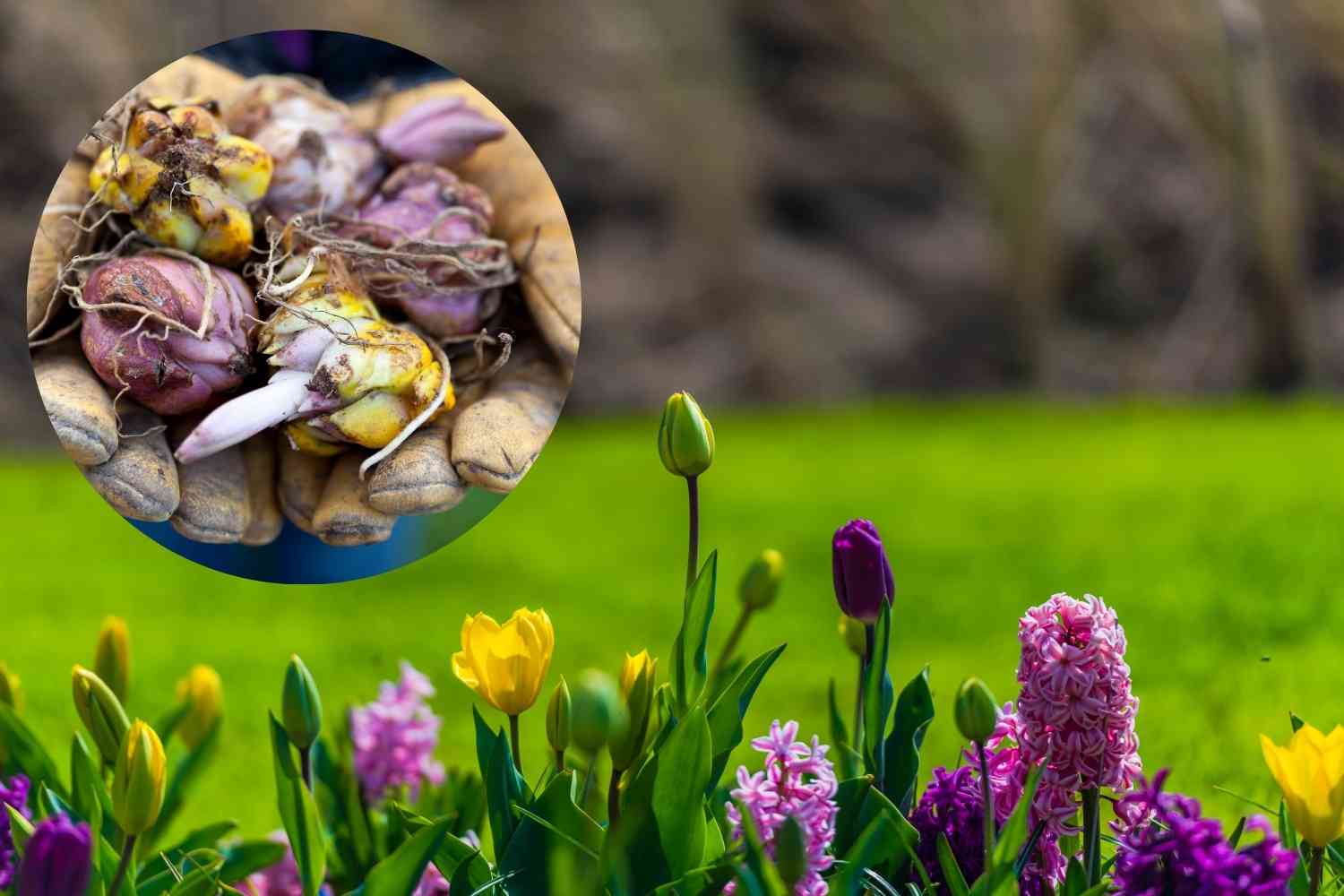
The arrival of autumn marks a crucial moment for gardening enthusiasts: it is the ideal time to plant spring flowering bulbs. In September nurseries, florists and gardening centers are filled with a wide selection of bulbs, ready to be buried in September, a perfect opportunity to prepare for spectacular blooms which, depending on the species, can last from two to four months. The advantage of investing in these bulbs is twofold: on the one hand the low cost and simplicity of the plantation, on the other the abundance of the results in terms of flowering.
The spring flowering bulbs represent a good choice for those who want to start cultivating plants without too much difficulty, an excellent opportunity, for example, to bring children closer to gardening: they allow them to teach them the foundations of cultivation and allow you to understand the importance of patience, since between the planting of the bulbs and flowering, several months pass, during which it will be necessary to wait and attention.
Another reason why the spring bulbs are so appreciated is versatility: they can be successfully cultivated in the garden, in pots on the balcony or on the terrace. They are suitable for any climatic area, from the coasts to the mountains, while flowering at different times according to local temperatures. The excellent adaptation capacity makes them an excellent choice for anyone, regardless of the experience or availability of green spaces.
Which bulbs to plant now in September?
Here are some bulbs to consider now, some simpler, others more demanding. Planting them in September, you will give them the right time to develop strong roots, so as to ensure abundant blooms:
-
Crocus – Ideal for very early blooms, even in winter.
-
Bucaneve (Galanthus) – will draw light and delicacy on the coldest days.
-
Muscari – Perfumed and capable of naturalizing, with small blue/purple bunches.
-
Narcisi – Classics of the spring style, with varieties ranging from white to intense yellow.
-
Tulipans – Botanical or hybrid species; The former require less care, the others make more but are more delicate.
-
Giacinti – Very fragrant, excellent in pot or flower bed, but after flowering they must be treated with care.
-
Anemons – they give a very nice scenic effect, especially if planted in groups.
-
SCLLA – Perfect under trees or caducphy shrubs, it likes little shadow and well -drained soil.
-
Fritillary – imposing, with particular flowers, for those who want something less ordinary.
The bulbs are substantially divided into two large categories.
What is the right time to plant the bulbs?
Timing is a fundamental factor to ensure the success of the bulbs plantation. Although the bulbs already contain all the resources necessary to flourish, they need to develop a robust radical apparatus to absorb water and nutrients from the ground. For this reason, you will have to plant them at the right time, which varies according to the different geographical areas of Italy.
In the Alpine areas and on the high Apennines, the optimal period to plant the bulbs goes from 10 to 30 September, while in the Po Valley and in the areas of the medium Apennines it is preferable to wait until September 20, continuing until 20 October.
In the southern regions, especially in the internal areas, the best time is at the beginning of October, with an interval that extends throughout the month. Finally, in coastal areas, it is recommended to plant bulbs between mid -October and mid -November.
It is particularly important to give priority to the bulbs that bloom in winter, such as Bucaneve and Croci, who will need a longer time to develop the roots before facing flowering.
How to plant bulbs in pots
The spring flowering bulbs can be easily planted in containers such as pots, boxes or bowls. To obtain the best results, it is important to make sure that each bulb has enough space to develop: it is advisable to leave a diameter equal to once and a half that of the bulb itself. On the bottom of the vase, it is useful to create a layer of drainage with expanded clay, above which a good soil for flower or universal plants must be added. After plating the bulbs, you have to water in moderation and place the vase in a sunny area or half a shadow, taking care in maintaining light irrigation every 15-20 days, if it does not rain.
How to plant bulbs in the garden
For those who have the opportunity to plant the bulbs directly in the garden, the ideal position is under the trees or caducphy shrubs, which during the winter are devoid of foliage and allow the necessary light to the growth of the bulbs. Once the trees are filled with leaves, they offer the shadow necessary to protect the bulbs from summer heat.
In the garden it is possible to plant large quantities of bulbs using a plant bulbi, an economic and easily available tool in gardening centers. The ideal depth for planting is about twice the height of the bulb. After plating, simply water and let the autumn and winter rains make the rest.
If you cry today, you’re playing in advance. The roots will develop well during the cold months, the autumn and winter rains will do their job, and when spring arrives it will be as if you have sown dreams: every flower that blossoms will be a small show. And in addition, compared to the purchase of already flowery plants, with the bulbs you save and you have something that returns every year, if you choose rustic species or that naturalize themselves.
Don’t you want to lose our news?
