
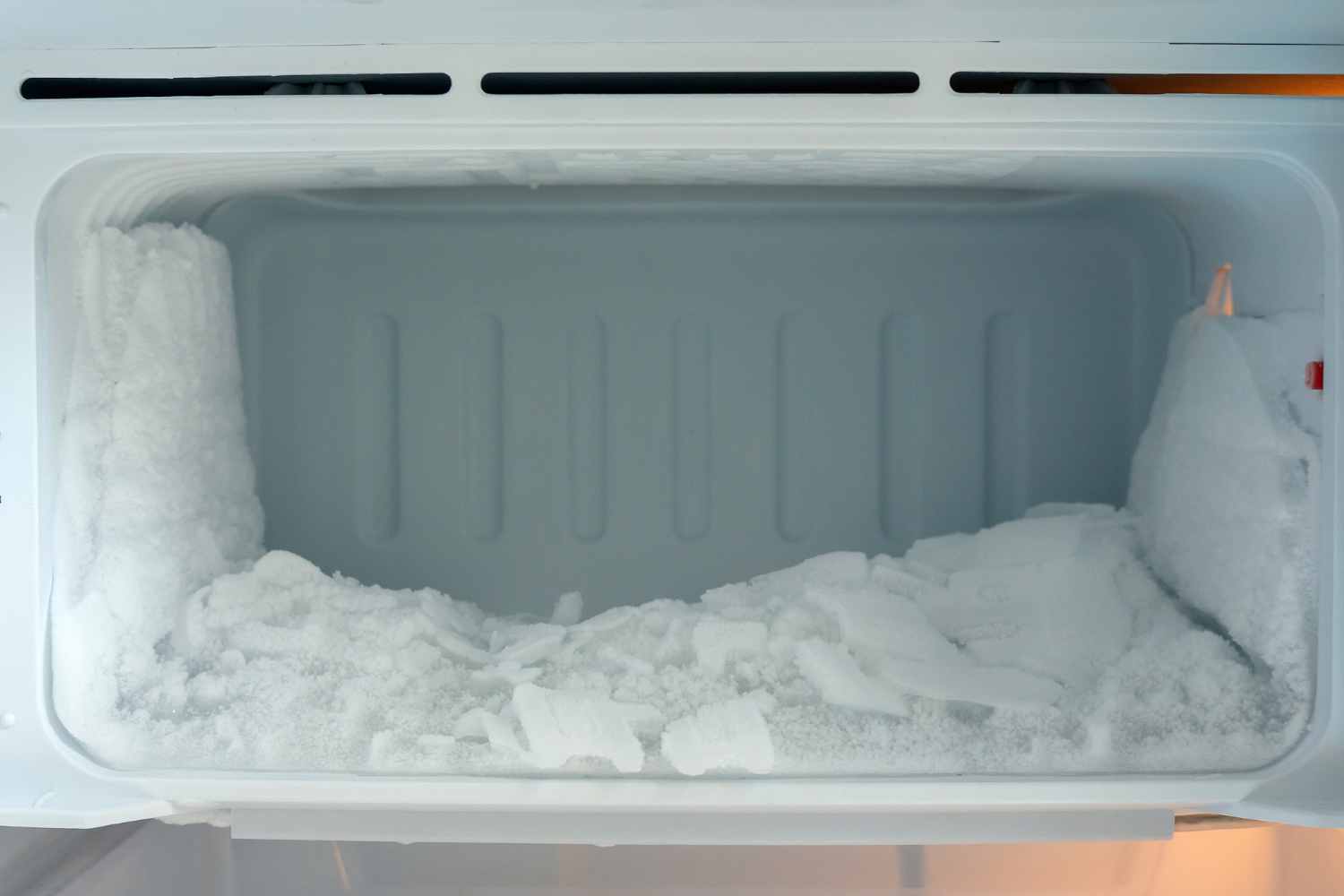
The freezer looks like the perfect ally to keep food for a long time, a trusted companion who allows us to avoid waste and who often saves our life, from a culinary point of view, of course. Yet many people make several mistakes that frustrate the benefits of freezing. The result? Foods that lose flavor, consistency and nutritional qualities, often ending up in the trash. So let’s see what to do, and above all what not to do, when we approach the freezer.
Hot foods
Putting still steaming dishes in the freezer represents one of the most frequent mistakes, an apparently harmless practice that instead causes chain consequences. The internal temperature of the freezer rises abruptly, forcing the engine to work more. In the meantime, the already frozen foods suffer a thermal change that compromises their conservation.
The formation of condensation is another serious problem, because the water vapor of hot food is transformed into ice crystals that alter the structure of neighboring foods. The vegetables become soft, the meat loses consistency and the sauces separate. The solution is simple: wait for food to reach the ambient temperature. To accelerate cooling, you can immerse the container in cold water, or divide the portions into smaller containers.
When the too much crawl
Filling the freezer to the edge might seem an intelligent way to exploit the space. In reality, this habit prevents the correct circulation of cold air, and consequently the piled foods freeze in an uneven way: some parts remain soft while others become blocks of ice.
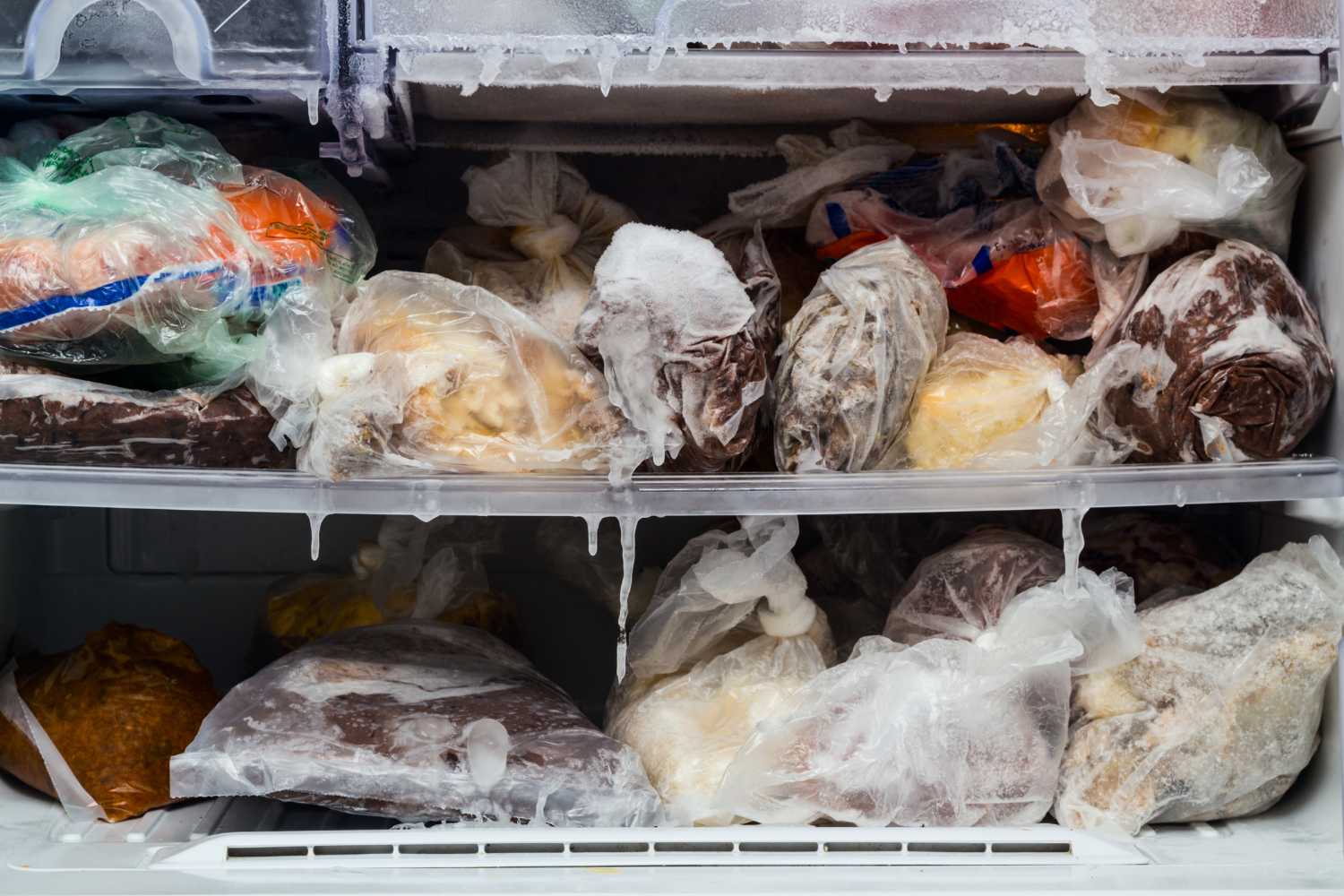
The organization makes the difference. Leaving space among the containers allows the air to circulate freely. The new products must be positioned far from those already frozen to avoid direct contacts. A freezer too full consumes more energy: the engine struggles to maintain the constant temperature and the electric bill increases significantly.
The strategic arrangement helps to optimize spaces. Plan products such as vegetables or meat trays can be stacked, while rigid containers settle better on the side shelves. Frequently used foods must be kept at hand to avoid rummaging and making hot air enter.
The importance of labels
How many times have you found mysterious containers covered with brina in the freezer? Without labels, identifying the content becomes impossible. That indefinite block could be ragù, minestrone or leftovers three months ago. The lack of information leads to inevitable waste: in doubt, many prefer to throw away.
An effective label reports three essential information: the content, the date of freezing and the number of portions. These data allow you to manage stocks rationally. The indelible markers work well on plastic bags and containers. For aluminum trays there are cold resistant adhesive labels.
The stock rotation system prevents waste. The oldest products must be consumed before the fresh ones, therefore, setting up a list attached to the freezer door helps to keep track of what is inside without continuously opening the door.
Other errors to avoid
Let’s see other actions from which we should escape:
Pay attention to these details will transform the freezer into a sort of food piggy bank: foods will keep their properties, waste will decrease and the weekly expenditure will become lighter.
