
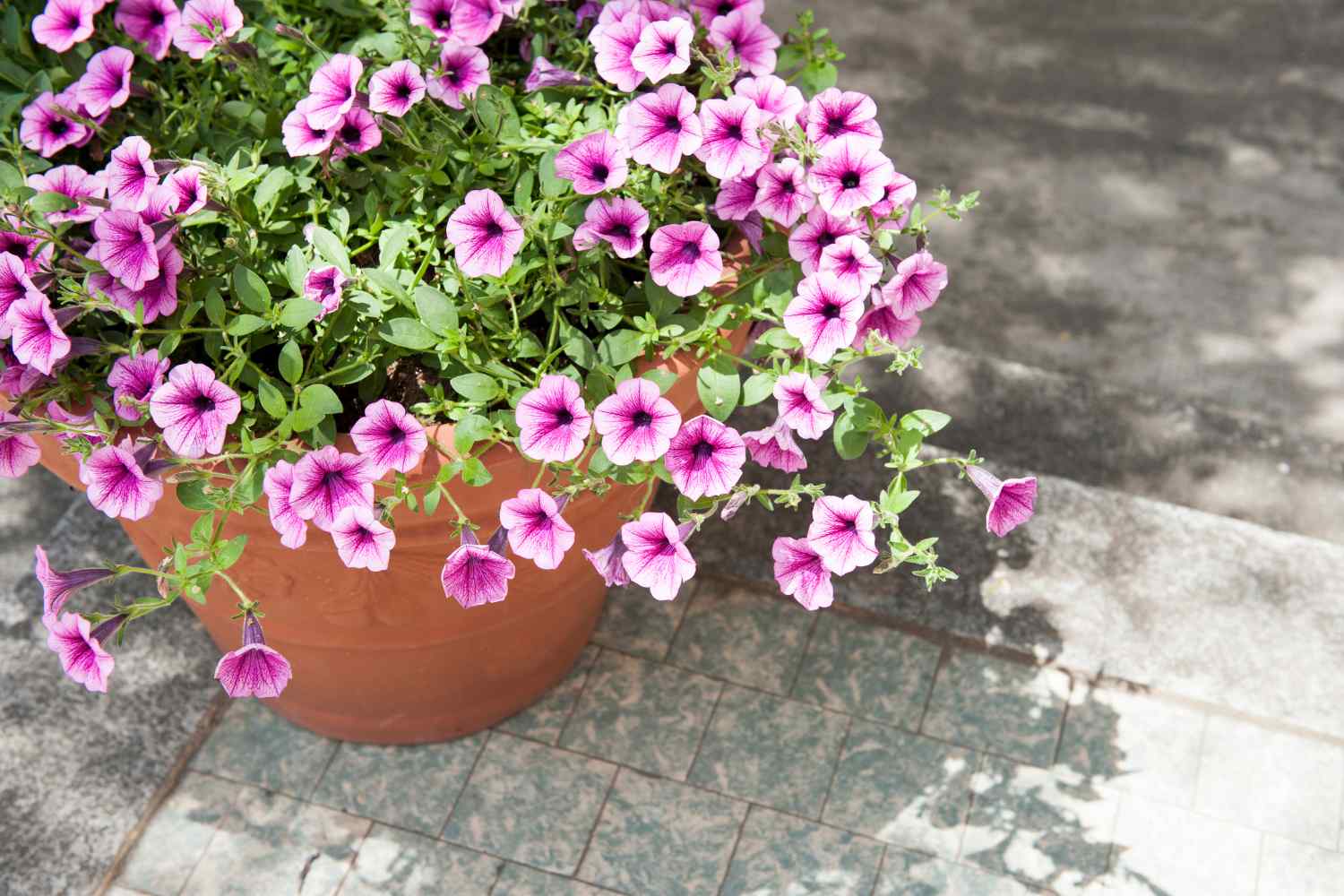
Very colorful, tireless and incredibly scenographic: the petunias are the real protagonists of the summer balconies. If you think they are only ‘grandmother flowers’, prepare to change you back.
La Petunia, known by the scientific name Petunia x hybridais an annual or perennial herbaceous plant, depending on the variety, belonging to the family of Solanaceae, The same of aubergines and tomatoes, highly appreciated due to its beauty and for the facilitating with which it is possible to grow it.
The leaves are oval or lanceolate, with slightly serrated edges, and can vary from intense green to light green, depending on the species and varieties.
The distinctive feature of this plant are the trumpeter -shaped flowers, which can be single or double, and range from the diameter of a few centimeters up to almost 15 centimeters, depending on the cultivar.
The varied coloring of the flowers practically includes the entire palette of colors in nature: pink, purple, red, white, yellow, blue, purple, cream, lavender, blue and mauve, with some varieties that also have multicolored petals.
Petunia is a plant of extraordinary beauty, capable of embellishing any space, and therefore very used as an ornamental plant.
History and origins of Petunia
The origins of Petunia belong to the regions of South America, where it was used by the natives as a medicine to treat wounds and bruises.
It was introduced to Europe in the eighteenth century by the French botanist Antoine Laurent de Jussieu, who, to coin the term petunia, is inspired by the Brazilian tradition: the word “petun“In fact, he indicated the tobacco plant, belonging to the same Petunia family, the Solanaceae.
Over the years, especially towards the end of the 80s, numerous hybrid varieties with larger flowers have been created through the intersection of different species of petunia, more bright colors and greater resistance to diseases.
Variety of petunia
Petunia has a wide range of varieties, including over 40 different species. As already observed, there are many hybrids, deriving from the intersection of the Petunia Violacea, the Petunia toxillage and the Petunia Nyctaginiflora. There are 4 main groups of hybrid groups, and in turn include different varieties:
Multiflora
They produce numerous small flowers (about 5 cm in diameter) and reach 40-50 cm in height.
Main varieties: Polaris, Red Satin, Brass Band, Dream Girl and Plum Crazy.
Large
Characterized by large and lively flowers, they reach 60 cm in height.
Main varieties: Merlin Blue Morn, Silver Superunia, Fluffy Rufflers, Pan American.
Pendula
They include the stripping petunias, suitable for windowsills and aiole.
Main varieties: Surfinia, Blue Spark, Purple Wave.
Milliflora
They have even smaller flowers than the previous ones, with the general dimensions that do not exceed 20-25 cm in height.
Main varieties: Mini Superunia, Blue Bedder, Fire Chief.
The surfinia variety, part of the hybrid group of pendulum petunias, was created and patented in Japan, they become practically a species in its own right, complete with a registered trademark.
Where to place the Petunia
If you want to get the most from the petunias, you will have to choose an optimal position, to favor regular growth and development.
These plants thrive in sunny places, where they can benefit from at least 6-8 hours of sunlight per day. Good exposure to the sun will ensure abundant blooms and lively floral colors.
In the regions with a very hot climate, a little shadow in the hottest hours of the day could be useful to avoid excessive thermal stress.
How to cultivate the Petunia in the garden
To color and enrich your garden with the beauty of the Petunie, it is important to prepare the soil adequately. These plants love well -drained soils, rich in organic substance and slightly acidic. Before sowing or transplant, work the ground in depth, eliminating any weeds and compacts.
Select an area of the garden exposed to the sun to allow vigorous growth and abundant flowering. Remember to maintain an adequate distance between the plants to prevent them from overlapping once the adult dimension is reached. Irrigation should be regular, especially during periods of drought, but always make sure to avoid excess water to avoid the radical rot.
In addition, during the growth season, you could apply a balanced fertilizer to help the development of the plant, thus promoting prosperous and luxuriant flowering.
How to cultivate the Petunia in the pot
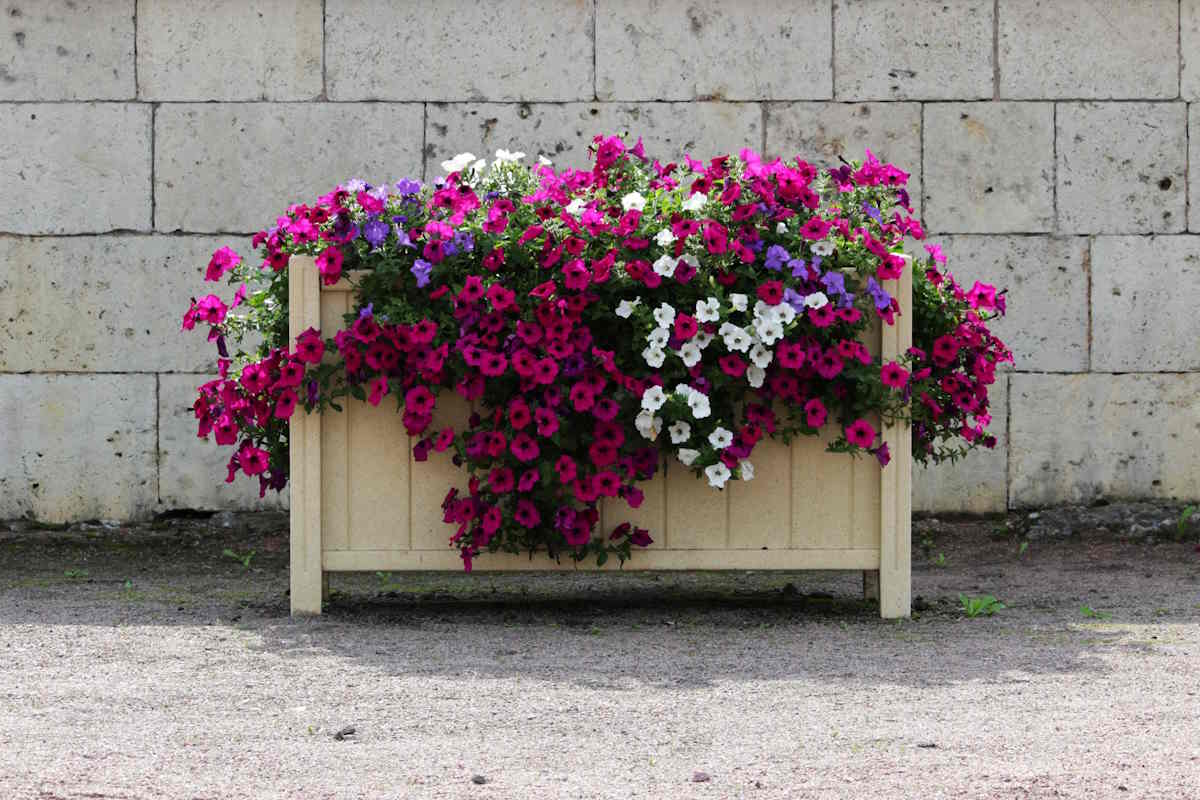
To plant Petunia in a vase, make sure to use a high quality substrate, well drained and full of nutrients. You will have the opportunity to choose between different dimensions of vessels, depending on the variety of petunia that you want to grow and the space you have available.
Once the suitable vase is selected, fill it with the ground and place the plant, taking care not to damage the roots during the laying. To obtain a luxuriant and continuous flowering, it is essential to provide a right amount of water and nourishment: watered regularly, but avoids excessively wet the soil, since the water stagnation can cause the rot.
During the growth season, it is advisable to integrate the cure with a liquid fertilizer for flowering plants, following the recommended doses on the package.
How to make Petunia’s cutting
The cutting is a common method to propagate the petunias and create new plants starting from existing specimens. This process is relatively simple and can be performed during the spring or summer season.
To start, cut a healthy portion of the mother plant, preferably from a side branch. Remove the basal leaves and make sure you have at least 2-3 knots on the cutting, from which the roots will develop.
Immerse the base of the cutting in a rooting hormone to increase the chances of rooting and then plant it in a sandy and well -drained substrate. Cover the cutting with a transparent plastic or with a bag to create a wet environment that will help the development of the roots.
Place the cutting in a bright place, but avoid direct sunlight. After a few weeks, the cutting should develop healthy roots and can be transplanted to a pot or garden.
How and when to prune the petunia
Pruning is an important operation to keep the petunia always perfect in health, and to stimulate lush flowering. It can be performed both to eliminate dried flowers and stimulate flowering and to control its shape and size.
Remove the dried flowers as they appear, since this will encourage the plant to produce new buds. As regards pruning interventions concerning the most desired shape, carefully cut the longer branches, or too vigorous, to maintain a compact shape, especially in the varieties with right bearing.
The pruning of the petunias should be performed moderately, avoiding cutting too drastically, since this could damage the plant and reduce the subsequent blooms.
When to sow Petunia
Petunia can be grown both by seed and via the bought seedling. If you want to start sowing, you can do it inside, in a seedbed or in small vessels, about 8-10 weeks before the date scheduled for outdoor transplantation. The ideal temperature for the germination of the seeds is around 21-24 ° C.
Once the seedlings have developed some real leaves, you can proceed with the transplant in larger pots or in the garden, taking into account the needs of space and light of the specific variety you have chosen.
What ground to use and where to place the petunia
To ensure healthy and luxuriant growth, it is essential to provide Petunia with the right land. As already observed, it must be well drained, in order to avoid the water stagnation that could cause roots problems. To promote the growth of the plant, a slightly acid substrate will be very good with a good amount of organic substance. If you want, you could add to the soil of the mature compost before planting or transplanting the petunias.
As for positioning, make sure to place Petunia in an area of the garden or on a balcony/terrace where it receives at least 6-8 hours of direct sunlight per day: direct sunlight will favor flowering and intensify the colors of the flowers.
Everything watering the petunia
Petunia’s water needs can vary according to environmental conditions, temperature and humidity. In general, it is better to keep the soil slightly humid, but not completely wet to avoid roots problems.
He waters Tele Petunie regularly during the hot season, avoiding wetting the leaves, since the water on the leaves can favor the development of fungal diseases. During rainy periods or more humid climates, it may be necessary to reduce the frequency of irrigation to avoid water stagnation.
When the Petunia blooms
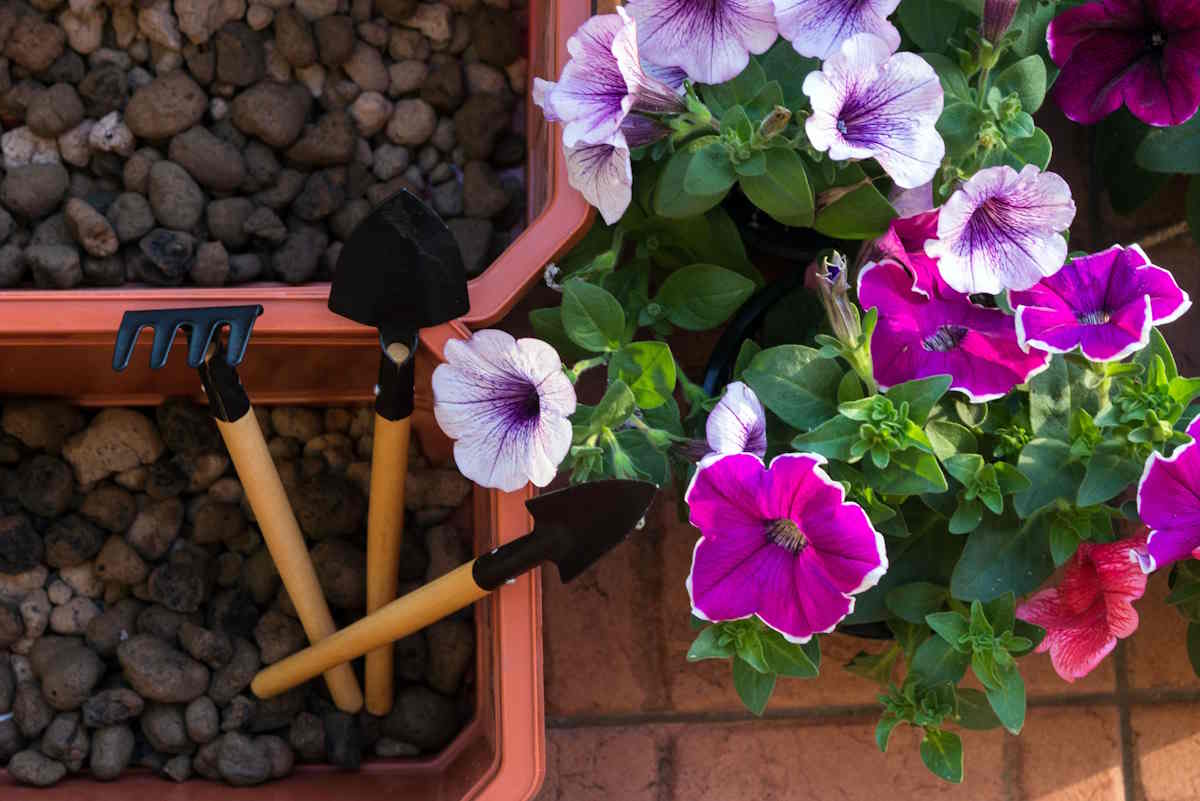
Petunia’s flowering can vary according to variety and climatic conditions. Generally, flowering begins in spring and continues until the first freezing freezing. Some varieties, such as Petunia Grandiflora, can produce flowers throughout the summer, while others can have more concentrated blooms in certain periods. By keeping the plants well cared for, eliminating the dried flowers and providing them with the ideal conditions, you will be able to prolong the flowering and you can enjoy the bright colors of Petunia longer.
What are the diseases and parasites of Petunia
Although Petunia a resistant and robust plant, it can be subject to parasitic diseases and attacks.
Among the most common problems we place:
How to keep the Petunia
Petunia is generally grown as an annual plant, but some varieties can survive as perennials in milder climates. If you want to keep the petunias for the following season, you can collect the seeds from mature flowers and keep them in a cool and dry place until the next sowing. In addition, you could propagate new plants from the cutting, as described above.
Curiosity about Petunia
Petunie are not only beautiful to see, but they also have an interesting story. In the 1980s, NASA brought them into space to study their growth in zero gravity conditions, discovering that these plants manage to adapt surprisingly well even in extreme environments. A variety in particular, called Night Sky, attracted the attention of the public for its blue and purple petals dotted with white, which recall a starry sky. The Petunie also emit a more intense perfume in the evening to attract butterflies and night moths, thus playing an important role for pollination. Finally, in the Victorian era, giving them could have a double meaning: on the one hand they expressed affection and admiration, on the other they could conceal feelings of resentment or hostility depending on the context.
What is the symbolic meaning of Petunia
Petunia is associated with various symbolisms in different cultures. In general, this plant represents the expression of positive feelings, such as love, gratitude and admiration towards others. In some contexts, Petunia is associated with strong and courageous personalities. In addition, the lively aspect and spectacular made Petunia a symbol of joy and happiness.
In the past, during the Victorian era in England, this splendid plant was closely connected to a deep feeling of anger or resentment in the soul of those who received it as a gift. This meaning had been associated with the plant from the beginning due to its natural tendency to suddenly flourish with bright colors.
The plant has been used since ancient times for its fascinating characteristics related to abundant and long -lasting flowering. In the Middle Ages, it was one of the most loved varieties to create and adorn the gardens dedicated to the Madonna, or splendid and enchanting gardens designed to inspire prayer and contemplation.
On the Petunia read also:
Other flowers to cultivate:
