
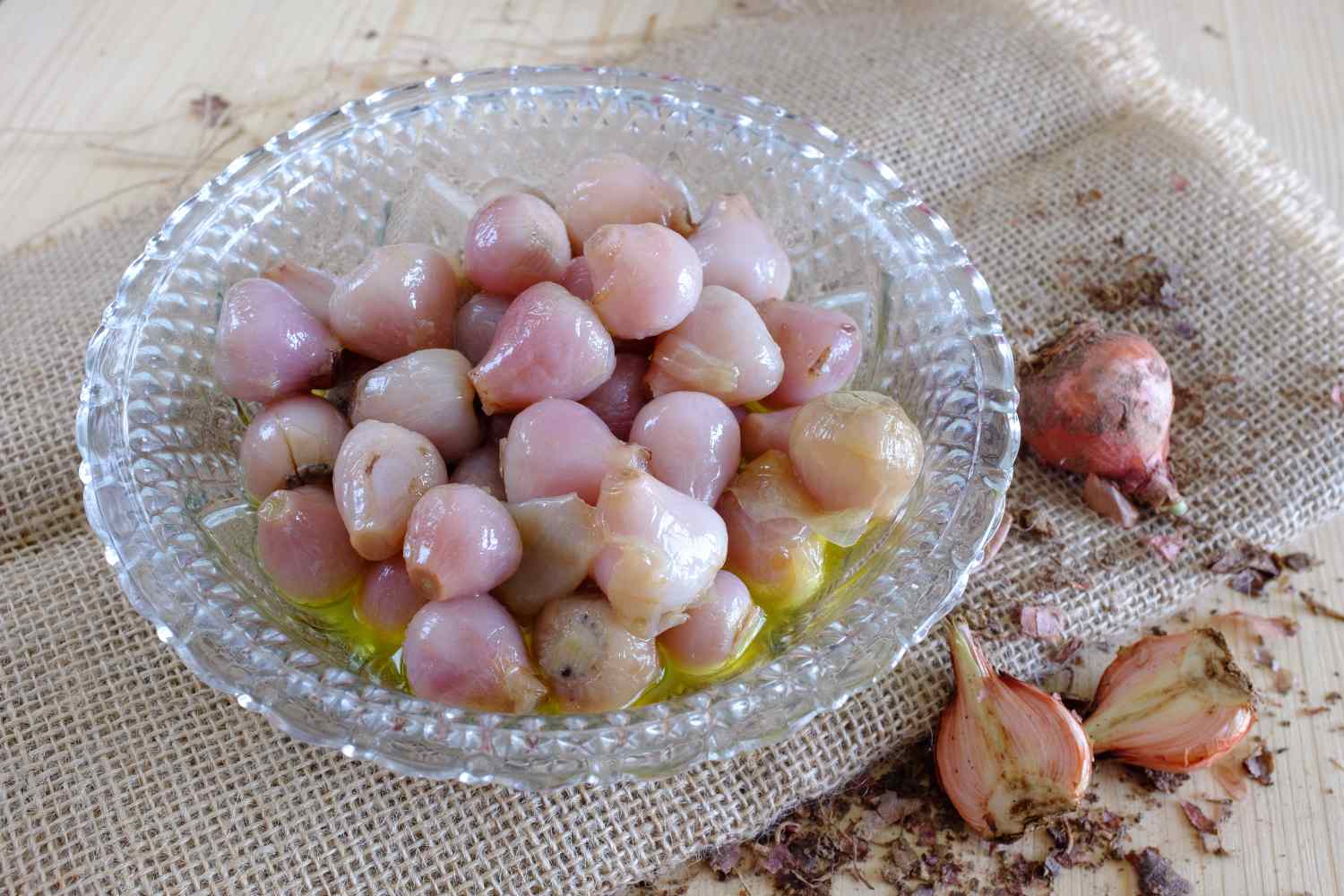
In Puglia and in Basilicata autumn has not really arrived until the lampascionioni appear on the table. These small bulbs, also called lamps or turquoise onions, have always been the protagonists of the cold seasons. They are not common onions and do not behave as such. Their bitter taste makes them a particular food, appreciated by those who love the determined flavors and often rejected by those who taste them for the first time. But with the right technique they can become a real specialty.
The identity of the Lampascionioni: wild, tenacious and amarognoti
The scientific name is Muscari Comosum and belong to the Liliaceae family. They grow spontaneously in arid and limestone land, such as those of the Alta Murgia National Park, but they can also be cultivated. They are small, more than common onions, and have a compact pulp. For centuries they have been part of the southern handouts, where they were kept as a reserve in periods of famine. They do not deteriorate quickly and are rich in fiber and minerals, which is why they were precious in difficult times.
What really distinguishes them is the flavor. The bitterness is clear, present, sometimes unsettling. It is not an ingredient that tries to please everyone: either you love it or avoid it. But precisely this feature makes them interesting for the Apulian chefs, who have been transforming them into contours, appetizers and main dishes capable of surprising for generations.
Preparing them well is the key: cleaning and soaking they count more than the recipe
The first phase is cleaning. The lampascioni must be freed from the roots, peeled out of the external layers and washed thoroughly. At this point we move on to the maid, which serves to reduce bitterness. It is a mandatory passage, not a advice. Cold water must cover them completely and must be changed several times, even within a whole day. In many families they let them rest like this for twenty -four hours, sometimes even more, until the water stops citing.
At the base of the bulb a cross is engraved, so the water penetrates better and the cooking is more uniform. After soaking, we proceed with the boiling, which can last from twenty to thirty minutes. They must become tender but not to get rid. There are those who add an vinegar of vinegar to further clean the flavor and accentuate freshness. At this point, the lampescionioni are ready to be transformed.
Traditional Apulian recipes

Read and seasoned
The most direct way is also the oldest one. After boiling they drain, pass under cold water and season with extra virgin olive oil, salt, pepper and a splash of vinegar or lemon. It is an essential preparation that does not hide anything: those who love lampascione prefers it like this.
In oil
In Puglia it is common to find them in a jar, in oil, already ready to be served. After the boiling, they are seasoned with garlic, chili pepper, bay leaf and vinegar, then they are preserved in extra virgin olive oil. With a few days of rest they buy flavor and become perfect as an appetizer or pasta dressing.
Pancakes
Another beloved recipe is the pancakes. The cooked lampscons are chopped and mixed with eggs, flour, salt and pepper, sometimes even with a little cheese. The dough is fried until golden and crunchy pancakes are obtained. They have an intense perfume and a soft consistency inside, ideal for those who want a less “raw” approach to the bitter taste.
In wet or “in purgatory”
In some areas they cook in a pan with fresh tomato, onion, wine and spices. Tomato softens the bitter and creates a rich sauce that goes well with meat or pasta. This version, also called “in Purgatory”, is widespread in rural areas and brings a rustic and intense perfume to the table.
Au gratin lampscons
After the boiling and accurate soaking, the lampscionioni drain well and let themselves be dry for a few minutes. They cut each other for a long time and settle in a slightly greased pan, with the cut part facing upwards. At this point, a mix of breadcrumbs, pecorino or grated Parmesan (depending on tastes), salt, pepper and a drizzle of oil is prepared. Some add chopped parsley to give freshness.
The mixture must be distributed generously on the lampescionioni, in order to completely cover them. The pan enters the preheated oven, about 180–190 ° C, and remains for twenty abundant minutes, until the surface becomes golden and crunchy. If you need, a quick pass under the grill in the last few minutes accentuates the crust.
The result is a tasty and fragrant dish, with the crunchy external part and the soft and delicately bitter interior. It can be served as an appetizer, side dish or even as a single vegetarian dish if accompanied by bread and vegetables.
It is a simple but very smart recipe: he uses the strength of the lampascione without covering it, and at the same time makes it more accessible to those who do not like bitterness in purity.
The errors to avoid
The first mistake, the most serious, is to skip the soaking. If they do not lose part of their bitterness, no recipe can save them. Cooking must also be managed carefully: too short it makes them hard and difficult to digest, too long transforms them into a tasteless poll. It serves balance.
Another common mistake is to overdo it with strong condiments to “cover” the taste. Garlic and chilli can accompany, but if they become the protagonists they cancel the personality of the lampascione. Finally, the temptation to insert them in modern dishes only for fashion should be avoided: it is not a neutral ingredient and should not be forced. If you use them, they must have a clear role.
A taste for those who love challenges
Lampconsi are not for everyone, and it is useless to pretend the opposite. But those who accept the challenge and prepare them in the right way discovers an ingredient with character, rooted in the peasant history of the South. They do not try to please, but to assert themselves. And when they succeed, they give flavors that they do not forget easily.
Between autumn and winter, in a self -respecting Apulian cuisine, a jar or a bowl of lampascionioni are never lacking. It is not just tradition: it is identity.
