
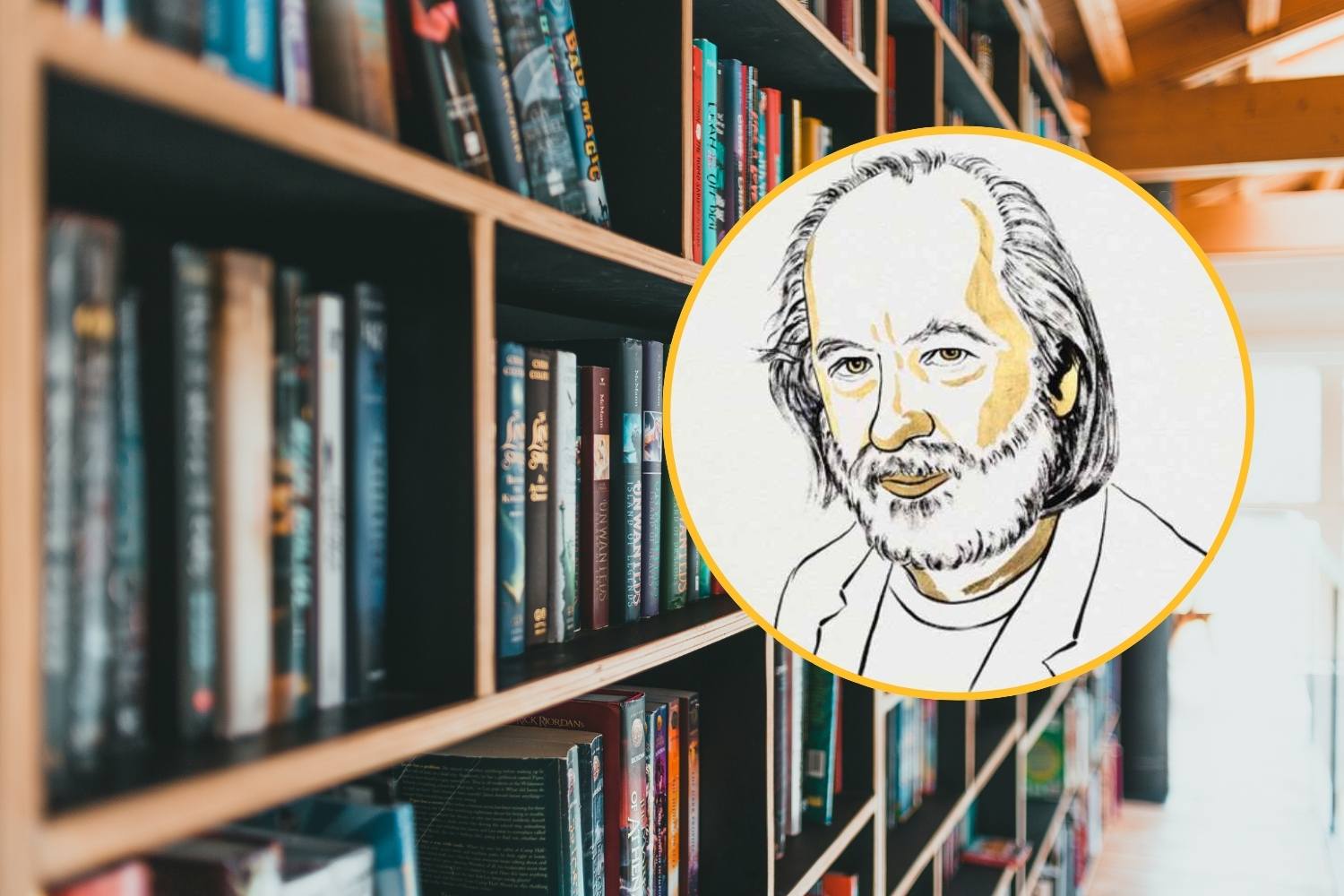
Hungarian László Krasznahorkai won the 2025 Nobel Prize for Literature, establishing himself as one of the greatest living authors. Recognition arrives”for his body of compelling and visionary work that, in the midst of apocalyptic terror, reaffirms the power of art“. A shy and meditative author, over the course of forty years Krasznahorkai has built a unique literary universe, made up of metaphysical anguish, dark irony and painful beauty. His interminable sentences drag the reader into a flow of thoughts that unites Kafka, Bernhard and biblical pessimism. To understand the greatness of this “master of the Apocalypse”, let’s go to analyze three fundamental works to read (or rediscover) after the Nobel.
The 2025 #NobelPrize graduate in literature László Krasznahorkai also looks to the East in adopting a more contemplative, finely calibrated tone. The result is a string of works inspired by the deep-seated impressions left from his journeys to China and Japan.
About the search for… pic.twitter.com/TpXMQZdAR7
— The Nobel Prize (@NobelPrize) October 9, 2025
“Satantango”: waiting as condemnation
In his debut novel, SatanangoLászló Krasznahorkai takes the reader to a ruined Hungarian countryside, where a small community of farmers awaits the return of a mysterious man, Irimiás. Satanango it is a slow and disturbing dance between disillusionment and hope, a story that reveals the fragility of the human soul in the face of the promise of salvation.
With a river of writing, made up of endless and hypnotic sentences, the writer builds a microcosm where material degradation is intertwined with moral degradation. The novel, later adapted for cinema by Béla Tarr with the title of the same name, marks the beginning of his unmistakable apocalyptic language, capable of uniting realism and metaphysical vision.
“Seiobo came down here”: beauty as redemption
In Seiobo came down herethe author abandons the Europe of anguish to turn his gaze towards the East. The novel is a meditation on beauty and artistic creation, where each story explores the link between art and spirituality.
Inspired by the Japanese myth of Seiobo, the goddess of beauty, Krasznahorkai builds a mosaic of stories that range from Kyoto to Renaissance Florence. His style becomes contemplative, almost Zen: each page invites the reader to find the sublime in the detail, to slow down the pace and observe the world as a craftsman or painter would.
“The Return of Baron Wenckheim”: The Twilight of the West
With The return of Baron Wenckheimwinner of the National Book Award for translated literature, Krasznahorkai pens one of his most visionary and corrosive novels. Baron Béla Wenckheim returns to his native country in search of peace and love, but finds a world corrupt, neurotic and on the verge of collapse.
Between political satires and existential reflections, the author draws a funeral symphony of the West, where irony mixes with disenchantment. It is a return to the origins, but also a farewell: Krasznahorkai’s voice becomes that of a disillusioned prophet who watches the world burn, reminding us that only art can save us from nothingness. After the Nobel, these pages appear even more prophetic: in a world falling towards the end, Krasznahorkai reminds us that only art can save us.
BREAKING NEWS
The 2025 #NobelPrize in Literature is awarded to the Hungarian author László Krasznahorkai “for his compelling and visionary oeuvre that, in the midst of apocalyptic terror, reaffirms the power of art.” pic.twitter.com/vVaW1zkWPS— The Nobel Prize (@NobelPrize) October 9, 2025
You might also be interested in:
