

From above, with the skyscrapers overlooking the ocean and the light reflecting on the glass, it looks like Miami. And instead we are in Spain, on the Mediterranean coast, in Benidorm: the city that in 2025 was awarded the title of European Green Pioneer of Smart Tourism, a recognition assigned by the European Commission to destinations that combine sustainability, innovation and inclusion.
Once a symbol of mass tourism, today Benidorm has become the laboratory of a new way of travel: intelligent, efficient and deeply linked to the territory.
An idea born in the 1950s: the vertical city
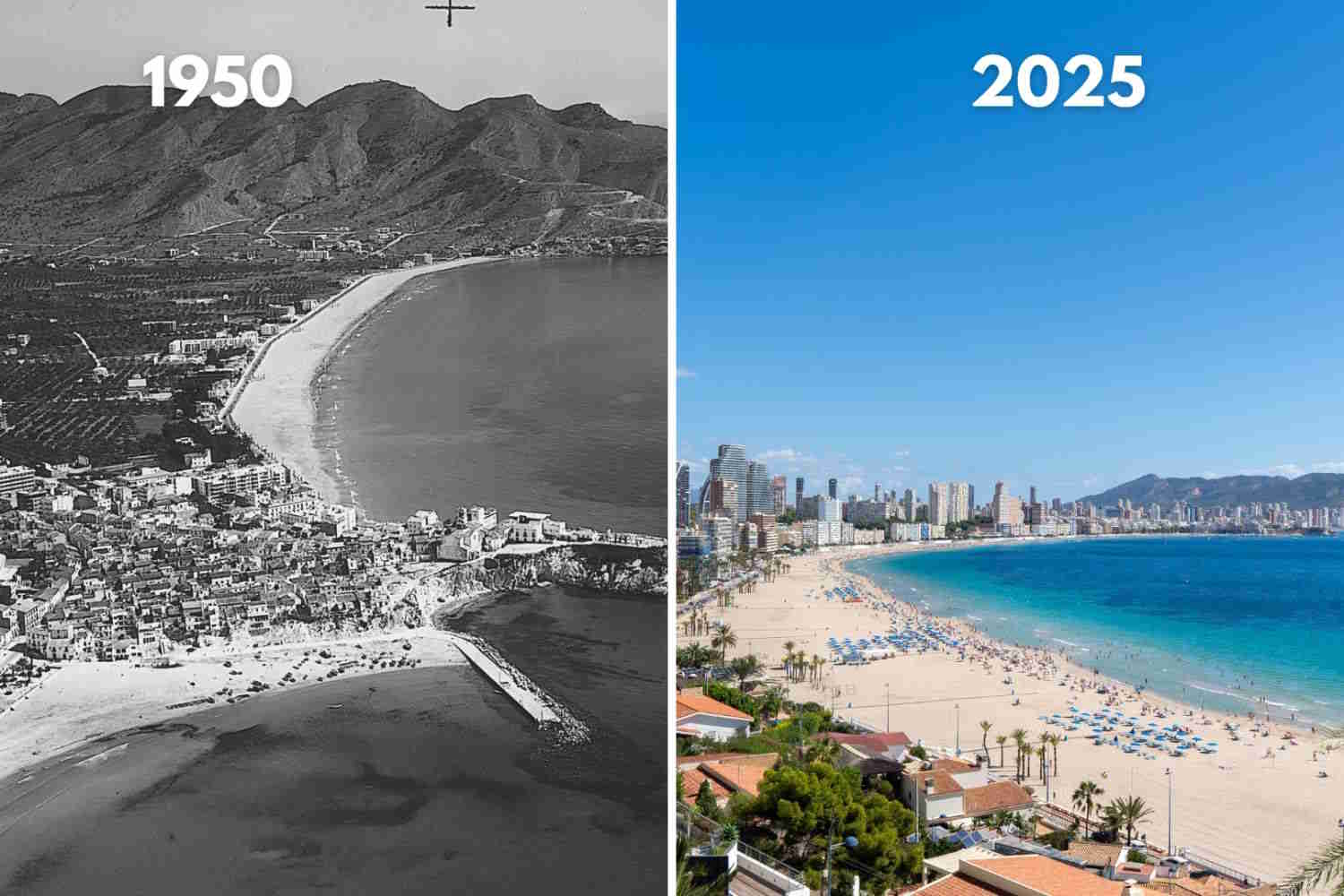
Benidorm’s transformation is not improvised. Its roots date back to the 1950s, when the then mayor Pedro Zaragoza Orts created a revolutionary urban plan: the “vertical plan”. While other Spanish coastal towns expanded horizontally, consuming soil and fragmenting the landscape, Benidorm decided to grow upwards.
The idea was as simple as it was far-sighted: concentrate the population and services in skyscrapers, but leave free space between the buildings, guaranteeing light, air and liveability. The rule was clear: only 20-30% of the land could be built on, the rest had to be left for gardens, swimming pools and wide streets. A model that today we would call sustainable, but which at the time was pure urban planning intuition.
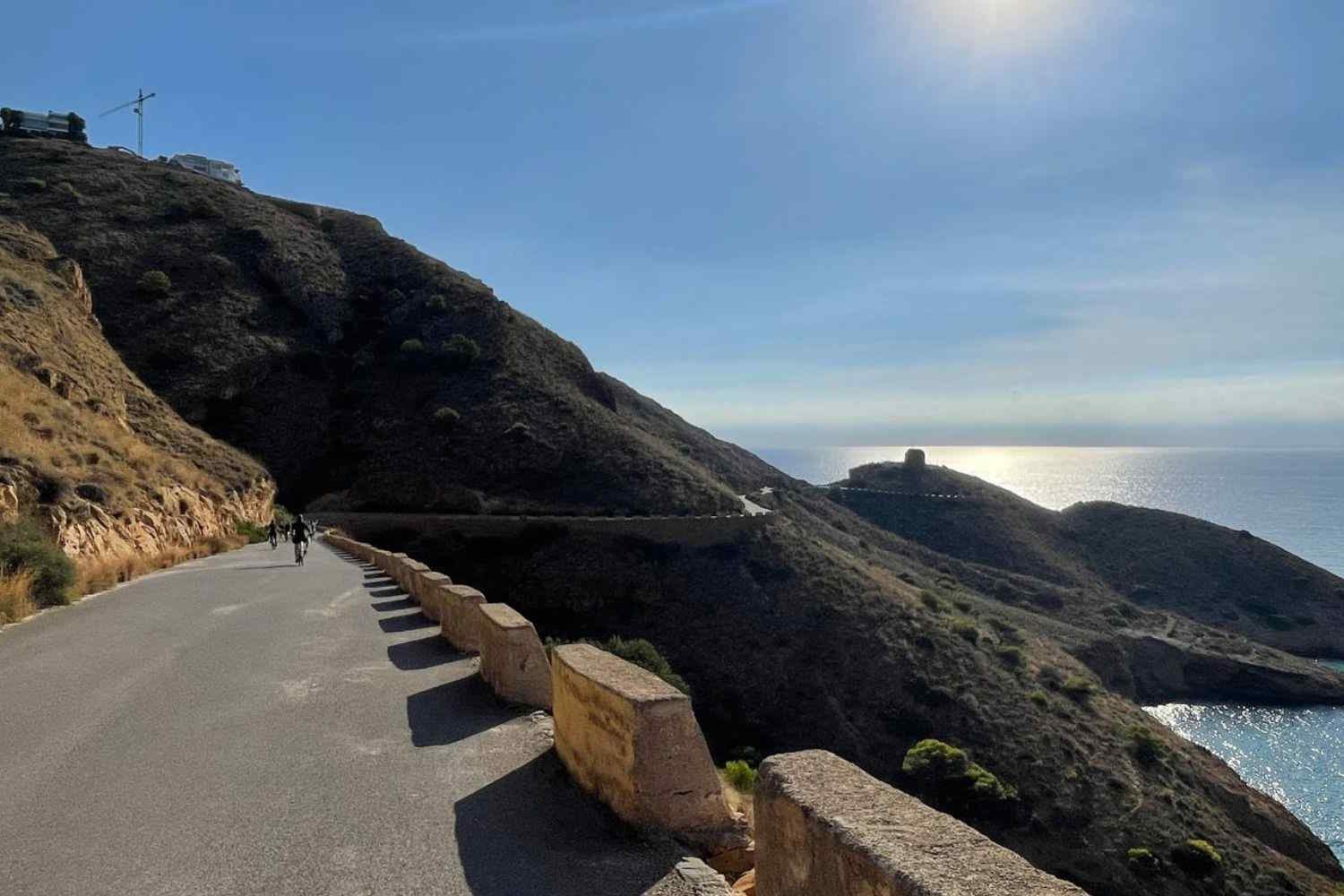
The result is a compact but liveable city, with large avenues, wide sidewalks and neighborhoods that can be easily crossed on foot or by bicycle. In Benidorm you don’t need a car: the seafront is pedestrianised, cycle paths reach every neighborhood and the hills that embrace the city. We ourselves explored the Sierra Helada, a natural park overlooking the sea, with an e-bike tour that allows you to go from the urban frenzy to the absolute silence of nature in just a few minutes.
European record water management
If there is one fact that explains Benidorm’s transformation better than any other, it is this: the city wastes only 5% of its water. In a country where the average water efficiency stops at around 70%, Benidorm has managed to achieve 95% recovery and reuse thanks to an integrated control and purification system.
Over the last 36 years, despite a 40% increase in the population and a 26% increase in tourist overnight stays, water consumption has decreased by 18%. An achievement achieved thanks to a network of intelligent technologies that monitors the pressure, distribution and quality of water in real time. But the secret is not just technological: 36% of the treated water is reused to irrigate green areas, clean the streets and support local agriculture.
Benidorm has also installed storm surge tanks and drainage systems which protect the coast from the effects of climate change, reducing the risk of flooding and erosion. It is a model of urban resilience that combines engineering and environmental protection, and which today many European cities look at with interest.
The sea that breathes: the Posidonia oceanica meadows
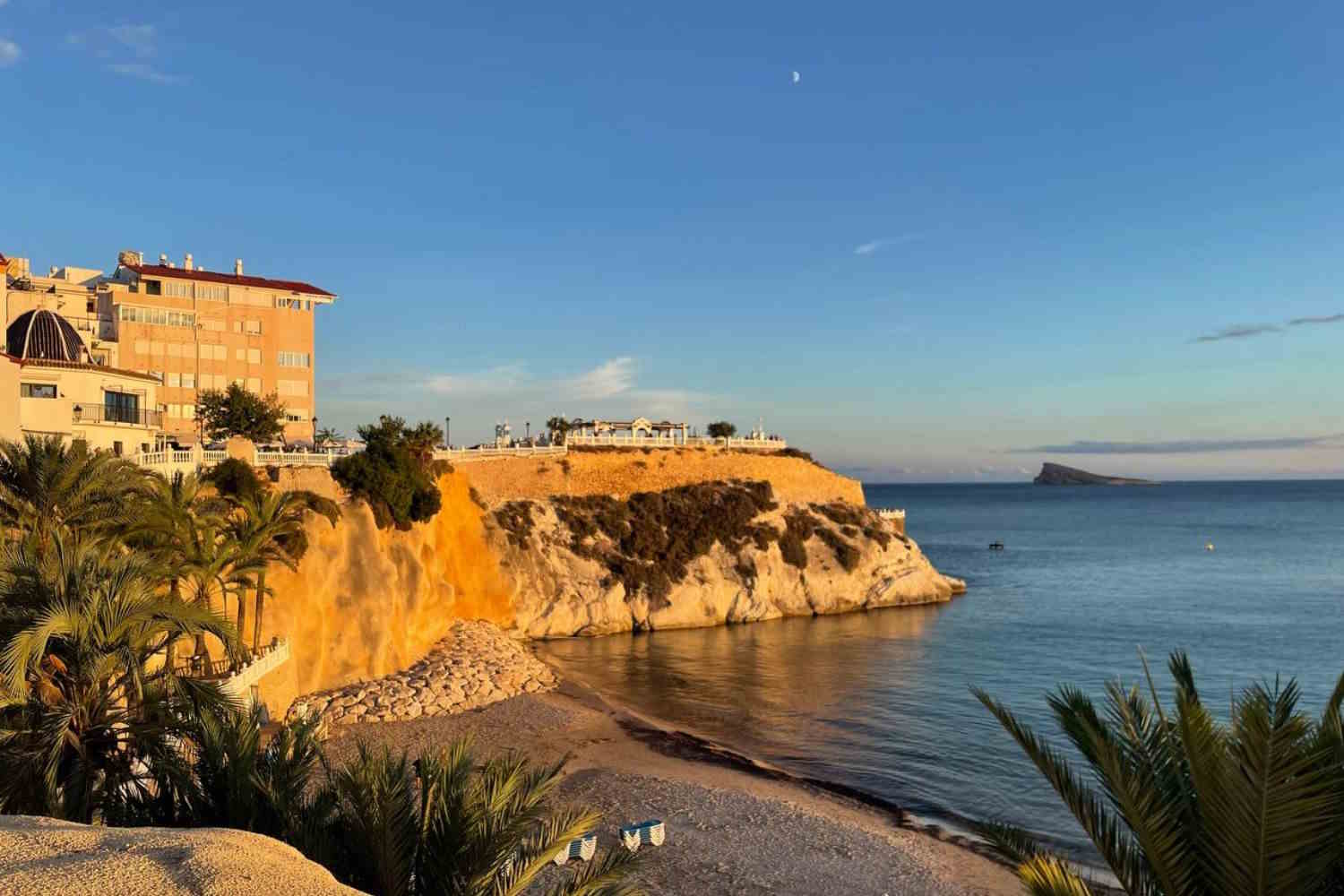
Benidorm’s sustainability doesn’t stop on the ground. Beneath the surface of the sea lies a natural heritage of inestimable value: Posidonia oceanica, an endemic plant of the Mediterranean which is considered an indicator of marine health. Its submerged prairies – true “water forests” – are home to over 4,000 plant species and 700 animal species, producing five times more oxygen than the Amazon. Thanks to the digital project “Projecte Posidonia”, Benidorm constantly monitors and protects these meadows, avoiding damage from anchoring and pollution.
This care for the marine environment is also reflected in the daily management of the beaches: cleaning without chemicals, eco-compatible services and continuous monitoring to reduce human impact. Benidorm has understood that a clean and living sea is not a side effect of tourism, but its essential condition.
The microclimate that turns off radiators
Benidorm enjoys a unique microclimate, due to its privileged position: south-facing, sheltered by the mountains and open to the sea. This means constant sunshine and mild temperatures all year round. In winter almost no one turns on the radiators, and in summer you just need to open the windows to let in the wind coming from the Mediterranean.
Urban planning, once again, follows the logic of nature. Buildings are designed to capture light and take advantage of natural ventilation, thus reducing the need for artificial energy.
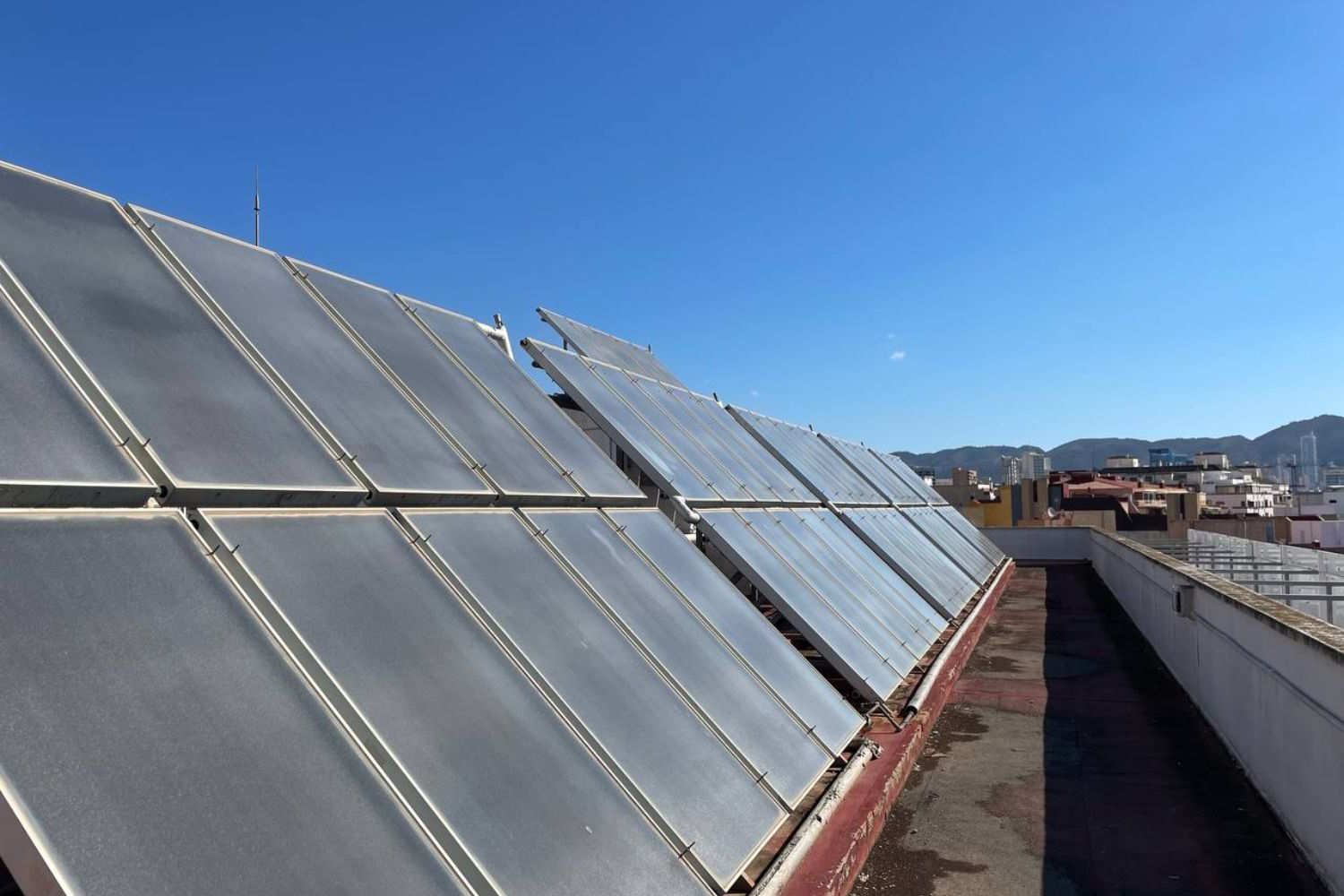
Almost all buildings have photovoltaic systems on their roofs, contributing to local, clean electricity production. And the results are visible: the city has already reduced energy costs linked to public lighting and municipal buildings by 51.8%.
Total accessibility: a city designed for everyone
There is another aspect that makes Benidorm a European example: universal accessibility. Beaches, public buildings and tourist areas are designed to welcome everyone, without physical or sensory barriers.
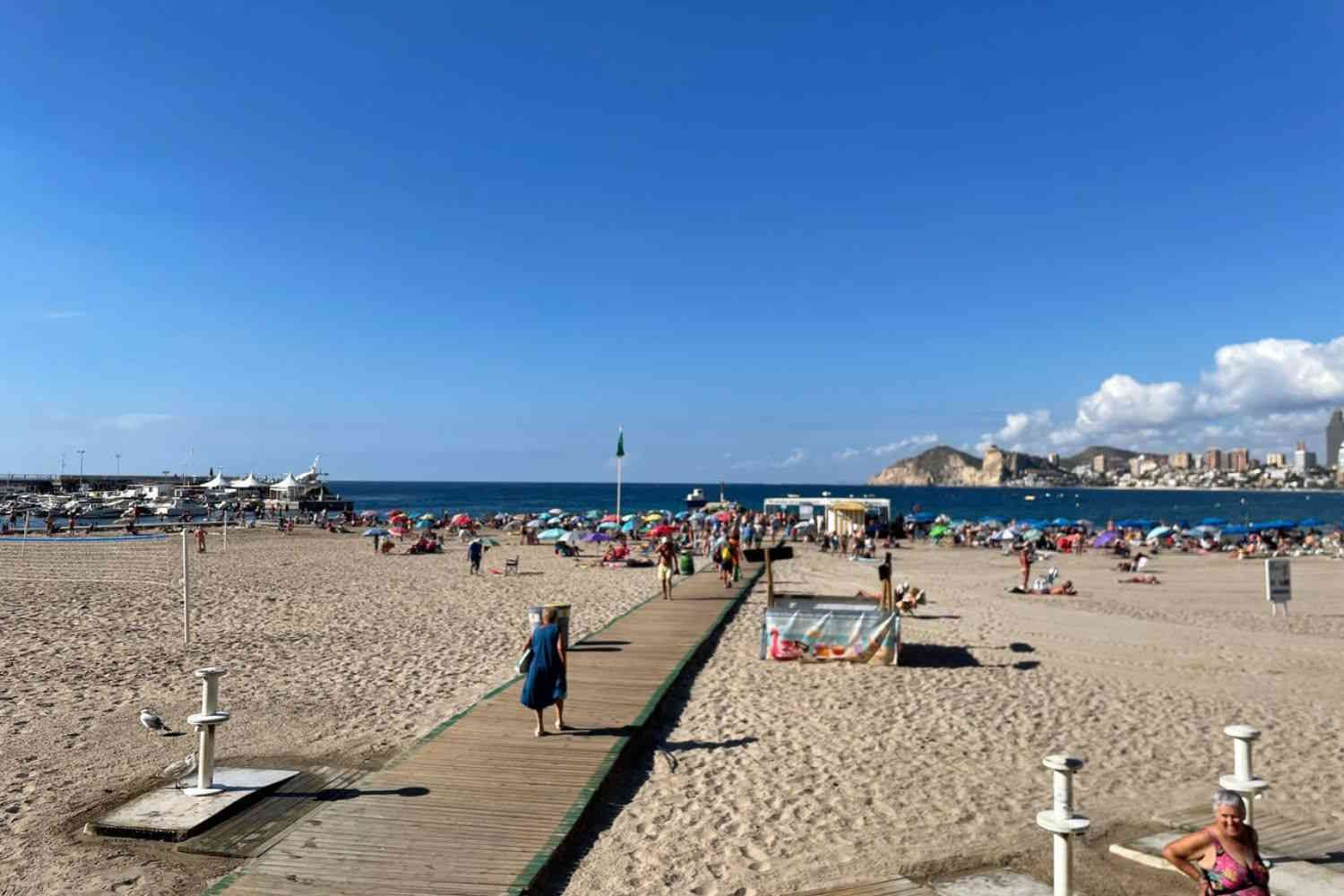
On the beaches, walkways and amphibious chairs allow direct access to the sea even for those with walking difficulties. There is staff dedicated to assisting swimmers with disabilities, tactile paths for the visually impaired and flags with inclusive symbols to help even color-blind people interpret the state of the sea. In the city, the traffic lights speak, the sidewalks are wide and the entrances to museums or public buildings open automatically.
In 2024 Benidorm received recognition as “Spain’s most inclusive destination” at the Fitur 4All Awards, an award that certifies an approach to accessibility considered among the best in Europe.
A smart city with a Mediterranean heart
Benidorm has been able to use technology intelligently, not to amaze but to simplify daily life. Sensors on the beaches count visitors in real time, avoiding overcrowding. An app updates citizens and tourists on traffic, weather and marine conditions. And a network of 134 kilometers of cycle paths allows you to move quickly without a car.
Sustainable mobility is an integral part of the urban project: there are free parking spaces, pedestrian zones and incentives for the use of electric bicycles. All municipal buildings and public lighting are powered by 100% renewable energy. It is a smart city model that does not however lose its Mediterranean spirit: social, sunny and on a human scale.
A laboratory for the tourism of the future
Benidorm is today proof that mass tourism can also be sustainable, if planned with intelligence and respect. Here modernity coexists with the sea, technology merges with tradition and sustainability is not a label but a daily practice.
The European recognition does not only celebrate the results achieved, but a different way of thinking about the city: dense but livable, innovative but human. And as the sun sets behind the skyscrapers reflecting in the sea, it’s easy to see why many call it the Miami of Europe. Except that here, unlike Florida, the future has already arrived and it’s called Benidorm.
