
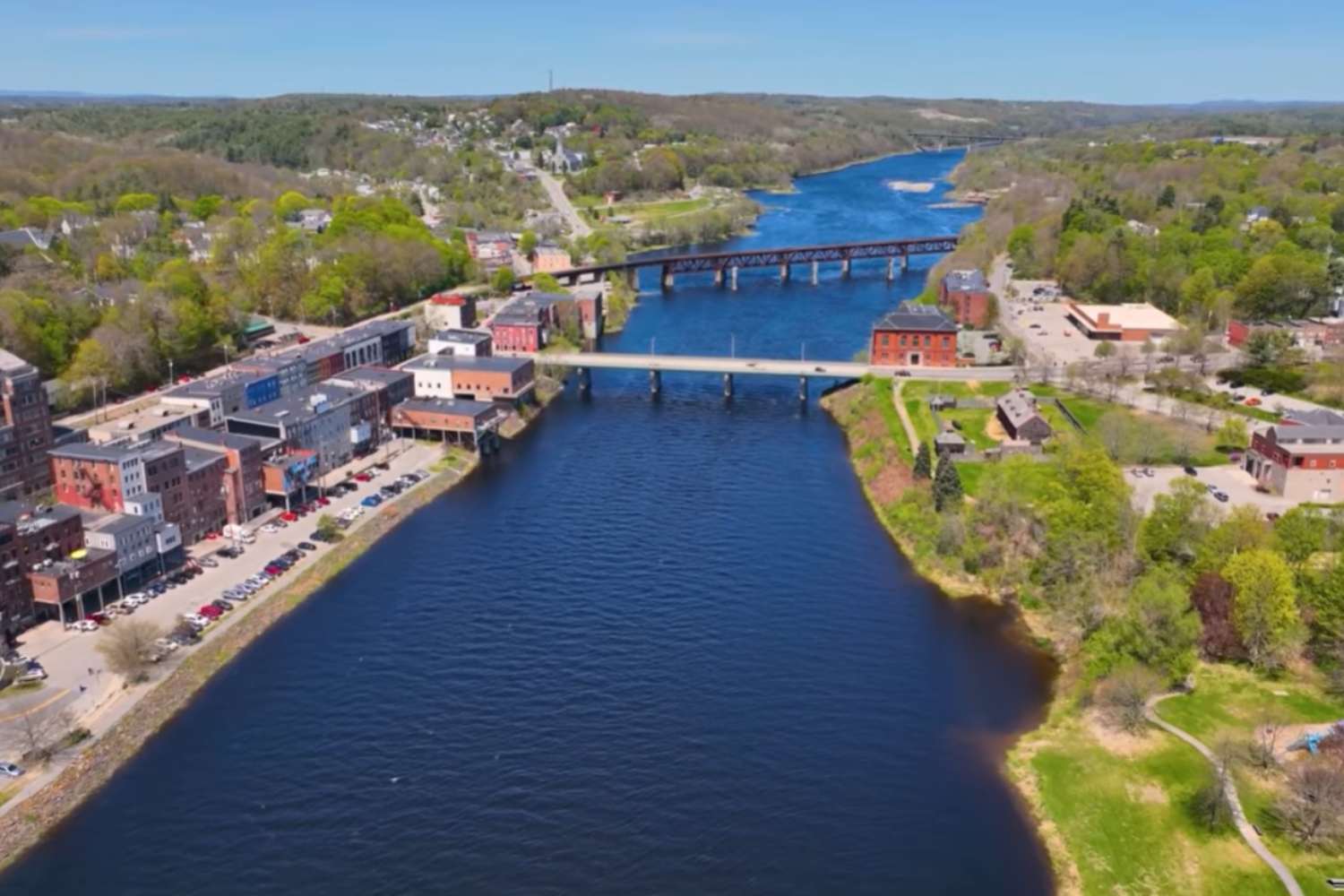
In Maine, ownership of four large dams on the Kennebec River has been transferred to The Nature Conservancy (TNC), with the goal of restoring natural habitat for Atlantic salmon, herring and sturgeon. The structures, operated to date by Brookfield Renewables, prevent migratory fish from reaching historic spawning grounds. The acquisition, which took place on September 15, 2025, cost 138 million dollars and represents the first step towards the return of a free river after more than a century.
The Kennebec River originates from the Sandy River, flows through towns like Skowhegan and Waterville, and flows into the Gulf of Maine. The dams affected by the project are Weston, Shawmut, Hydro-Kennebec and Lockwood, distributed along the lower reaches of the river. Removal won’t be immediate: The federal regulatory process, as demonstrated by similar cases in California, will take years. TNC aims to raise an additional $30 million to create a nonprofit that will manage the decommissioning, allowing the dams to produce energy for another five to 10 years.
A key aspect involves the collaboration with Sappi North America, whose Somerset Mill depends on managing water from one of the dams. The objective is to combine environmental restoration and support for industrial activities, ensuring both ecological and economic benefits for the region.
The benefits for aquatic fauna
Atlantic salmon, a species considered near threat globally, will be able to travel up the Sandy River, gaining hundreds of kilometers of spawning and growth habitat. Herring, Atlantic sturgeon and American eel will also benefit from the free river. Currently, only a small fraction of historic salmon make it up the Kennebec, often trucked past dams to spawn, with many lost along the way.
The removal of dams on the Klamath River in California and dams on the Penobscot River in Maine have shown that fish retain ancestral instincts and that restoring rivers brings lasting environmental and economic benefits. The Kennebec project therefore promises to restore the river to its natural ecological function and create a replicable model of river restoration.
You might also be interested in:
