
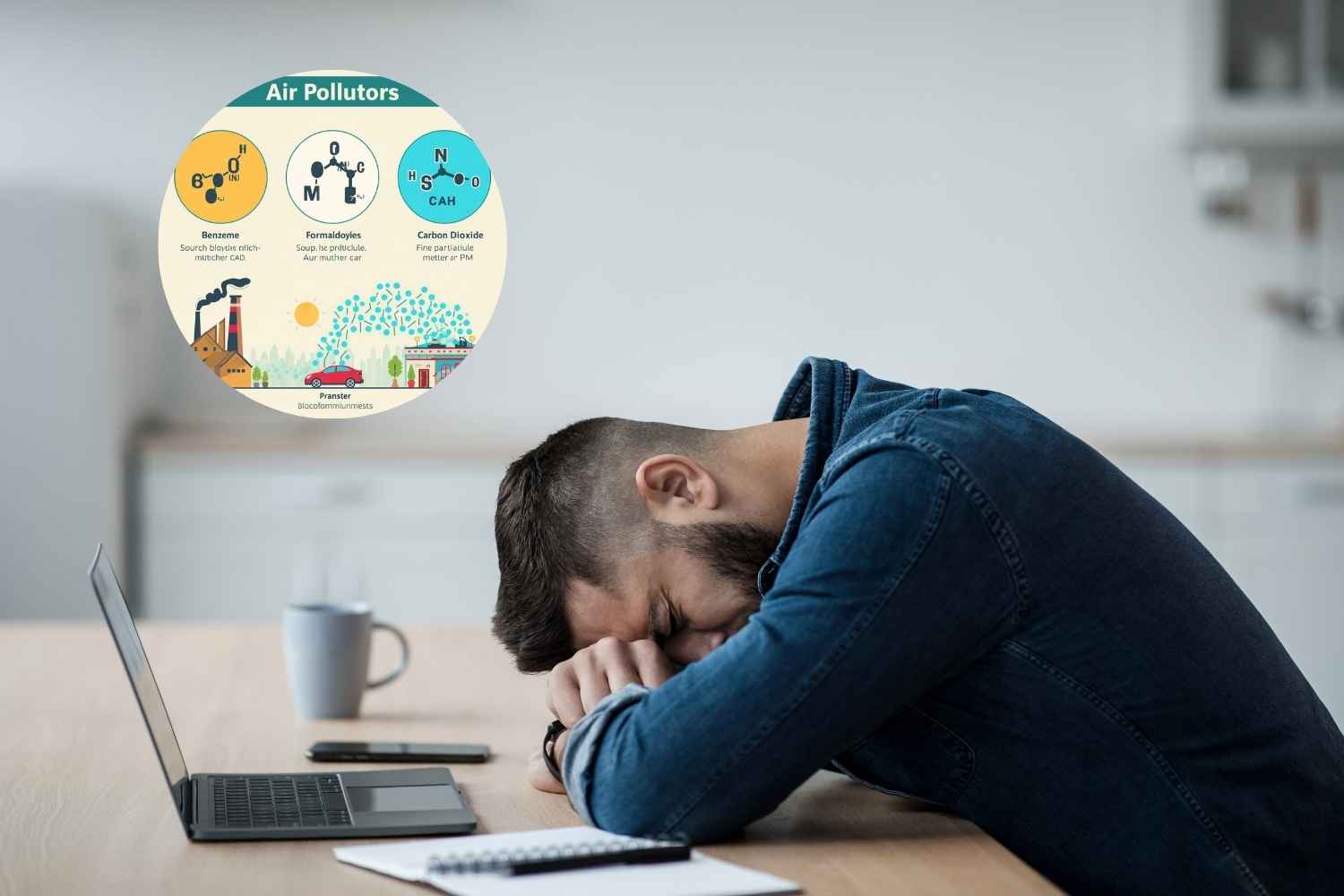
Do you wake up tired even after eight hours of sleep? Do you have difficulty concentrating during the day, frequent headaches and a feeling of sickness that you can’t explain? Before you blame it on stress or hours of rest, you should look up. Or better yet: breathe deeply. The problem may be lurking in the air of your bedroom.
The invisible night enemy
Every night we spend about eight hours in a closed environment, often with doors and windows sealed for silence or to save energy. In this time, we breathe around 3,000 liters of air, and if this were to contain pollutants, the exposure would become truly significant. Studies have shown how the quality of the air in the bedroom can directly influence the quality of sleep and cognitive performance the following day: stale air can contain excess carbon dioxide, volatile organic compounds, fine particulate matter and other pollutants that disturb rest. When CO2 levels decrease, objectively measured sleep quality, the perception of freshness of the air and the ability to concentrate and logically reason the following day improve.
What do you breathe while you sleep
The pollutants present in the bedroom come from different sources. Formaldehyde is released from furniture, paints and building materials, benzene comes from cleaning products, sprays and plastics, carbon dioxide accumulates naturally when we breathe in a closed space, while fine dust enters through windows or rises from fabrics. Added to these are the volatile organic compounds released by air fresheners, detergents, furnishings and electronic devices, all elements which, combined, create a cocktail of substances capable of altering our well-being. The most common symptoms? Headaches, respiratory irritations, difficulty concentrating and that persistent tiredness that accompanies you all day. A systematic review of studies confirms the link between exposure to air pollution and sleep problems in all age groups.
Carbon dioxide deserves a separate discussion. In a room with the door and window closed, two people sleeping can bring concentration above 2,000 parts per million, when the optimal level should remain below 1,000, since this would explain why, sometimes, despite having spent many hours in bed, you wake up with the feeling of having slept little and badly.
Ventilation is the first solution
So what to do? The simplest and most effective strategy remains to open the windows. Research conducted on healthy young adults found that with windows or doors open the average CO2 concentration drops to 717 parts per million, while with windows closed it rises to 1,150 ppm, with significant improvements in the depth of sleep.

Opening the window for at least ten minutes before going to bed and, if possible, leaving it ajar during the night creates sufficient air exchange. If external noises were to disturb, controlled mechanical ventilation systems could be used which would guarantee fresh air without compromising the silence. These devices filter the incoming air, remove particulate matter and recover heat, making the environment healthy without heat loss.
The ideal would be to create air currents by opening two opposite windows for a few minutes, several times a day. This simple gesture dilutes the accumulated pollutants and lowers the CO2 concentration. In winter just ventilate for five minutes: the air is completely renewed without cooling the walls too much.
Allied plants
Keeping plants in the bedroom to purify the air is always a valid solution, because some species absorb toxic substances through their roots and soil. Among the most common we can include aloe, sansevieria, pothos and spathiphyllum.
Materials and habits
Reducing sources of pollution is essential. Choose furniture made of solid wood or certified with low formaldehyde emission, avoid synthetic carpets and chemically treated curtains, use natural detergents and try to limit artificial perfumers. Remember that the chemical products we use at home release substances into the air, even for months.
Wash sheets and pillowcases every week, because they accumulate dust, mites and particles that you breathe in all night. Vacuum regularly, preferably with a HEPA filter. Keep the humidity between 40 and 60 percent: too much encourages mold and mites, too little irritates the respiratory tract.
If you smoke, always do it outside the house. Cigarette smoke releases hundreds of toxic substances that settle on fabrics and surfaces, continuing to pollute the air even hours later.
Control and awareness
Measuring air quality helps to understand if action is needed, which is why there are economical sensors that detect CO2, temperature and humidity. If CO2 regularly exceeds 1,000 ppm during the night, that would be a sign of the need for greater ventilation. Some devices connect to automatic ventilation systems, activating when necessary.
Investing in air quality means investing in health. Eight hours breathing clean air makes the difference, resulting in improved sleep quality, concentration and mood, without forgetting the reduction of headaches and irritation. Thanks to good air quality you will wake up fresh and rested, ready to face the day.
Remember that the chronic fatigue you carry around may not depend on how much you sleep, but on what you breathe while you do it.
