
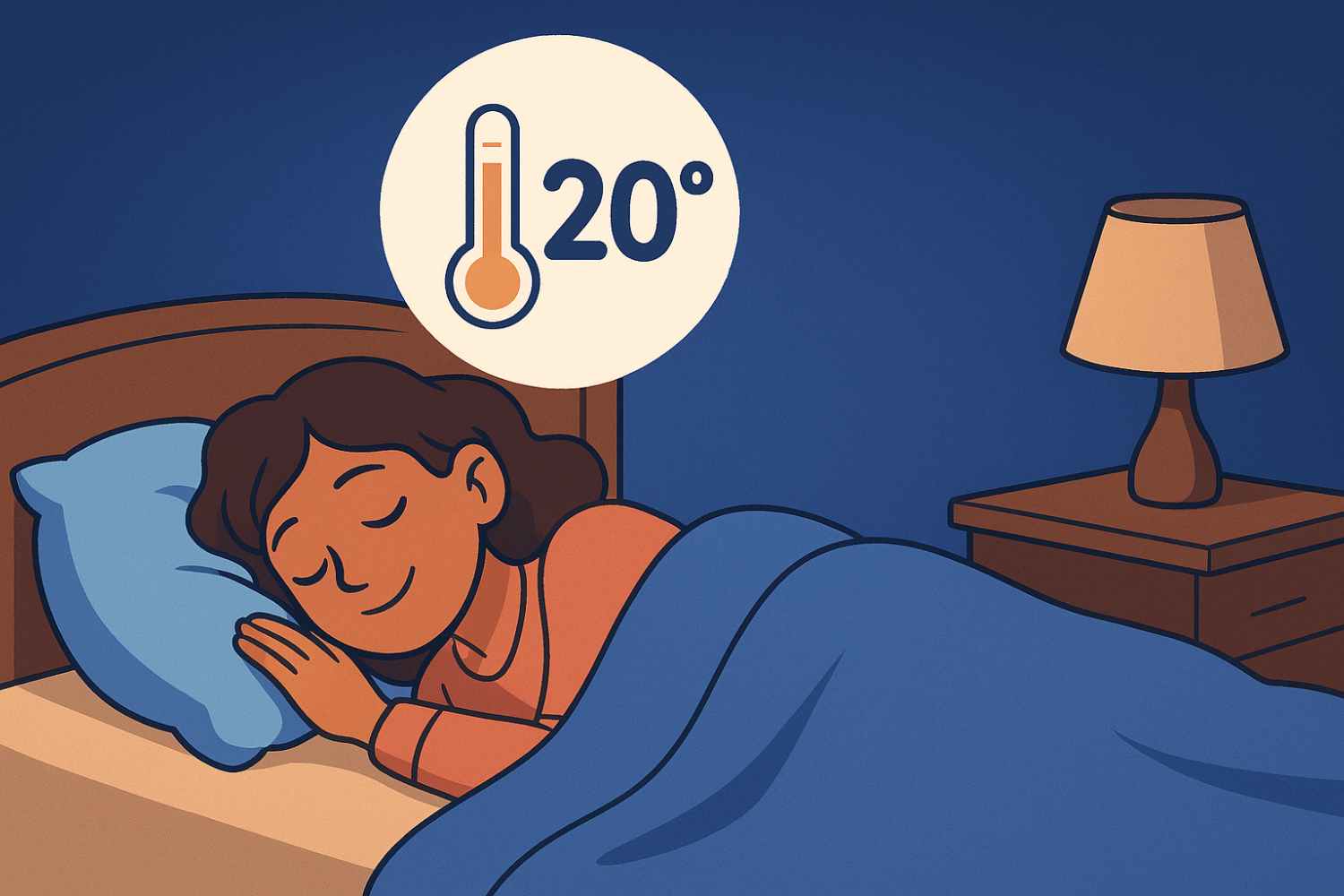
When we get under the covers in the evening we rarely think of the temperature of the room as a determining factor for the quality of rest, when it is the exact opposite: the science of sleep has identified a precise thermal range that favors rapid falling asleep and a deep and restful sleep. Let’s find out together what the ideal temperature is and why it really makes a difference.
The perfect thermostat: between 19 and 21 degrees
Scientific research converges on a fairly precise fact: the optimal temperature for sleeping is between 19 and 21 degrees Celsius. One study monitored the sleep of older adults in their homes for extended periods and found that rest was most efficient when the nighttime temperature remained between 20 and 25 degrees, with a clinically relevant drop in sleep efficiency when the temperature rose from 25 to 30 degrees.
Because the body needs cold (not excessive) to sleep
The explanation lies in the physiological mechanisms that regulate sleep. Our body follows a circadian rhythm which involves a lowering of internal body temperature in the evening hours, a biological signal that prepares the body for rest and, when the external temperature is too high, this natural process is hindered. Research published in Frontiers in Neuroscience has shown that thermoregulation and sleep are closely interconnected, given that cooling the body facilitates entry into the phases of deep sleep, the truly regenerative ones.
During the night, our internal temperature drops by about one or two degrees compared to daytime values. A cool environment facilitates this process, while a room that is too hot forces the body to work to dissipate heat, interfering with sleep continuity and reducing the time spent in REM and deep sleep phases. Studies show that in optimal temperatures, between 19 and 21 degrees, we instinctively try to create skin microclimates between 31 and 35 degrees through blankets, and any deviation from this balance negatively affects the quality of rest.
The effects of excessive heat on rest
Sleeping in environments that are too heated (but also too cold, as we will see in the next paragraph) has concrete consequences on the quality of sleep. Temperatures above 26 degrees can cause frequent awakenings, night sweats and a feeling of sickness upon waking. Research has highlighted how high temperatures, around 32 degrees, significantly increase the rate of awakening and the total time spent awake at night, reduce the duration of the REM phase and suppress the natural drop in body temperature.
Those who sleep in rooms that are too hot tend to wake up several times during the night, even without realizing it, fragmenting the sleep cycle and compromising rest. In the morning you wake up tired, with the feeling of not having really rested, even after eight hours in bed.
How to find your thermal balance
Obviously, what has been said so far is not a rule that applies to everyone, because the ideal temperature can vary slightly from person to person. Individual factors such as age, metabolism, body weight and even the type of pajamas and bedding influence thermal perception. A Japanese study published in the Nagoya Journal of Medicine Science found that the subjective perception of cold in the bedroom significantly worsens the quality of sleep, suggesting that personal comfort remains an important element.
A good approach is to start from 19-20 degrees and adjust by one or two degrees based on your sensations. The fundamental criterion is to fall asleep without feeling hot or cold, with a fresh face and a comfortable body under the covers.
Strategies for managing night-time temperature
Setting the thermostat correctly is the first step, but not the only one. During the cold months, it is best to turn down the heating one hour before going to bed, so that the bedroom can gradually reach the optimal temperature. In summer, the intelligent use of the air conditioner or a fan can make a difference, as long as the air flow does not hit the body directly.
The choice of bed linen deserves attention: natural materials such as linen and cotton promote perspiration and help the body maintain a comfortable temperature. Pajamas also count: it is better to opt for light and breathable fabrics, avoiding synthetic fibers that retain heat and humidity.
Bedroom temperature is not a negligible detail, but a central element of sleep hygiene. Setting the thermostat between 19 and 21 degrees, adapting to your personal needs, represents a simple but effective choice to improve the quality of rest and wake up truly rested.
