
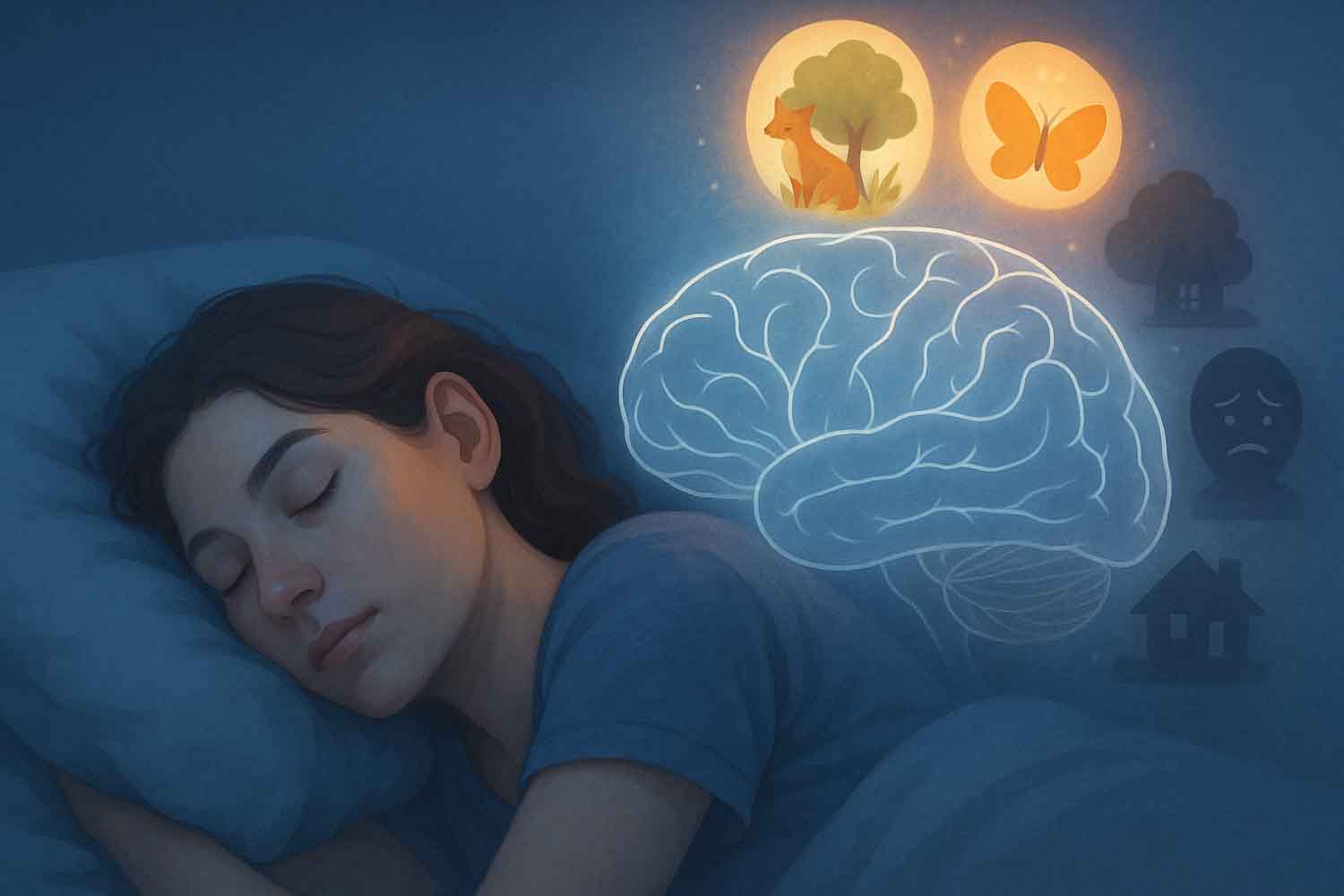
The idea may seem like something straight out of a science fiction episode, but instead it is scientific reality: while we sleep, the brain is not as still as we think. Reorganize, select, modify. And above all he decides which memories deserve to remain in the front row and which, instead, can take a step back. It is precisely in this moment of “nightly maintenance” that a group of researchers tried to intervene, discovering that it is not necessary to erase a negative memory to make it less cumbersome: just offer it a more positive competitor.
Guiding their work is a simple idea: when a sound or word is connected to both an unpleasant and a pleasant experience, the brain spontaneously tends to give space to the more recent or emotionally stronger one. Researchers wondered if it was possible to exploit this natural mechanism… and the answer seems to be an encouraging “yes”.
How this “retouching” of memories works
The experimental path started from artificial memories, constructed specifically so as not to interfere with the volunteers’ personal experiences. Each participant learned to connect meaningless words to unpleasant images. The next day, half of those same words were also associated with positive images. Two different memories, a single signal capable of recalling them both. At that point sleep entered the picture.
During the non-REM phase, when the brain consolidates what we have experienced and learned, scientists reproduced some of those words almost imperceptibly. Not enough to wake the volunteers, but enough to trigger recall of the associated memory. The result, the next morning, was surprising in its delicacy: the negative images were weaker, more distant, while the positive ones took over. They didn’t disappear, they weren’t erased. They were simply passed over.
Interestingly, this effect only occurred when the word had acquired a new positive association. Words linked exclusively to negative memories did not change in intensity. No generalized “cleaning”, no indiscriminate wiping.
The pleasant memory, in short, learned to come forward on its own, as if the brain had decided to offer it the space that was previously missing. To confirm that something was really happening there were also the signals recorded by the EEG: when the word was reproduced, the brain showed a response in the theta band, the same one involved in the consolidation of the most important memories.
And there is one detail that is most striking of all. When participants attempted to recover the negative image, they were often “interrupted” by the positive one. A sort of gentle but insistent intrusion. A new memory that fits into the old and pushes it a little further.
The effects were not only cognitive, but also emotional. Those same words, when evaluated again, seemed less dark, less weighed down by an unpleasant feeling. It’s a subtle change, but snap judgments often determine how we react in real life. For this reason, scientists consider these results an important first step.
The study recognizes some inevitable limitations: the memories were artificial, the effects were measured in the short term and we do not know how long they may last over time. But the main message remains: sleep is not simply rest. It’s a window of possibility. And perhaps, with the right attention, even a place where you can leave room for lighter memories.
You might also be interested in:
