
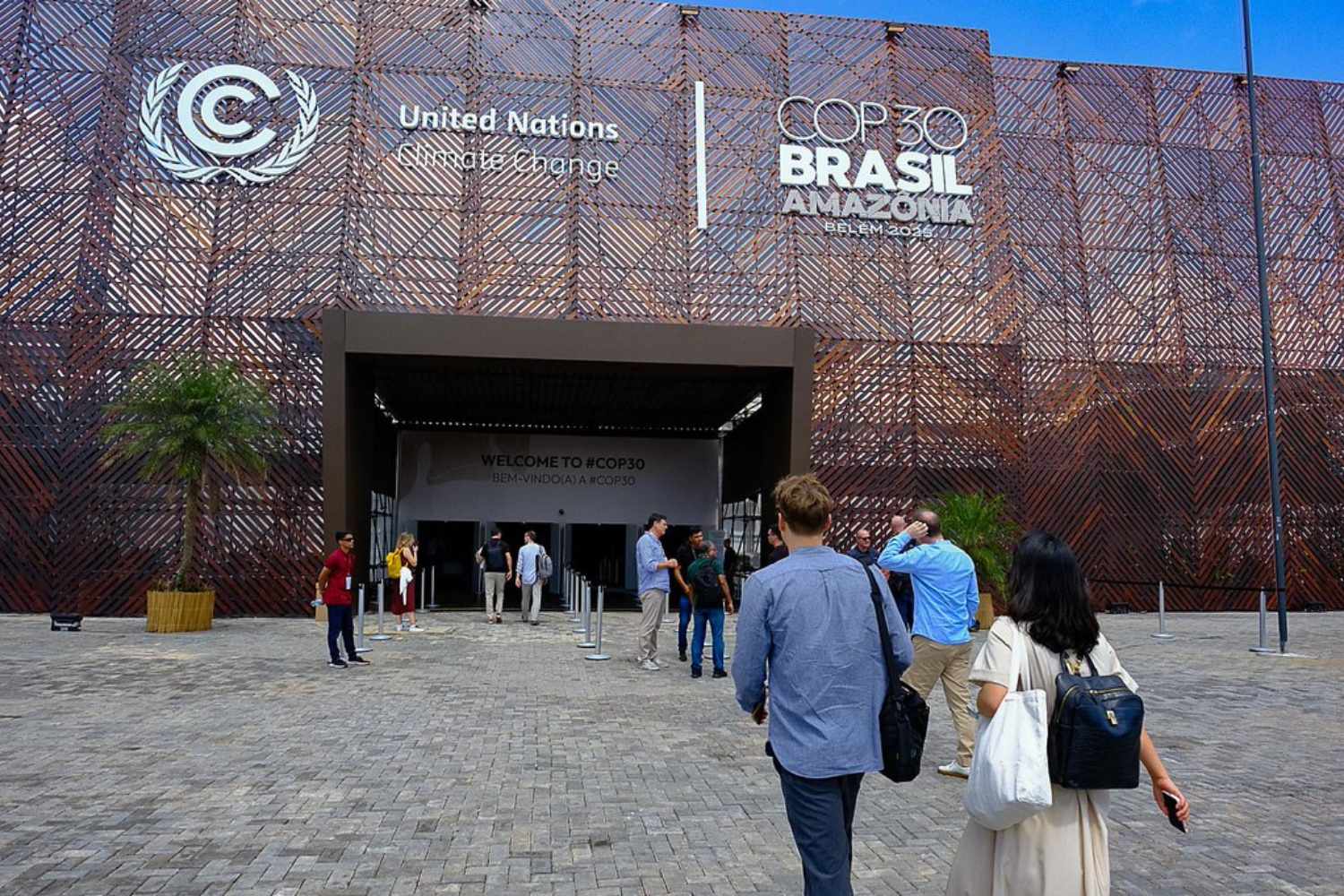
At COP30 in Belém, in the heart of the Amazon, the stakes became clear from the first days: translating into a concrete path the still vague commitment to “transition away” from fossil fuels enshrined at COP28 in Dubai. An objective that Pope Leo
The Brazilian presidency led by André Corrêa do Lago has grasped the urgency and put the idea of a formal roadmap on the table. A vision that wants to go beyond general principles and introduce a clear plan, with stages and responsibilities, even without a defined format yet.
Why Brazil insists on the roadmap
Lula’s government considers COP30 “the COP of implementation”. For this reason he entrusted Minister Marina Silva with the task of putting forward a proposal that takes up the outcome of Dubai and tries to make it operational. In the meantime, Colombia has relaunched on two fronts: an autonomous plan between ambitious countries and a regional request to stop extraction in the Amazon, an initiative which, however, Brazil has not accepted.
About forty nations support the idea of a shared path, from France to Kenya. Others, especially large oil producers, maintain clear opposition. China and India remain cautious, asking for clarification on the economic implications and repercussions for international trade.
The political knot: consensus or block
At COPs decisions are made unanimously, and this makes every step complicated. The Brazilian presidency evoked “mutirão”, the collective effort that allows many to achieve what would be impossible for a few. It is a call to responsibility that affects all open dossiers: from trade to carbon taxes, up to the transparency of national contributions (Nnd).
In the meantime, the requests of the most vulnerable countries are once again central. They aim to triple the funds for climate adaptation, an area in which real commitments remain far from objectives: out of a theoretical 300 million per year, around 40 have arrived so far.
The European proposal: a Mutirão Roadmap
In this framework, the European Union has presented a proposal that tries to realign the member states and offer a political platform to the Brazilian presidency. The text, also approved by Italy after days of internal uncertainty, “encourages all Parties to accelerate efforts” according to differentiated responsibilities and national capabilities.
The EU proposes to launch a “Mutirão Roadmap”, an expression that recalls the Brazilian approach, and aims for a transition away from fossils “in a fair, orderly and equitable way”. An important political step, which comes as the internal debate at the COP also focuses on Cbam, the climate tariff contested by Beijing.
And Italy? Between caution and waiting
In the mosaic of accessions, Italy remains one of the countries that do not appear among the 82 explicit supporters of the roadmap. A caution reiterated by the Minister of the Environment and Energy Security Gilberto Pichetto Fratin: “The roadmap? Before joining we want to see what’s inside”, he explained, implying that Rome does not want to commit to an instrument that still lacks details.
A position that clashes with the enthusiasm shown by other European partners, while EU Commissioner Wopke Hoekstra confirmed how much the Union likes the proposal. In the dynamic of the “mutirão” evoked by the Brazilian presidency, the Italian hesitation however risks weakening the front of the more ambitious countries precisely at the moment in which the discussion attempts to get into the substance.
Science and diplomacy, a common front?
Lula’s arrival in Belém gave new impetus to the negotiations. The president met with delegations from Europe, emerging countries and local communities, including indigenous representatives who are calling for recognizing “nationally determined contributions” for native peoples as part of climate policies.
The most incisive comparison, however, is the one with scientists. Meteorologist Carlos Nobre (IPCC) reminded the president that the elimination of fossils must take place “by 2040 and no later than 2045”. Lula, Nobre reports, “did not dissent”, a political signal that many are observing carefully.
The two options on the table
The negotiating text released mid-week contains two possibilities for the roadmap:
They are still embryonic proposals, but for the first time they put tools, responsibilities and moments of verification in sequence. However, there remains resistance from exporting countries and the fact that some promoters of the roadmap, such as Brazil itself, continue to expand hydrocarbon extraction.
A still fragile balance
COP30 is drawing to a close with many outstanding points. The 82 countries in favor of the roadmap are pushing to include a detailed path in the final text. But the presidency knows that a compromise could be limited to stronger language than Dubai, without dates or numbers.
In any case, a growing demand has emerged in Belém to make measurable what has so far only been evoked. The roadmap, if it arrives, will be the first test to understand whether the “mutirão” can transform a political commitment into a real process.
