
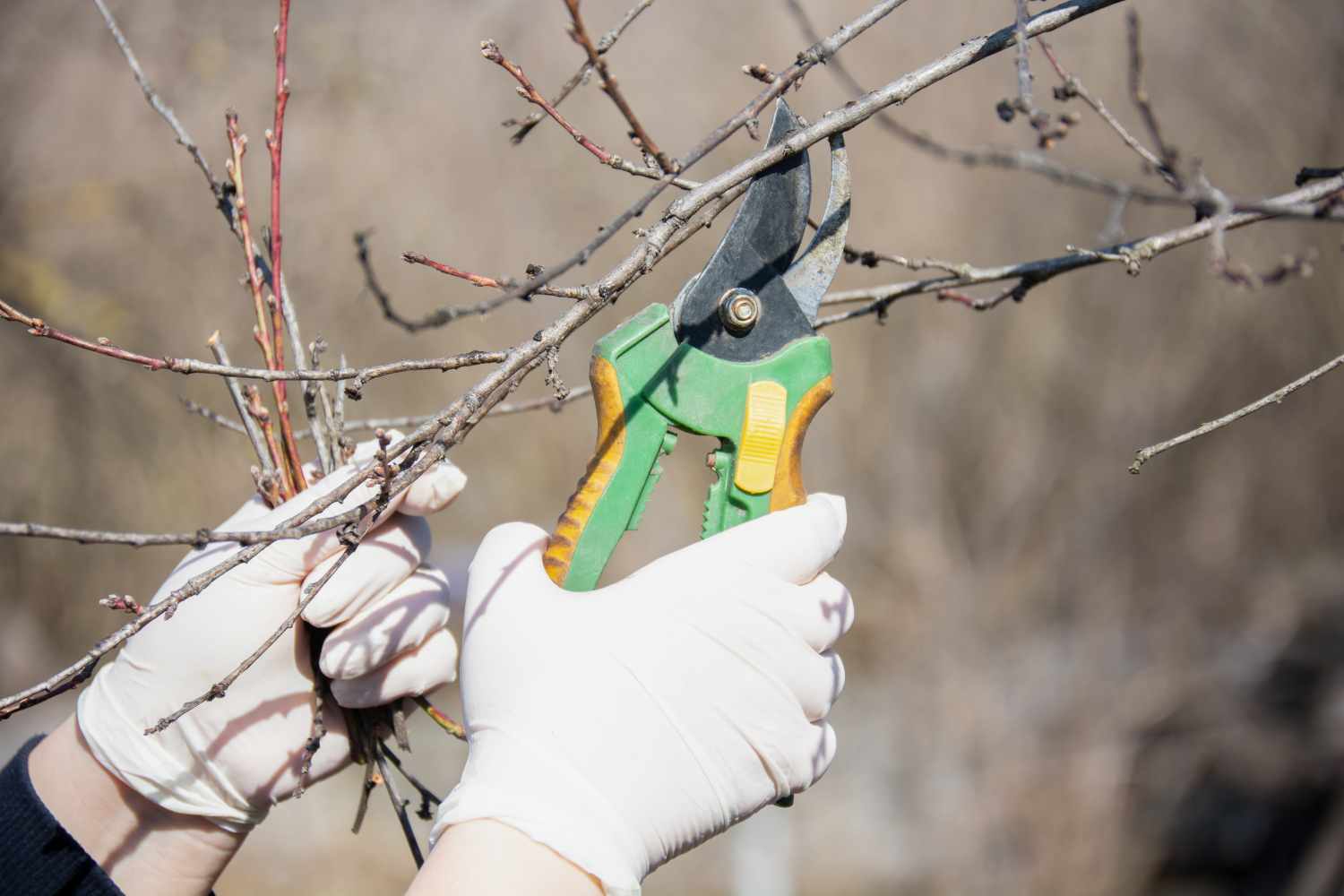
November is a very delicate month for pruning. Since most plants enter the dormant phase, it is tempting to start pruning, but only a few plants can be pruned in this period. If you prune an olive tree, for example, you risk doing a lot of damage.
The species that are more resistant to the cold, such as apple trees and pears, can be pruned in November, because they are plants that do not suffer from frost and so pruning in this period promotes healthy growth.
Among the fruit trees that tolerate November pruning we also find the plum tree, which can be pruned after harvesting, but if you are in an area where early frosts are possible, don’t do it, we will see why later in the article. The best period for the plum tree remains February, but if we have many plants we can anticipate it. In November we can also prune walnut and hazelnuts, only with light interventions. Before taking the scissors and the pruning pruner it is important to check that the plant has actually ceased its vegetative activity.
Plants that should not be pruned in November
Some plants are particularly sensitive to cold and should not be pruned during this period. Among these we find the aforementioned olive tree, a typical Mediterranean shrub plant that suffers from cold and humidity and risks serious damage if cut before the end of winter. The problem in the case of the olive tree is that the cuts, if exposed to frost, can compromise the health of the tree. Even plants such as cherry and citrus trees should be left alone until spring, to avoid damage due to low temperatures. The cherry tree in particular is a plant that is very sensitive to pruning and should always be treated with small interventions.
Remember that emergency pruning for diseased or damaged branches can be carried out regardless of the period, but for training or production interventions it is always better to respect the natural cycles of the plant. A general rule is not to expose the cuttings to frost or heavy rain. Always remember to intervene only on plants that have stopped growing (this does not apply to aromatic and evergreen plants). Therefore prune where you observe that all the leaves have fallen and, as a general guide, in a period in which no frosts or heavy rains are expected (check the weather!).
What not to prune in November
The species that must not be pruned in November include the olive tree, the cherry tree and all citrus fruits such as orange, lemon and mandarin. Added to these are fig and apricot, which are particularly sensitive to cuts made in cold conditions, as well as tropical species or those that are not very resistant to low temperatures, which risk serious damage if touched too early.
What to prune in November
On the contrary, there are plants that can be pruned in November, as long as the period is not accompanied by frosts or persistent rain. These include apple, pear and plum, the latter only if strictly necessary, because the month of February remains the most suitable. Walnut and vines can also start to be managed at this time, with vines still performing at their best between January and February. To these are added pomegranate and strawberry tree, together with the more robust aromatics – rosemary, sage, lavender and thyme – which tolerate light interventions well and often offer the opportunity to obtain new cuttings for future propagation.
Because it is better not to prune in frost and rain
Pruning during periods of frost and rain can cause more harm than good to plants. Intense cold makes plant tissues more fragile and vulnerable, making it difficult for pruning wounds to heal and increasing the risk of infections by fungi and bacteria. Furthermore, excessive humidity caused by rain can favor the development of pathogens, which find an ideal environment in cut and still exposed surfaces. Pruning in frosty or rainy conditions can therefore weaken the plants and compromise their future growth.
How to prepare tools for safe pruning
Before tackling any intervention, even a light one, it is better to dedicate a few minutes to preparing the tools. The blades must be well sharpened, so as to ensure clean cuts that promote rapid healing. Dirty scissors or rusty saws increase the risk of transmitting diseases from one plant to another, which is why it is best to disinfect metal surfaces with alcohol or specific products, a fundamental operation especially when working on weakened branches or already affected by fungi. Final cleaning is also important: removing bark or sap residues prevents the formation of bacteria and keeps the instruments in good condition for longer.
How to recognize if a plant is ready to be pruned
One of the most common errors concerns intervention too early, when the plant has not yet completed the transition to vegetative rest. To avoid this, it is best to carefully observe some signs: the total fall of leaves in deciduous trees, the absence of new buds forming and the reduction in lymphatic activity, which can be seen from the lower “humidity” on test cuts. The color of the branches can also offer useful indications: mature ones have a more uniform shade and a slightly hardened bark. If green shoots or still active leaves appear, it is better to postpone pruning and let the plant complete its cycle naturally.
