
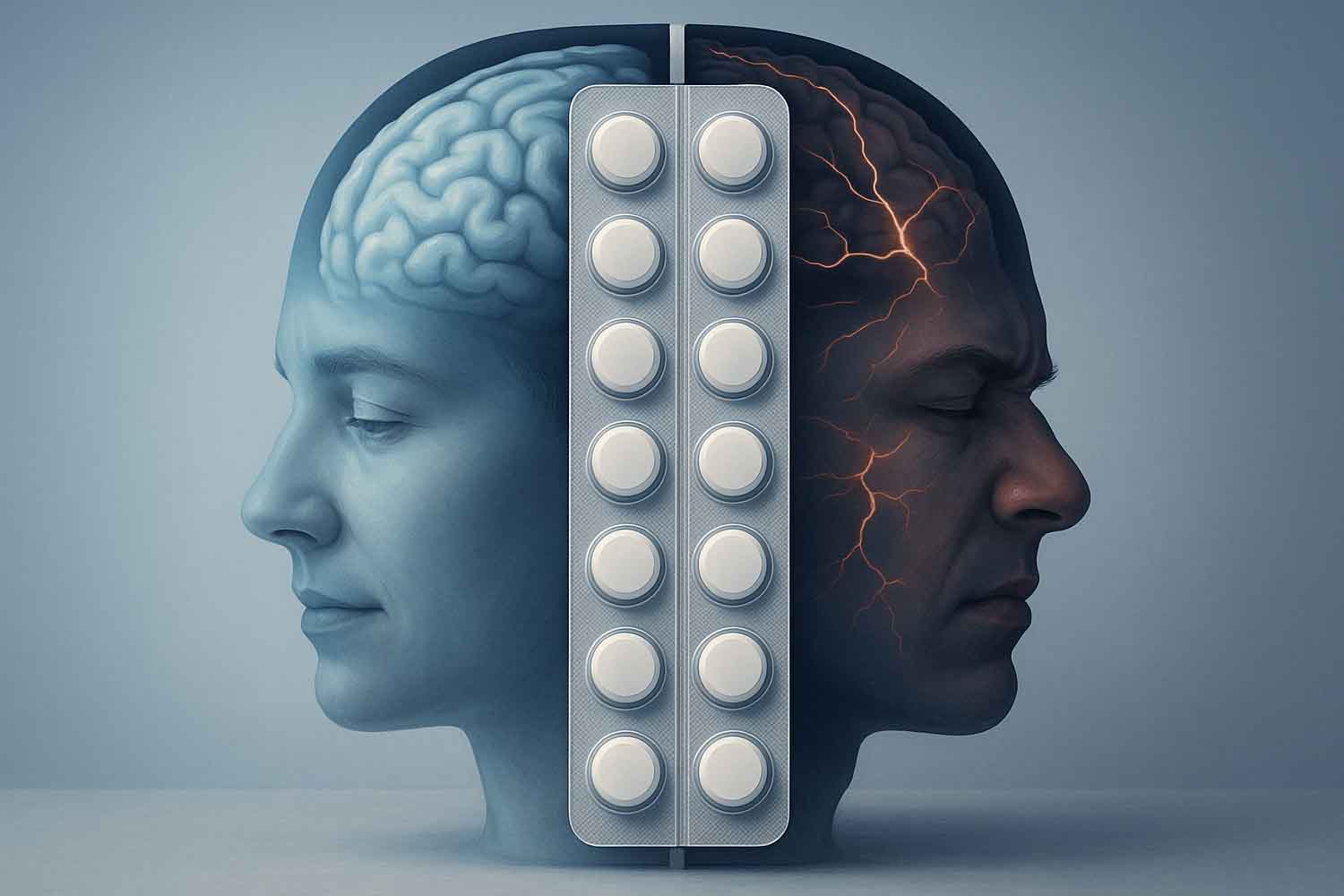
There are medications that we take without thinking too much: headache, fever, muscle pain… a little paracetamol and off you go, problem solved. It is among the most used medicines in the world, sold everywhere under familiar names such as Tachipirina, Efferalgan, Tylenol or Panadol. Yet, behind its reassuring “everyday help” image, a less well-known effect is hidden.
Research conducted in 2020 by Ohio State University and led by neuroscientist Baldwin Way highlighted a curious phenomenon: people who take paracetamol tend to perceive risky situations as less dangerous and, consequently, behave more impulsively. Simply put, the drug seems to attenuate negative emotions related to fear of risk.
Way explained:
Paracetamol reduces the feeling of discomfort when evaluating potentially dangerous activities, as if the brain no longer perceives that classic tug in the stomach that stops us from making a rash decision.
An effect which, in a society where one in four people in the United States takes paracetamol every week, could have far from negligible consequences.
Paracetamol can influence emotions, empathy and risk perception
It is not the first time that research points the finger at paracetamol for its psychological “side” effects. Other studies had already observed that this drug reduces emotional sensitivity, lowers empathy and can even cloud cognitive clarity.
In short, not only less pain, but also less emotions.
To test the effect of acetaminophen on behavior, Way and his team involved more than 500 university students. One group was given a dosage of 1,000 mg of paracetamol, the maximum recommended for an adult, while a second group received a placebo. Then, the participants tried their hand at a curious digital experiment: inflating a virtual balloon to earn imaginary money.
Each “inflation” increased earnings… but also the risk that the balloon would burst, eliminating everything. The result? Those who had taken paracetamol inflated more and blew up more balloons compared to the control group. Less fear, more risk, explains Way:
Those who are more cautious tend to stop before taking risks. But those who have taken paracetamol seem to feel less anxiety and perceive less danger, as if the fear itself was anesthetized.
In addition to the balloon test, the researchers asked participants to evaluate risky scenarios such as driving without a seat belt, bungee jumping or betting a day’s pay on a sports match. In some cases, those who had taken the drug judged these behaviors to be less dangerous.
From reduced empathy to impulsive choices
Although the observed effects are slight, scientists warn that the implications should not be underestimated. Paracetamol is present in over 600 prescription and over-the-counter medicines, and its diffusion is so widespread as to make it a social variable in all respects.
In 2023, a new study from the University of Vienna confirmed the trend, suggesting that frequent painkiller intake can reduce empathy and weaken prosocial behavior.
In other words, those who regularly take paracetamol may be more emotionally detached, even without realizing it.
However, despite these findings, paracetamol remains one of the essential medicines recognized by the World Health Organization. Its effectiveness against pain and fever is undisputed, but perhaps the time has come to also ask ourselves about the less visible effects, those that affect the mind more than the body.
As Way points out:
Further studies are needed to better understand how paracetamol – and other common drugs – can influence our decisions, emotions and perception of risk.
You might also be interested in:
