
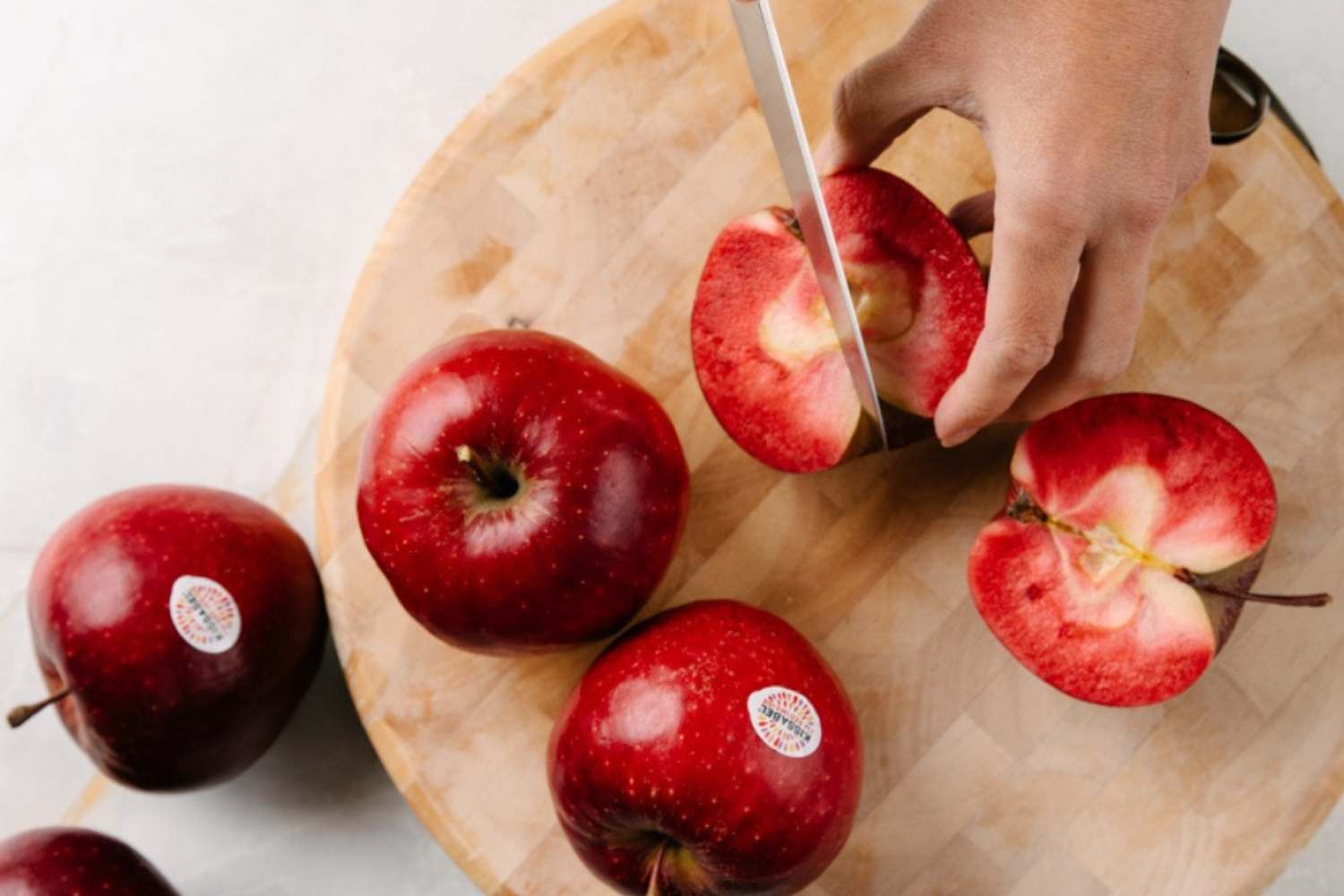
You will probably have seen very particular apples in the fruit shop, in the supermarket but also on social media, which have not only the skin but also red pulp. They are called Kissabel® and they are literally bewitching consumers and pastry chefs all over Europe.
The history of Kissabel begins in France two decades ago, when a group of passionate fruit growers had an ambitious idea: to cross red-fleshed wild apples with high-quality varieties. After four generations of crossbreeding and a lot of patience, the first commercial orchards were born.
The result? Three main varieties:
The name evokes the sweetness of a kiss – the “kiss of nature”, as the producers like to define it. Those that are increasingly found easily in Italy too are Kissabel® Rouge.
Why are they red inside? This time no GMOs, the credit goes entirely to the anthocyanins, the same natural pigments that color blueberries and red fruits. In this case they have also colonized the pulp, giving that ruby red that is so intriguing.
View this post on Instagram
View this post on Instagram
What the strawberry apple tastes like
And here we are at the most controversial point. Anthocyanins bring with them a good dose of antioxidants, but also a strong character: the acidity and tannin notes of this apple give it a taste that somewhat divides tasters.
Opinions on Kissabel® are different. Everyone agrees on its crunchy and juicy consistency but perceptions vary on the flavour: there are those who perceive hints of red fruits, with light notes of strawberry and raspberry on the finish, accompanied by nuances of quince; on the other hand, there are those who think that the name and color influence the palate a little too much, while the real protagonist is a mix of citrus acidity with a sweet finish that is more reminiscent of tropical fruits than strawberries.
The truth? It’s probably somewhere in the middle and depends a lot on personal sensitivity. What is certain is that it is not a “classic” apple.
However, their compact pulp and spectacular color make them perfect for pastry making, where some chefs are already using them to create desserts with a guaranteed visual impact.
@maryy_di_tutto_eunpo Too good
______ #fragolaapple #kissabel #fypviralシ #viralfood #xteee
♬ original sound – Mary
@dr.tizianoscarparo The strawberry apple is the fruit of Winter

#strawberryapple #fruit #loseweight #healthynutrition #loseweight
♬ original sound – Dr Tiziano Scarparo
Where to find them (and how much they cost)
Kissabel® are a registered trademark of the international Ifored consortium. In Italy, production is entrusted to the NovaMela consortium, which brings together producers from Alto Adige, Trentino and Piedmont.
They can now also be found in supermarkets for around 4-6 euros per kilo (depending on the variety and the point of sale). A not exactly cheap price, which makes us reflect: are we buying an innovative fruit or paying above all for the aesthetic charm and marketing?
As often happens with trendy products, it’s worth asking: do we really need them or are we giving in to yet another lure of aesthetic consumerism?
The answer, as always, lies somewhere in the middle. If you love experimenting and appreciate particular flavours, Kissabel® can be a pleasant discovery. If, however, you are expecting the miracle of the strawberry in the form of an apple, prepare for disappointment.
