
During the day, the skin is constantly exposed to various environmental factors such as sun, dust, pollution and UV rays. These elements, together with stress and external aggressions, put a strain on our skin, which often appears damaged or dehydrated. The night, however, is a crucial time for cellular regeneration, as the body and skin dedicate themselves to recovery. Night creams, specially formulated to promote these natural processes, promise to nourish and regenerate the skin while we rest. But how useful are they really? And above all, what are the products that justify their cost, without compromising skin health or damaging the environment?
ÖEKO-TEST put 20 night creams to the test to answer these questions. The results are surprising: although many of these creams are highly recommendable, some problematic ingredients continue to emerge among the formulations, along with packaging choices that are not always eco-friendly. Let’s find out together what emerged from this in-depth test.
Night creams in test: product analysis
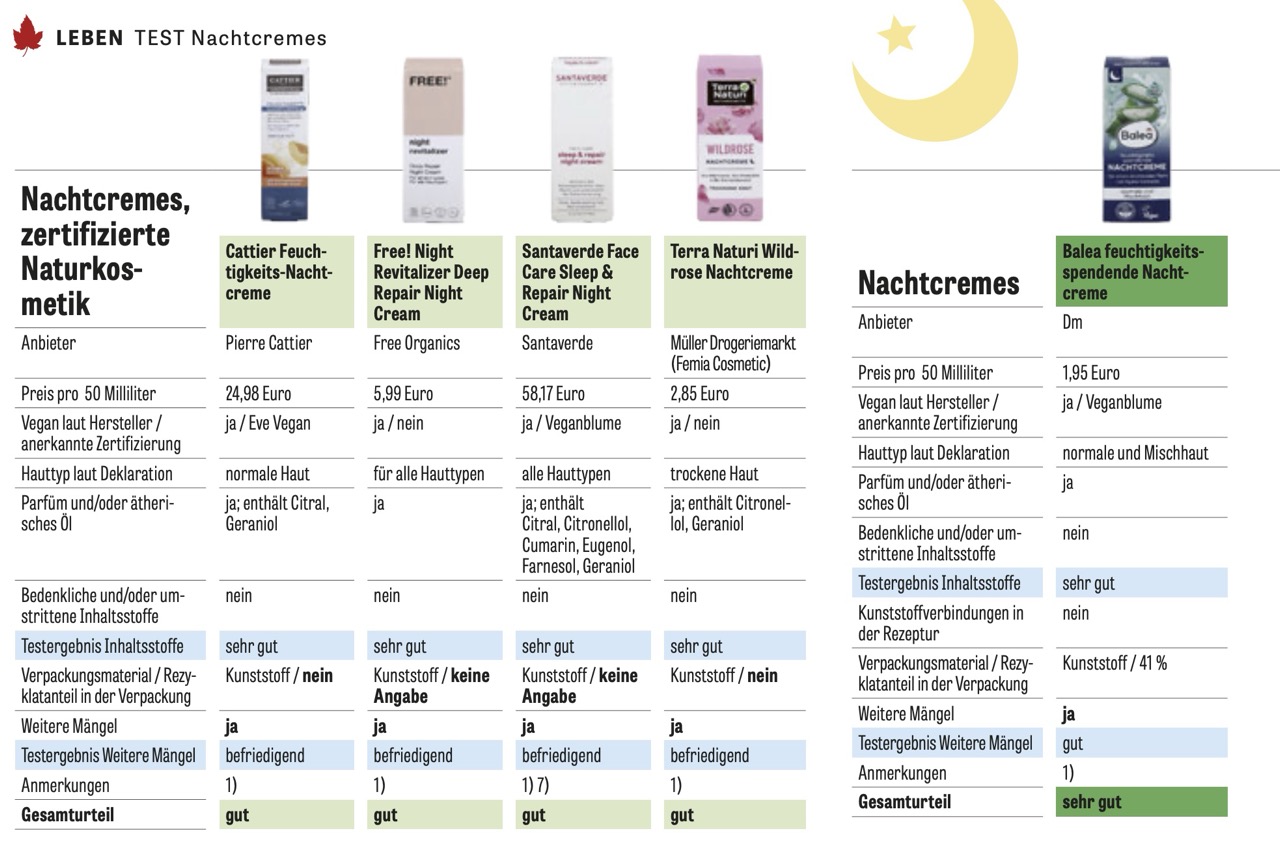
ÖEKO-TEST purchased and tested 20 night creams, of which 10 are certified natural cosmetic products. The products analyzed vary greatly in price, from very economical options (starting from 1.95 euros for 50 ml) up to the most expensive ones (58.17 euros for 50 ml). Among these, as many as half obtained the “very good” score, with a positive rating even for the more affordable options. However, there are some concerns regarding the ingredients contained in these cosmetics, with some products not reaching expected quality standards.
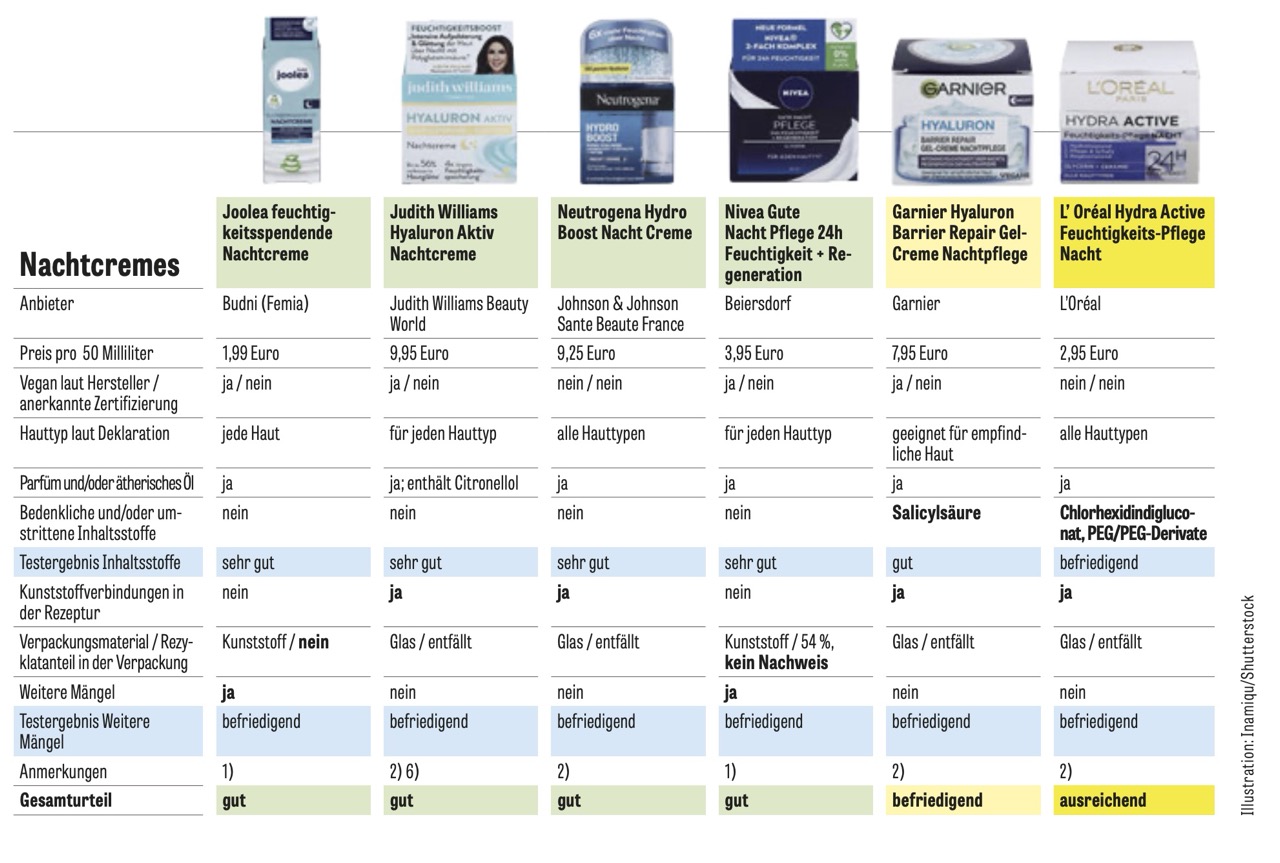
Notably, the Garnier Hyaluron Barrier Repair Gel-Creme Nachtpflege only scored a “satisfactory,” while the L’Oréal Hydra Active Moisture Care Night received a disappointing “insufficient.” These lower scores are mainly linked to the presence of controversial ingredients in their formulations.
The best night creams
Among the 20 night creams analyzed by ÖEKO‑TEST, well-known names and products from less “mainstream” brands emerge, with very different results depending on the formulation. Ratings range from “very good” until “insufficient”and prices range from around €2 to over €50 for 50 ml.
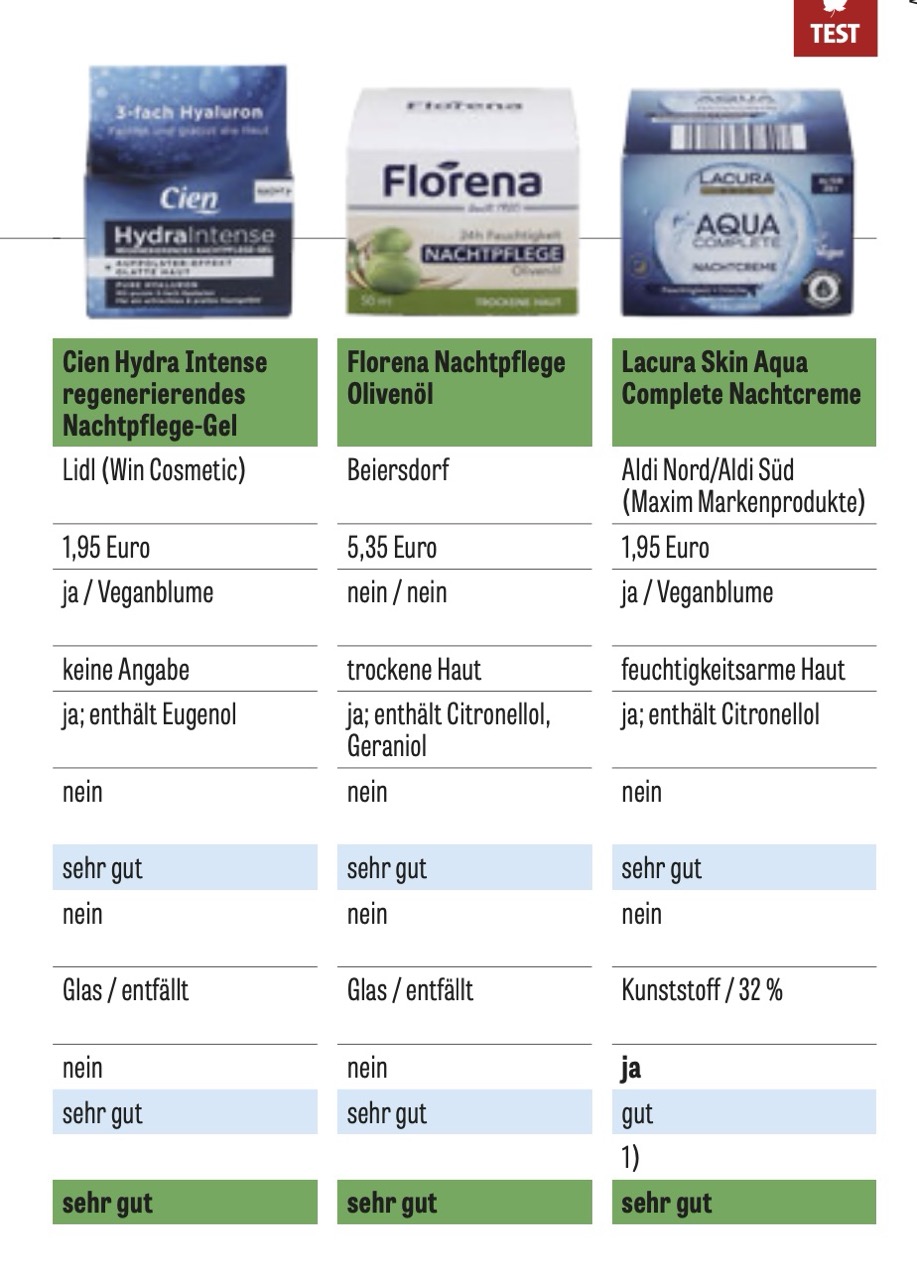
Here is the complete list of the 20 night creams tested by ÖEKO-TEST, with prices and ratings for each:
Alterra Sleeping Cream
Alverde Nachtcreme Bio-Wildrose
Blütezeit Nachtcreme Bio-Wildrose
Lavera Re-Energizing Sleeping Cream
Rosenrot Good Night regenerierende Nachtpflege
Weleda Skin Food Nährende Nachtpflege
Cien Hydra Intense regenerierendes Nachtpflege-Gel
Florena Nachtpflege Olivenöl
Lacura Skin Aqua Complete Nachtcreme
Joolea feuchtigkeitsspendend Nachtcreme
Judith Williams Hyaluron Aktiv Nachtcreme
Neutrogena Hydro Boost Night Cream
Nivea Gute Nacht Pflege 24h Feuchtigkeit + Regeneration
Garnier Hyaluron Barrier Repair Gel-Creme Nachtpflege
L’Oréal Hydra Active Feuchtigkeits-Pflege Nacht
Cattier Feuchtigkeits-Nachtcreme
Free! Night Revitalizer Deep Repair Night Cream
Santaverde Face Care Sleep & Repair Night Cream
Terra Naturi Wildrose Nachtcreme
Balea feuchtigkeitsspendend Nachtcreme
These evaluations show that it is not only the price that determines the quality of a night cream: even cheap products such as those from Lidl (Cien) or natural supermarket lines can achieve excellent results, while formulas from well-known brands can disappoint due to the presence of ingredients that ÖEKO-TEST considers avoidable.
@Oekotest
The ingredients of night creams: which ones to avoid?
In the ÖEKO-TEST test, some ingredients were identified that, according to experts, should be avoided in night creams. Not only for the health of the skin, but also for that of the environment:
Packaging: another sore point
In addition to the ingredients, another fundamental aspect analyzed in the test concerns the environmental impact of the packaging. Unfortunately, only 25% of products used recycled plastic in packaging, a gap that many manufacturers should address. Furthermore, many packages are additionally packaged in cardboard, generating unnecessary waste of material. Packaging is an aspect that must be taken into consideration, not only for aesthetic or practical reasons, but also for the impact it has on the environment.
Night creams yes, but with caution
Night creams can be a valid ally in your beauty routine, but not all options on the market are free of harmful ingredients or unsustainable packaging choices. It is important to pay attention to the ingredients, preferring light, hydrating and natural formulations, which not only nourish the skin but respect it in the long term. Furthermore, the sustainability of packaging should become a fundamental criterion in the choice of products, to reduce the environmental impact.
Choosing creams that respect both the skin and the environment is not only a question of ethics, but also of long-term health and well-being. It is essential to make informed choices, favoring brands that care about both the quality of the ingredients and their responsibility towards the planet.
