
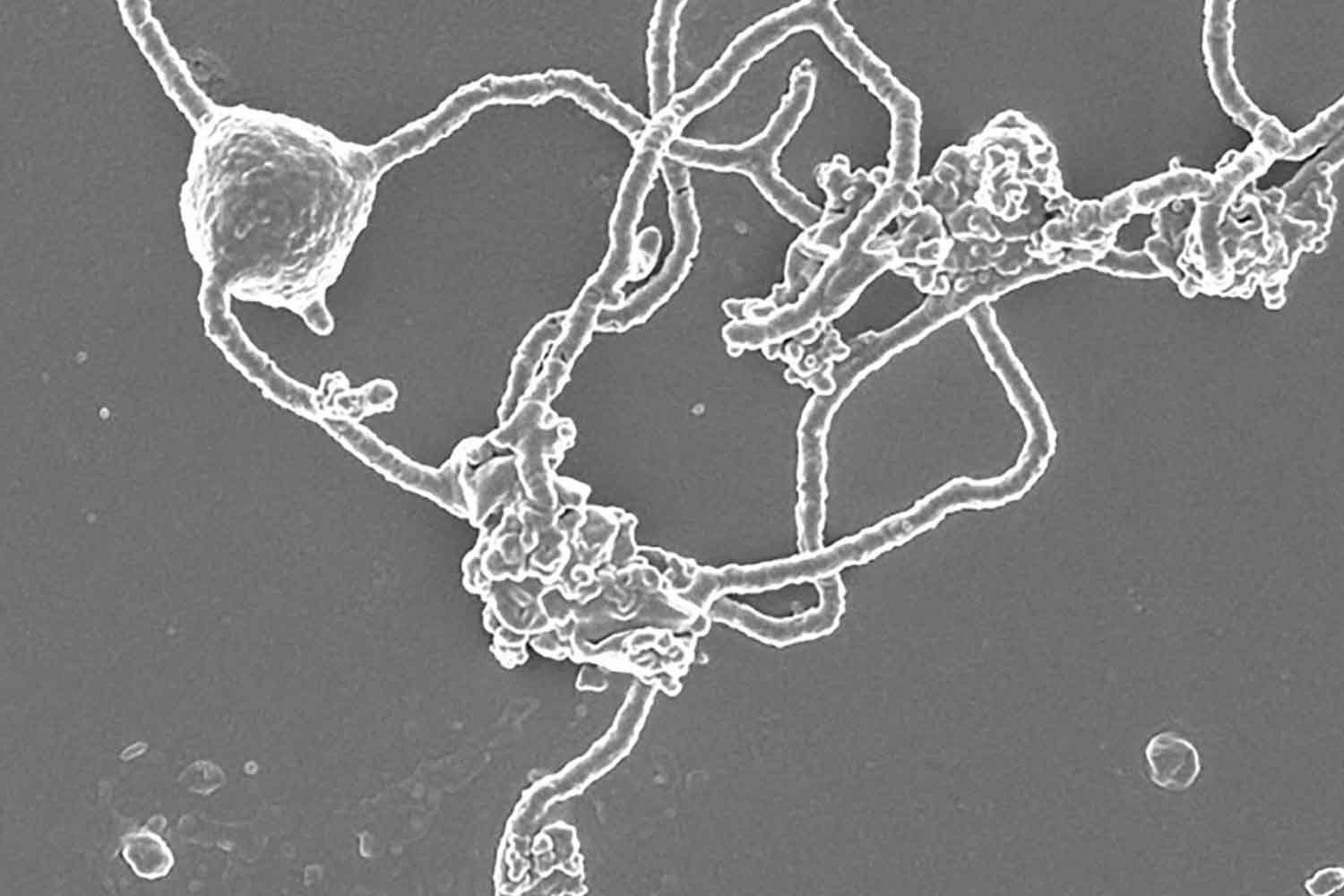
It might seem like a story very far from us, but instead it concerns every human being, every animal, every plant. According to new and in-depth scientific research, all complex life on Earth may have descended from a single microbe that lived about two billion years ago. A tiny organism, invisible to the naked eye, but capable of leaving an enormous mark on the history of the planet.
The discovery comes from the study of particular microorganisms called Asgard archaeasingle-celled life forms that inhabit extreme environments such as deep ocean floors and hydrothermal vents. It is precisely by analyzing their DNA that scientists have reconstructed a surprising link: animals, plants, fungi and humans appear to share a common ancestor.
From the depths of the oceans to the origin of complex cells
The life forms to which we belong, defined as eukaryotes, are characterized by complex cells, equipped with a nucleus and specialized internal structures. Without these cells, the human brain, photosynthesis, animal tissues or forests would not exist. Nevertheless, How the first complex cell came into being is one of the great mysteries of biology.
The work coordinated by the evolutionary microbiologist Thijs JG Ettema of Wageningen University shed light on this crucial step. His team assembled hundreds of microbial genomes recovered directly from the environment, without growing them in the laboratory, a necessary practice because these organisms are extremely difficult to grow artificially.
The result is a detailed family tree that places all eukaryotes within the Asgard archaea groupparticularly near a line called Hodarchaeales. In other words, complex life would not have arisen separately, but would have evolved from these ancient archaea.
Extreme microorganisms, but surprisingly similar to us
The Asgard archaea live in conditions that would be inhospitable to us. Some thrive near underwater hydrothermal vents, others in underground aquifers or chemical-rich sediments. Yet, their genetic heritage tells a family story.
Analyzes suggest that their ancestors are closer to eukaryotes they lived in milder environments than extreme onesthey fed on organic carbon and had unusually large genomes for such simple organisms. An important feature, because gene duplication is considered one of the main drivers of the evolution of biological complexity.
Some microscopic observations have shown that certain Asgard archaea possess branched cellular structures and proteins similar to those that, in eukaryotes, shape the shape of cells. Details that until a few years ago were thought to belong exclusively to complex organisms.
One more step to understand how we got here
This research fits into the great puzzle of eukaryogenesis, the process that led to the birth of the first complex cell. By tracing the genes linked to metabolism, scientists hypothesize that the ancestors of the Asgard were initially capable of obtaining energy from inorganic substances, and then gradually switched to feeding on organic matter produced by other microorganisms.
It is in this context that they could have been born the first collaborations between different speciesa key step that would lead to the origin of mitochondria, the “energy plants” present in our cells.
Not all answers are definitive. The researchers themselves point out that some parts of the evolutionary tree remain uncertain and that the results depend greatly on the genetic models used. But one thing appears increasingly clear: studying these microorganisms means studying our origins.
Because this discovery also concerns the present
Understanding where we come from is not just an academic question. The discoveries about the Asgard archaea fuel an important scientific debate about how to classify life on Earth and reinforce the idea that all biological complexity emerged from simple life formsslowly adapting to the planet’s environments.
Each new genome analyzed adds a piece to this very long history, which starts from the ocean depths and reaches human societies. A story that reminds us how deeply connected we are to the rest of earthly life, even to that which we do not see.
