
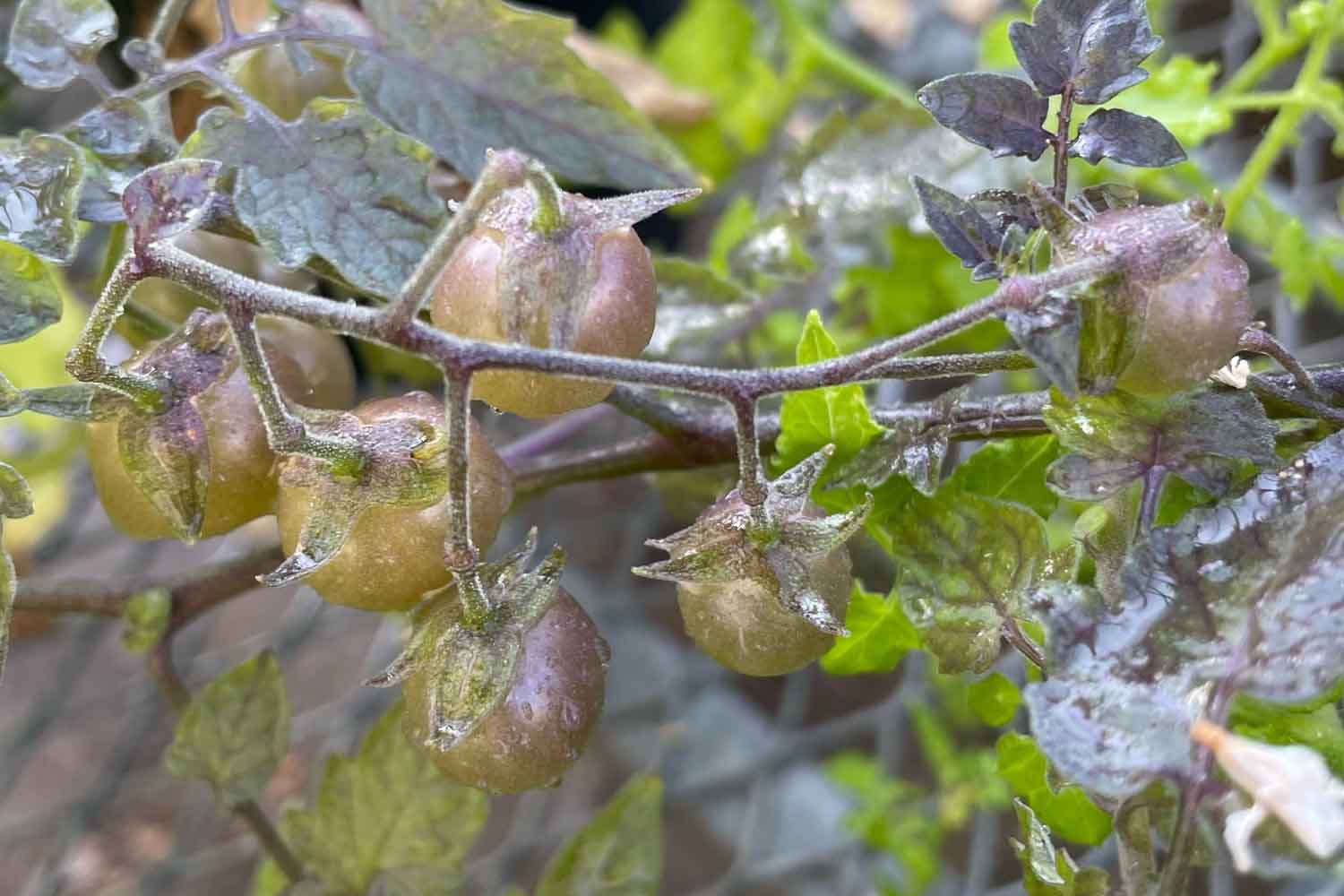
In nature it often happens that plants adapt, modify and change. But let them come back backwards over time, recovering very ancient genetic characteristics, it is something truly rare. Yet, this is exactly what is happening in some species of wild tomatoes that grow wild among the volcanic rocks of the Galápagos Islands.
A study published in the scientific journal Nature Communications by a team of researchers from the University of California, Riverside and the Weizmann Institute of Science, Israel, has documented for the first time a “backward” evolutionary process, observed in real time.
Tomatoes with archaic characteristics
The researchers analyzed 56 samples of wild tomatoes from different areas of the archipelago, belonging to the species Solanum cheesmaniae And Solanum galapagense. Their goal was to study alkaloids, toxic chemical compounds that serve as a defense mechanism against herbivores and parasites.
The discovery was surprising: in the older and more stable eastern islands, tomatoes produced alkaloids similar to those of tomatoes grown in the rest of the world. But in the younger and geologically unstable Western Islands, the fruits contained a much more archaic version of these chemical compounds, much like those found in the tomato’s prehistoric relatives, such as some wild varieties of eggplant.
This is not a simple isolated case: entire plant populations show clear signs of this genetic “return to the past”.
The key is in an enzyme and very few amino acids
Thanks to in-depth laboratory analysis, scientists have identified a specific enzyme involved in the production of these ancient alkaloids. The most incredible fact? Very few changes in some amino acids were enough to “reactivate” this old version of the enzyme.
A true genetic journey backwards, which does not just depend on random mutations, but seems to respond to very specific environmental pressures. The western islands of the Galápagos are in fact 500,000 years younger and offer decidedly more difficult conditions: poor soils, less vegetation, more extreme climates.
In such a hostile context, returning to old defense strategies may have represented an evolutionary advantage. For this reason the mutation did not remain isolated, but spread widely, also involving other genes, in a process called genetic atavism.
This “evolutionary review” is not only fascinating from a biological point of view. It can also have important practical implications. As Adam Jozwiak, molecular biochemist and lead author of the study, explains:
If you change just a few amino acids, you can get completely different molecules. This knowledge could help us design new drugs, improve plant resistance to pests, or make agricultural products less toxic.
But first, warns the scientist, we must learn to fully understand how this natural mechanism works. And this research represents a first, fundamental step in that direction.
Don’t want to miss our news?
You might also be interested in:
