
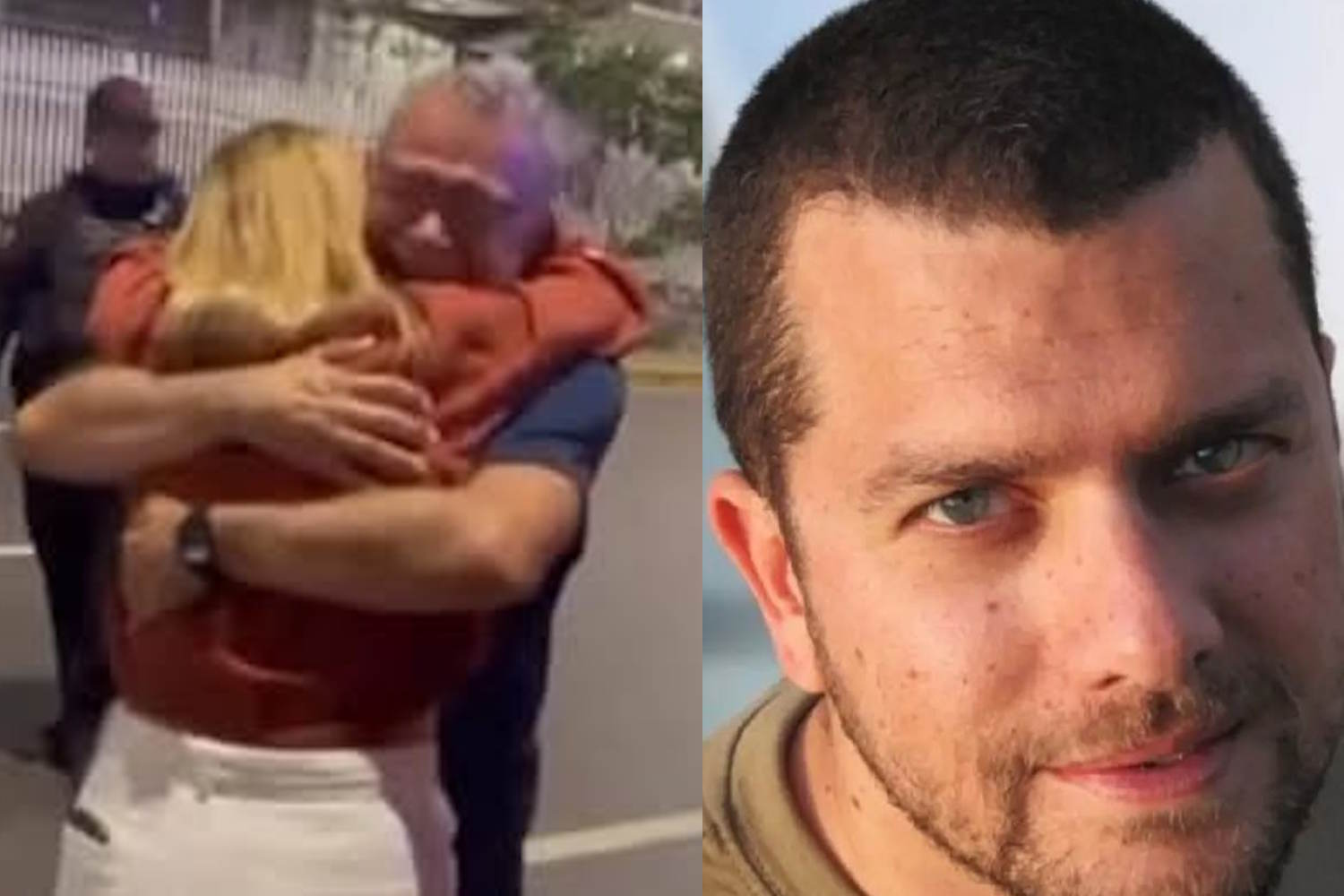
The turning point came a few hours ago, when the president of the Venezuelan National Assembly Jorge Rodríguez announced the imminent release of a significant number of political prisoners, Venezuelans and foreigners.
During the Italian night the news found its first confirmation: two Italian citizens were released, Luigi Gasperin And Biagio Pilieri. A signal that rekindles hope for other prisoners too, starting with the Venetian aid worker Alberto Trentini.
Who is Luigi Gasperin
Luigi Gasperin is a 77-year-old Italian entrepreneur and was the first compatriot to be released after the Caracas announcement. He was arrested on 7 August in Maturín, in the state of Monagas, following a check that led to charges of possession, use and transport of explosive material within the offices of the company of which he was president and majority shareholder.
After his arrest, Gasperin was transferred to a detention center in the Prados del Este area of Caracas. His health conditions immediately caused great concern: the entrepreneur suffers from heart disease and breathing difficulties. According to the latest information, he is now receiving adequate medical care and has already been able to reconnect with his family and his lawyers.
View this post on Instagram
Biagio Pilieri was also freed
Biagio Pilieri, a journalist and opposition politician with a double Italian-Venezuelan passport, was freed together with Gasperin. Pilieri had been detained for a year and four months in El Helicoide prison, one of the symbolic places of Venezuelan repression. The news was reported by the National Press Union of Venezuela.
A well-known figure in the country’s media and political scene, Pilieri is the party’s national coordinator Convergence and was among the most active members of the coalition he supported Edmundo González Urrutia and María Corina Machado in the 2024 presidential elections. Before full-time political commitment, he had worked for a long time as a journalist, becoming a critical voice towards the government of Nicolás Maduro.
At least 28 Italians detained in Venezuela, many in El Helicoide
Jorge Rodríguez’s announcement has drawn attention to a broader and still dramatic situation. According to various reconstructions, there are at least 28 Italians or Italian-Venezuelans currently detained in Caracas, many of whom are locked up in El Helicoide. The accusations range from alleged political crimes to motivations linked to professional activity or the expression of opinions considered uncomfortable.
Among the best known cases is that of the Venetian aid worker Alberto Trentini and that of Daniel Enrique Echenaguciaentrepreneur originally from Avellino, arrested on 2 August 2024 together with his family. His family members were subsequently released, while he disappeared for weeks before reappearing in El Rodeo I prison, where he would find himself in conditions of almost total isolation.
He has also been detained for over a year Mario Burlòan entrepreneur from Turin who left in 2024 to evaluate new job opportunities in Venezuela and never returned. The daughter told Corriere della Sera that she had only had a very short phone call after months of silence, under evident control: “I heard a voice in Spanish marking the time: three minutes, two minutes, one minute…”.
The list also includes Gerardo Coticchia Guerra, Juan Carlos Marruffo Capozzi, Perkins Rocha and Hugo Marino, who passed away already in 2019. Stories united by long periods of isolation, difficulties in contact with families and serious health risks. In the past, Amerigo De Grazia, a Maduro opponent of Calabrian origin, also remained in prison for over a year before being freed in August 2025.
The first releases therefore represent a strong political signal, which arrived after international pressure. But whose credit is it?
Of course, the release of prisoners does not transform Donald Trump into the savior of human rights. The prisoners become, once again, bargaining chips in a larger clash, played out on people’s skin and on the logic of power, international pressure and geopolitical interest.
If some releases were possible, it was certainly not out of justice or respect for fundamental rights, but out of political calculation. The real news, if anything, is that defenseless citizens, entrepreneurs, journalists and opponents continue to be used as negotiating levers.
