
“Eat real foodThis is the slogan with which the US administration presented the new Dietary Guidelines for Americans 2025–2030. A message that, taken alone, seems sensible: less ultra-processed foods, less added sugars, more simple foods.
Behind the rhetoric of returning to the origins, however, the new guidelines relaunch a dietary model that continues to focus decisively on meat, full-fat dairy products and animal proteins, neglecting once again the central role of a diet that has a good percentage of plant-based food.
The underlying problem, however, is there, and it is undeniable. The United States is facing a national health emergency: nearly 90% of healthcare spending goes toward treating chronic diseases, much of which is related to diet and lifestyle. More than 70 percent of American adults are overweight or obese, and nearly one in three adolescents has prediabetes. Numbers that give the measure of a profound crisis, which requires urgent and courageous interventions.
“These Guidelines take us back to basics,” Secretary Kennedy said in introducing the document. “American families must prioritize whole, nutrient-dense foods—proteins, dairy, vegetables, fruits, healthy fats and whole grains—and dramatically reduce highly processed foods. This is how we make America Healthy Again.
But is the return “to the basics” promoted by the Trump administration pointing in the right direction? The answer is not obvious. Because if it is true that reducing ultra-processed foods is a necessary step, replacing them with an excess of animal proteins risks being a partial solution, which does not fully address either the health or environmental crisis.
The new US food pyramid: what changes
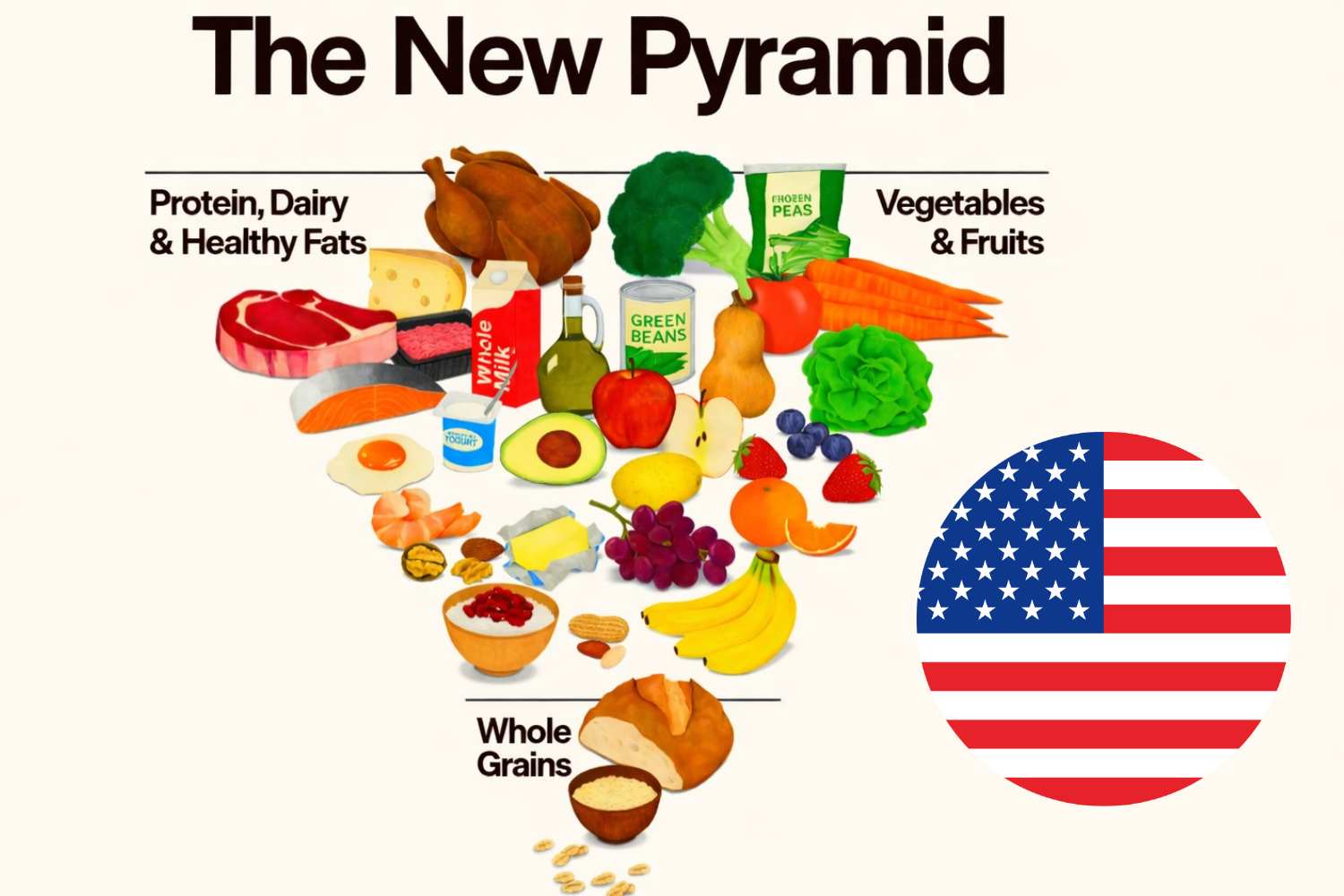
The most obvious change is graphic and symbolic: the new food pyramid has been turned upside down. At the base there are no longer cereals and carbohydrates, but proteins, considered the pillar of every meal. Meat, poultry, eggs, dairy products and, only secondarily, plant sources are presented as the core of the daily diet. Carbohydrates slide to the bottom of the pyramid and become foods to limit (particularly refined ones).
According to the American government, this reversal should correct the mistakes of the past. But what does this mean in practical terms? The new American guidelines recommend a decidedly high protein intake: approximately 1.2-1.6 grams per kilogram of body weight per day. To give a concrete idea, a 70 kg person should consume between 84 and 112 grams of protein daily, an amount that far exceeds traditional recommendations and which risks resulting in excessive consumption of foods of animal origin.
Alongside proteins, three portions of vegetables a day and two of fruit are suggested, preferably whole and minimally processed. As for cereals, two to four daily servings are recommended, but only if they are whole grains, while refined carbohydrates and ultra-processed foods are severely limited. There is no shortage of “good” fats – avocados, nuts, seeds and olive oil – although the guidelines advise keeping overall saturated fats under control.
And alcohol? In the new guidelines the topic receives very marginal attention. The document no longer sets clear numerical limits, but limits itself to generically recommending “consume less alcohol for better health,” signaling only that some groups — such as pregnant women, people in addiction recovery or with certain medical conditions — should avoid it altogether.
In short, unlike meat and proteins, which are treated in a detailed and precise manner, the indications on alcohol remain timid and not very incisive, despite the increasingly numerous scientific evidence on the fact that even small quantities of alcohol increase the risk of tumors, cardiovascular diseases and liver damage.
Fewer industrial foods, but the model remains unbalanced
The new guidelines finally take a stand against added sugars and ultra-processed foods, clearly indicating that they should not be part of a healthy diet. However, the risk is that of replacing one problem with another. Eliminating industrial snacks and sugary drinks to make room for more meat and dairy products does not equate to truly improving the quality of nutrition. Nutritional science has long indicated that a diet rich in legumes, whole grains, fruits and vegetables offers far greater benefits, both for human health and for that of the planet.
The official press release underlines how this new approach represents a return to “common sense” in food policies. But there is one topic that remains practically absent from the document: the environmental impact of intensive farming and meat production. In a historical moment in which the climate crisis requires more sustainable food choices, this omission appears questionable to say the least.
Sources: hhs.gov / Eat Real Food
