
Consuming less certainly doesn’t mean giving up feeling good. It simply means choosing better, and in the personal care sector, where the market has been pushing for an almost serial accumulation of products for decades, this distinction becomes even more urgent. The average Western beauty routine generates millions of tons of packaging, chemical residues and end-of-life electronic devices every year. Yet the solution does not necessarily lie in going back to doing everything by hand, but in understanding which tools, if used correctly, allow you to do more with less, and it is precisely on this front that technology, when designed with criteria, can become a precious ally of sustainability.
The problem of too much: beauty overconsumption and environmental impact
The beauty and cosmetics sector produces around 120 billion units of packaging every year globally, the vast majority of which is not recycled. Furthermore, in addition to containers, there is a less visible problem, linked to the proliferation of electronic devices with low construction quality, designed to last a short time and to be replaced often (so-called planned obsolescence).
For example, a cheap hair dryer has an average lifespan of two to three years, while a well-built tool, with a high-efficiency motor and made of durable materials, can last up to five, if not ten times longer. The difference in terms of electronic waste, resources consumed in production and emissions related to replacement logistics is far from negligible: buying better, just once, is (almost) always the most sustainable choice.
Energy efficiency: drying in less time consumes less
There is a parameter that rarely appears in discussions on domestic sustainability, even if it is extremely concrete: the energy consumption of personal care appliances. A traditional 2000W hairdryer used every morning for 20 minutes consumes approximately 240 kWh per year. On the contrary, a more powerful and faster tool, which reduces drying time to 8-10 minutes, can reduce that consumption by up to 50%.
View this post on Instagram
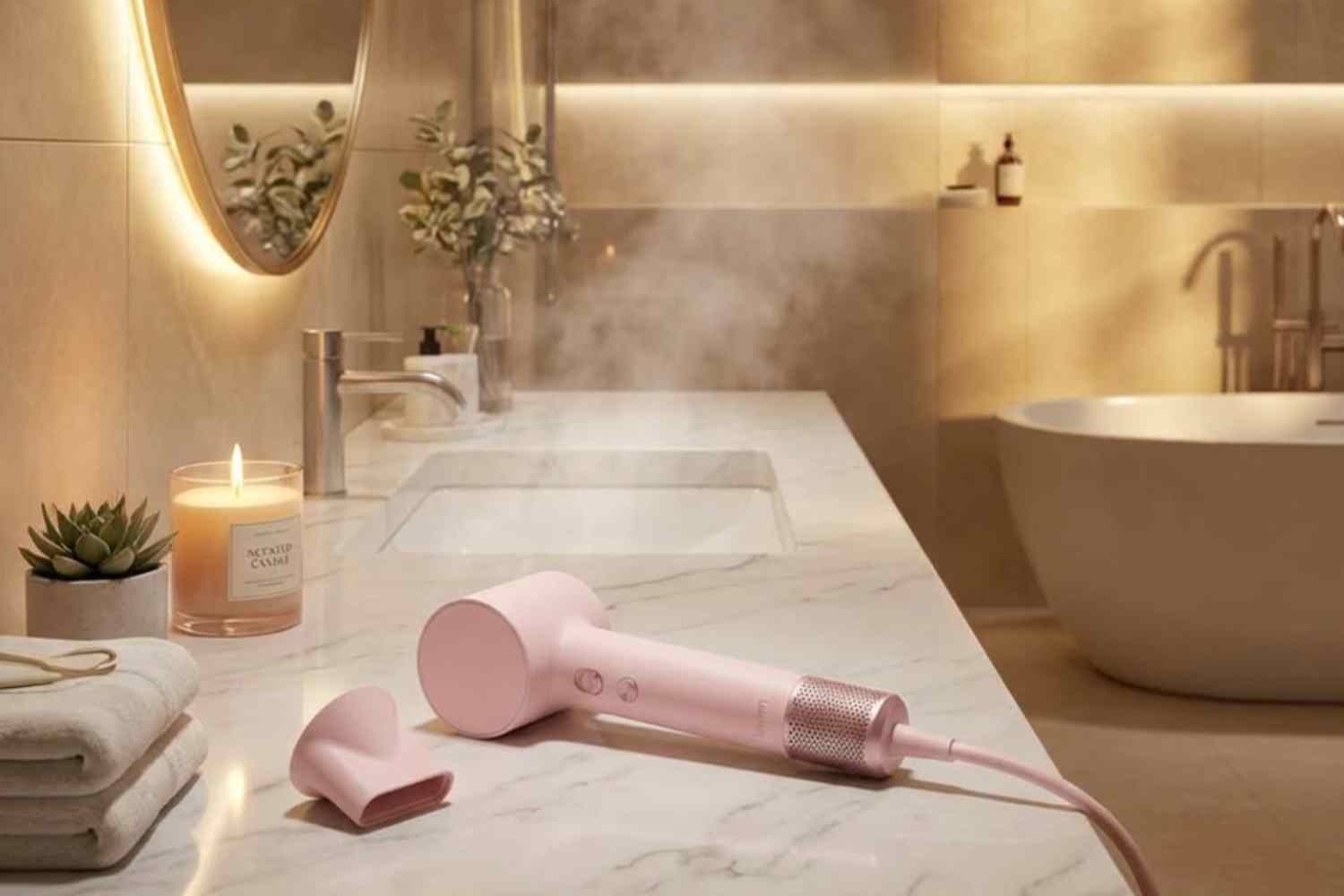
In this sense, the Laifen Mini hair dryer is the tool for us, because it works with a 110,000 rpm brushless motor that generates an air flow of up to 19 m/s, drying hair significantly faster than conventional models. The power absorbed is 1100W, lower than the average of traditional models, therefore we will have less watts, more speed and less time with the plug in the socket. In the energy calculation of a family, a more than symbolic saving.
Durability as an ethical choice: building to last
The brushless motor of the Laifen Mini is certified for a maximum duration of 800 hours of use, equal to approximately 13 years of daily 10-minute use. Another fact that tells a lot about the construction philosophy concerns the conformation of a motor of this type, which has no parts in contact subject to mechanical wear, and therefore decidedly longer-lived than a traditional brush motor.
Added to this is a body made with tactile UV paint applied to resistant material, designed not only for aesthetics but also to last a long time. In a sector where fast beauty has replicated the mechanisms of fast fashion, choosing durability is an act that goes against the trend, which produces measurable positive environmental consequences.
Fewer chemicals thanks to ionic technology
There is another aspect of beauty sustainability that concerns not only the devices but the products that accompany them, because between anti-frizz serums, heat-protective sprays and regulating oils we will have a routine made up of many products, which means more packaging and more chemicals that will end up in our drains.
During the drying phase, the ionic system integrated into the Laifen Mini emits 200 million negative ions per cm3. These ions neutralize the electrostatic charge that generates frizz and reduce the time needed to dry, while maintaining the natural hydration of the hair. The practical result is that many people will be able to reduce, if not completely eliminate, the use of anti-frizz finishing products: once again, reduced chemicals, less plastic and a brake on compulsive purchases.
Compact for real: less material, more sense
The Laifen Mini measures 218 mm in length and weighs 299 grams: 33% smaller than standard models from the same brand. Small dimensions do not only mean comfort of use or ease of transport: they mean less raw material used in production, smaller packaging, more efficient logistics.
The packaging also falls within the sustainability parameters, given that it is made of over 90% of highly biodegradable fibrous materials. Mind you, this is not the usual greenwashing operation, which has been so popular in recent years, but a choice of supply chain that starts from the design of the product and ends up with how it is delivered to your home.
True sustainability is that which lasts over time
Sustainability in personal care is not only measured in the use of natural ingredients, or through recycled packaging: it also depends on how many objects we buy, how long we use them, how much energy they consume and how many additional chemical products they require. A well-designed, long-lasting, energy-efficient tool capable of reducing the number of products needed is, in this sense, a greener choice than many alternatives that present themselves as eco-friendly and which in reality will only last a few years.
