
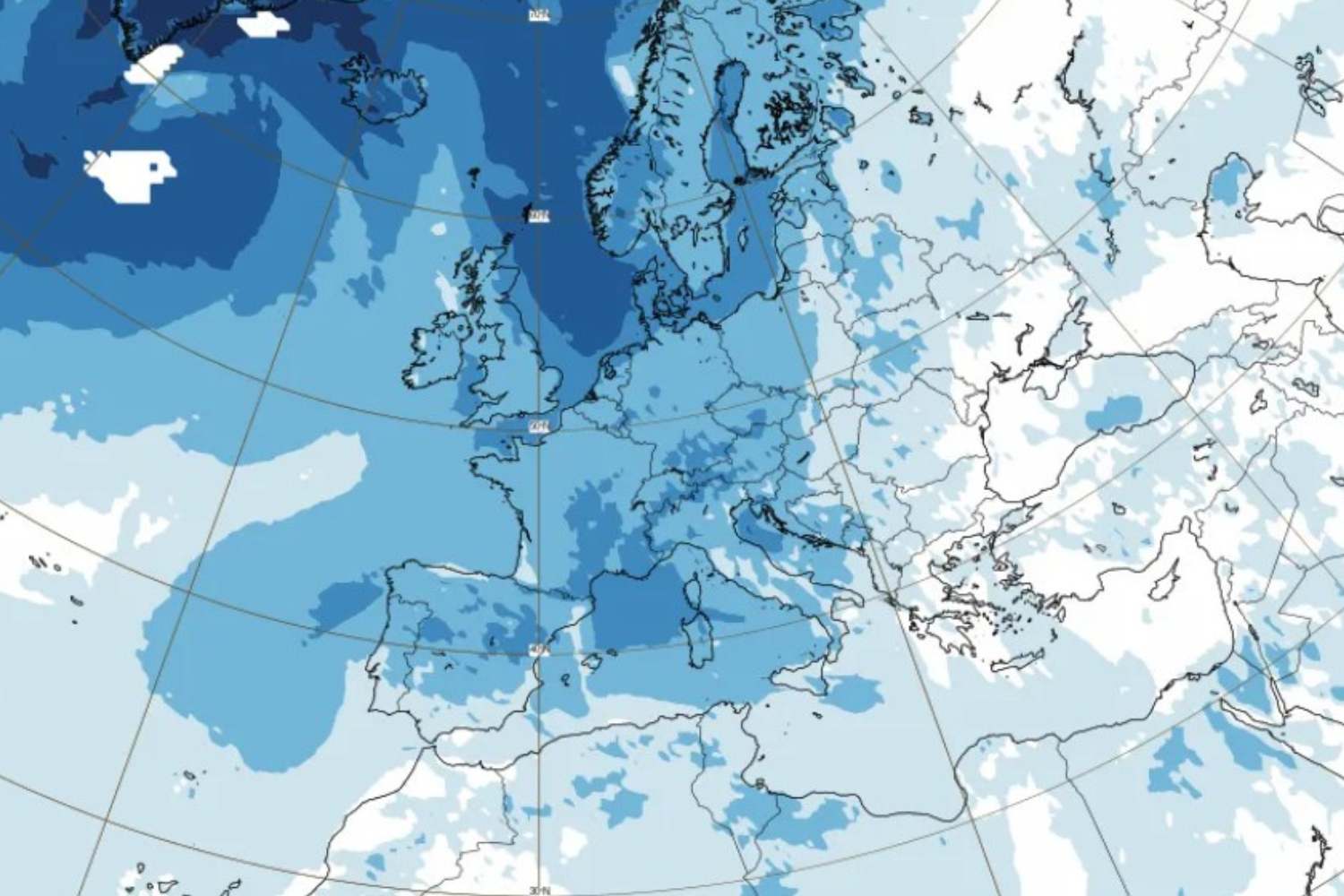
After days of almost spring-like weather, Italy is preparing to deal with an abrupt winter blow. Arctic currents are about to burst onto the Peninsula, bringing a drastic drop in temperatures, snow at surprisingly low altitudes and gale-force winds. The start of the week gave us days with normal temperatures and some notes of bad weather in the Centre-South, but from Wednesday 25 March the picture will change radically.
The icy Arctic currents will break into Italy between the second part of Wednesday 25th and Thursday 26th March, when the vortex will intensify over the upper Adriatic, and then slowly evolve towards the South-East. The result will be a temperature collapse of 7-8 degrees below the March averages, with values that will abruptly return to winter.
The weather of the week
According to the weather forecast, Thursday 26 March will be the most critical day. In the North, Veneto, Friuli and Emilia-Romagna will see showers, thunderstorms and snow even below 300 metres. Hailstorms and round snowfall cannot be ruled out (graupel). The scenario will be more stable in the North-West, with improvement by the evening. In the Centre, instability on the Adriatic and in inland areas, snow up to hilly altitudes and clearing in Tuscany. The South, however, will be affected by widespread showers and thunderstorms, snow up to hilly altitudes, rough seas and strong winds with cyclonic rotation.
On Friday 27 March, however, the sky will be clear in the North, still unstable along the central Adriatic with snow at low altitude, residual rain in the South. Temperatures will fall further, with morning frosts possible even in the plains, while the winds will be easing. Starting from Saturday there will be a progressive improvement across the entire country, but with final unstable notes on the Adriatic and the South. The sun will return to the North and on the Tyrrhenian coasts. Minimum temperatures will remain low, while maximum temperatures will recover slightly although often remaining below average.
