
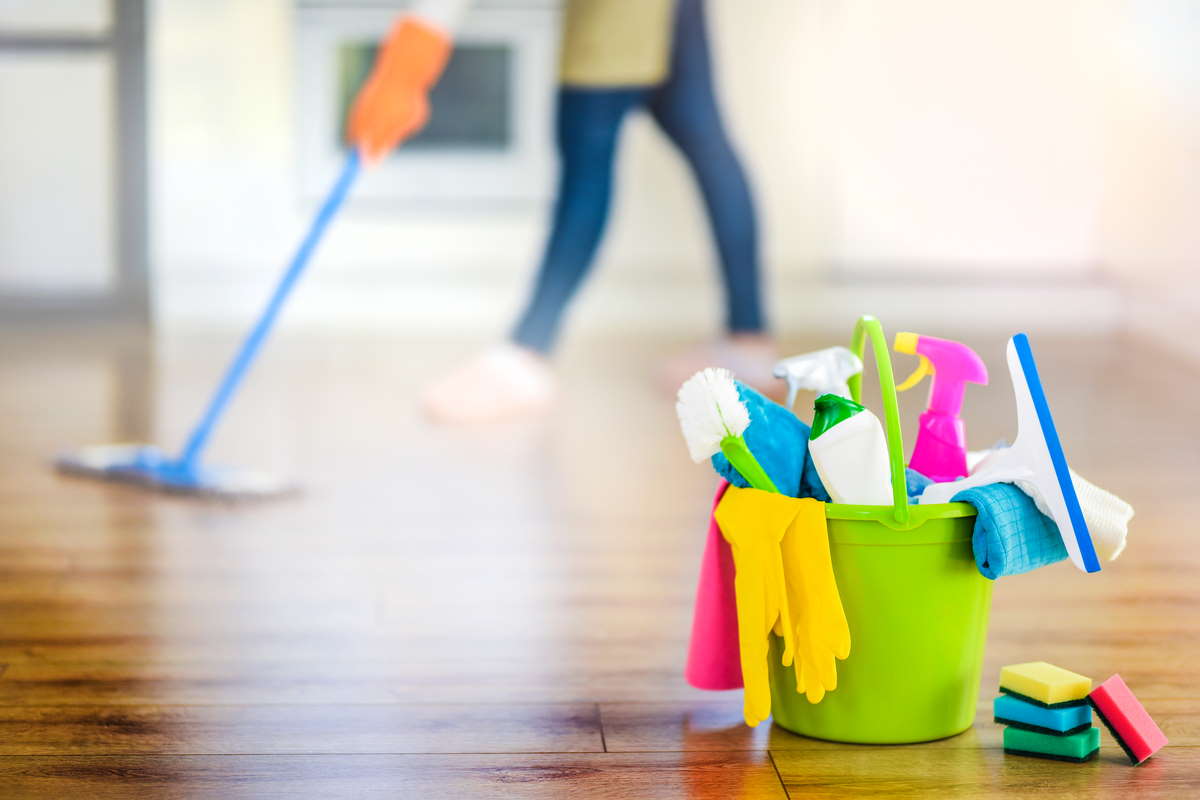
Every year, with the first warmth, something triggers within us: an ancestral impulse to make space, air, light. Spring cleaning isn’t just a tradition, it’s almost a psychological necessity. And science confirms it: according to several environmental psychology studies, living in an orderly and clean environment reduces levels of cortisol, the stress hormone, and improves mental well-being. Here’s how to deal with them in the smartest way possible, without turning the weekend into an exhausting marathon.
Roadmap (and time-boxing method)
Before you start, prepare an action plan. Time-boxing — a technique borrowed from the world of productivity — is also perfect for cleaning: assign a maximum time to each activity and stick to it. Not only will your spring cleaning be much quicker, but you will also avoid that feeling of overwhelm that often leads to putting everything off. A timer app on your phone is enough: 20 minutes for the bathroom, 30 for the kitchen, and so on.
One room at a time (the “completion” principle)
Organize yourself to proceed with major cleaning one room at a time, or one area of the room at a time, to avoid leaving unfinished work. It’s not just a question of efficiency: the psychology of completion teaches us that finishing an activity releases dopamine, the pleasure neurotransmitter. Seeing a room already clean and tidy will give you energy to continue — and this is not a cliché, it is neuroscience applied to household chores.
Decluttering: first you lighten, then you clean
The real secret to effective spring cleaning? Tidy up before cleaning. Decluttering has become a real cultural movement — from Marie Kondo’s KonMari method to the more recent philosophies of “mindful minimalism” — and for good reason: it’s impossible to deep clean through useless objects. Proceed one room at a time, or one closet at a time, and decide what to keep, what to donate, what to recycle. The updated golden rule? If you haven’t used it in 12 months and it doesn’t bring you joy, it’s time to let it go.
The 4 box method
Before getting to work, get four boxes, into which you can divide: objects to keep, objects that can be put up for sale (on Vinted, Subito or Facebook Marketplace), objects to barter or give away (“do no take” groups or apps like Olio), packaging and materials intended for separate waste collection. In 2025 there is a fifth category that is taking hold: objects to be taken to repair cafés, the collective repair workshops spread throughout Italy, where objects are given new life instead of throwing them away.
Dust before cleaning floors
After tidying up, dust before vacuuming and before washing the floors. This way cleaning floors will be much smarter. Dust the furniture from top to bottom — gravity is your friend — and then sweep or vacuum and wash the floors. To dust, all you need is a simple, slightly damp microfibre cloth: it captures dust without dispersing it into the air, unlike traditional dusters.
Cleaning together (and making everything easier)
Involve roommates or the whole family, including children, in spring cleaning — assigning them age-appropriate tasks is a great way to teach household responsibility. Everyone will have their own task, perhaps chosen based on preferences: those who like to organize the wardrobes, those who prefer to take care of the floors. And the right soundtrack — an energetic playlist or an interesting podcast — can do wonders for your mood during the most boring chores.
Use multipurpose (and finally ecological) products
To optimize time and save money, prepare your own DIY multipurpose cleaners at home starting from simple ingredients such as sodium bicarbonate, citric acid and natural Marseille soap. The good news is that in 2025 the market for ecological detergents in concentrated and solid formats has exploded, making it much easier to choose effective products with low environmental impact even for those who do not want to self-produce. Less plastic, less pollutants, same result – indeed, often better.
Start from the most difficult points
Starting from the most difficult points – the oven, the bathroom, the windows – when you still have fresh energy is the winning strategy: your efforts will go downhill. Do not overlap cleaning in the various spaces. On the floor, when sweeping or vacuuming, start from the farthest corner and work slowly and systematically towards the exit. A detail that makes the difference: clean the window and door seals, often forgotten but capable of accumulating months of dust and mould.
Lost objects: the container of “mysteries”
During cleaning and tidying up you will probably find objects that you thought were lost. Collect missing game pieces, screws, buttons, device-less chargers and other small mysterious objects in a single transparent container. Give yourself a month: if by then you haven’t understood what they are for or haven’t used them, it’s time to let them go permanently.
Maintenance: cleaning that you can’t see
Doing spring cleaning doesn’t just mean dusting and tidying up, but also dedicating yourself to small preventative maintenance jobs. Clean the hood and air conditioner filters, check the silicones in the bathroom, check the refrigerator seals. These interventions – often overlooked – improve the efficiency of household appliances and can translate into real savings on the bill. Dedicate, if you can, a day to actual cleaning and a second (or half day) to small repairs.
The final touch: ventilate and smell naturally
Once everything is finished, open the windows and let the spring air in. To perfume rooms in a natural way, forget about synthetic candles loaded with phthalates: opt for diffusers with essential oils (lavender, eucalyptus, tea tree), bunches of fresh aromatic herbs or simply dried citrus peels. The house will not only be clean: it will be a place where you can breathe really well.
When everything is in its place, you will be able to enjoy the beautiful spring days with a whole new lightness!
