
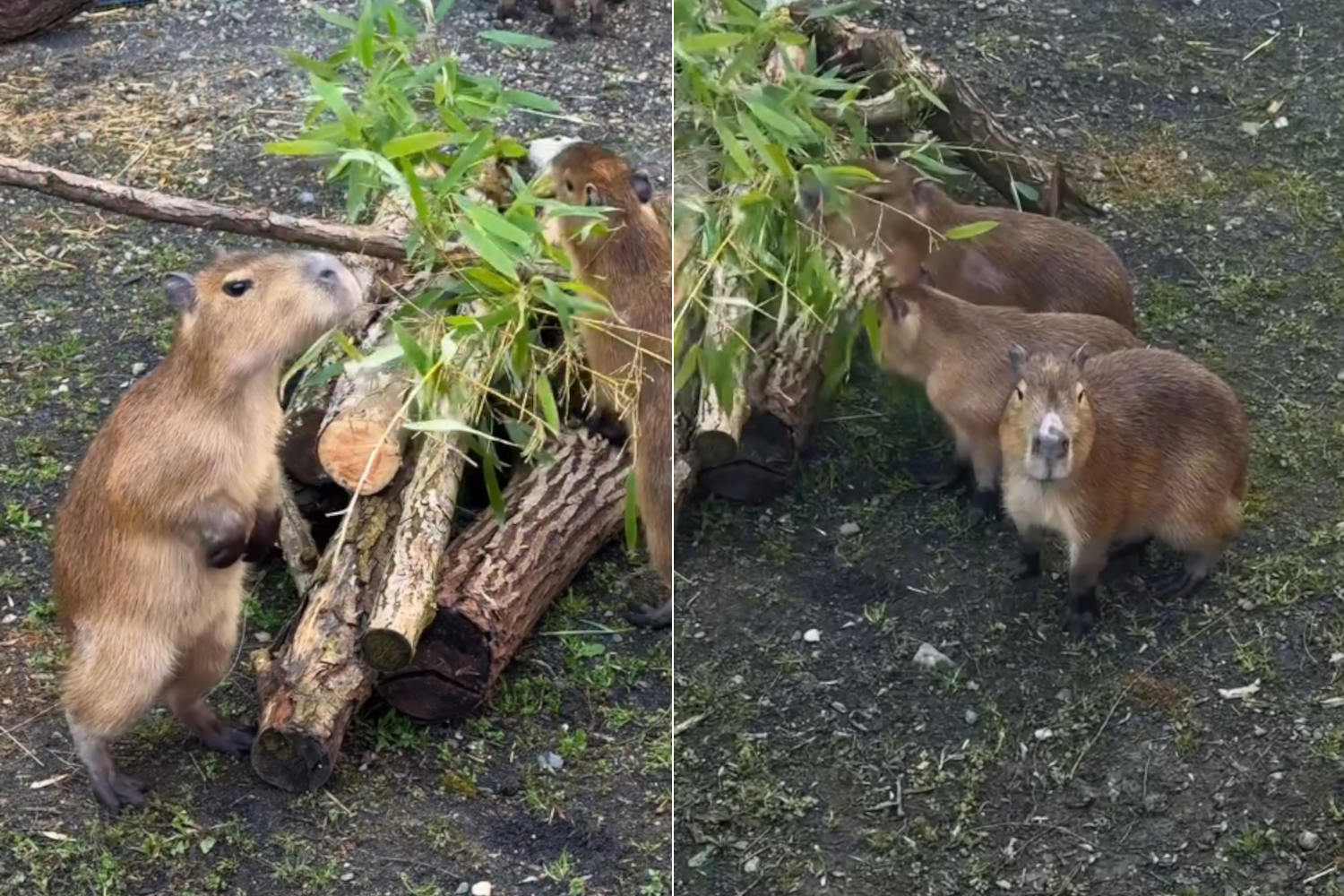
The Zoom Turin biopark welcomed three young capybara sisters (Hydrochoerus hydrochaeris), known among the public for its expression of imperturbable calm. Social and complex animals, capybaras are the largest rodents in the world. The three specimens come from a Swedish park and traveled over 2,100 kilometers to reach Italy, included in a European conservation program for the species promoted by the European Association of Zoos and Aquariums (EAZA).
View this post on Instagram
An arrival that was presented with great pomp on the park’s social channels, so much so that days dedicated to them were organized, but behind all this there is a much less glittering reality. Despite being hosted in a specially built habitat with shaded areas and a large watercourse, it is inevitable to remember that their life remains tied to an artificial context, far from the natural dynamics of the rivers and swamps of South America.
View this post on Instagram
The complex biology behind the star image
In fact, the capybara is not just a “social media face”. The species has unique adaptations to semi-aquatic life, with eyes, ears and nostrils positioned on the top of its head, allowing it to stay in the water for hours and monitor its surroundings. Adult males can reach 90 kilograms and over one meter and twenty in length, while the newly arrived sisters face a long process of settling in, necessary to reduce the stress resulting from captivity.
These animals depend on the constant presence of water to thermoregulate, feed and find shelter, a fragile balance that, in nature, is increasingly threatened by agricultural expansion and climate change. Their popularity risks transforming biological complexity into a simple “attraction”, shifting attention from respect for the species and its natural needs to the mere curiosity of visitors.
View this post on Instagram
Conservation yes, spectacularization no
The biopark underlines its adherence to the European campaign Wetlands for Lifededicated to the protection of wetlands. However, even conservation initiatives can clash with public perception: the risk is that animals such as capybaras are treated as objects of entertainment rather than as living beings with complex and social needs.
Zoom’s new habitat offers swimming opportunities and shade, but it doesn’t eliminate the fact that these sisters live far from their natural ecosystems. Behind the iconic “web star” image there is a world of ecological fragility, complex social behaviors and constraints imposed by man that deserve respect and awareness.
View this post on Instagram
You might also be interested in:
