
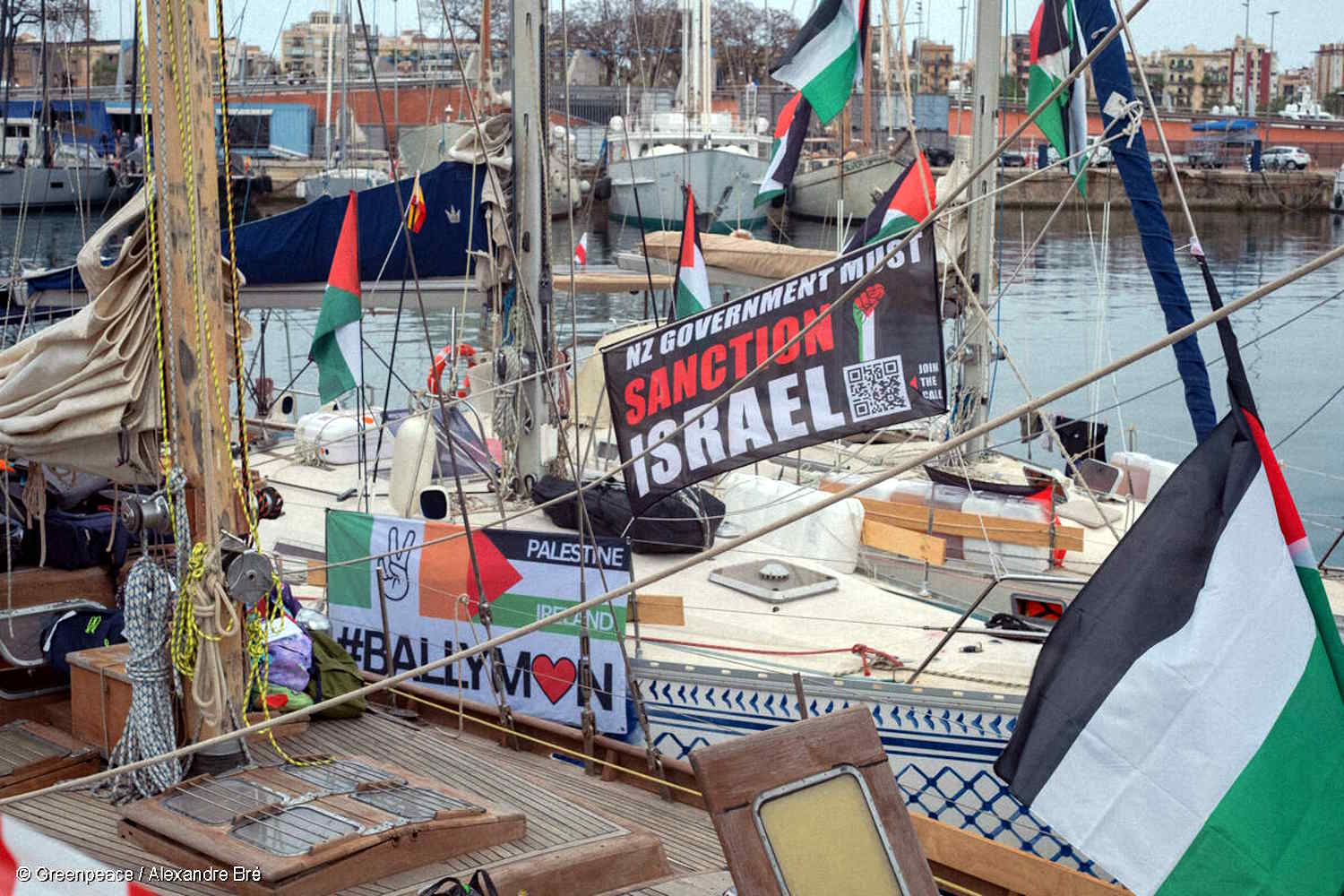
The new mission of the Global Sumud Flotilla, the now well-known humanitarian expedition by sea headed towards the Gaza Strip, departs from the port of Barcelona with a clear objective: to bring aid to the civilian population and break the Israeli siege.
There are around 70 boats and over 1,000 activists from more than 70 countries, coordinated by organizations such as the Freedom Flotilla Coalition, together with other international networks and missions also coming from the Maghreb and South-East Asia.
On board there are not only activists, but also doctors, jurists, researchers and volunteers. People who bring skills as well as testimony, with the aim of offering concrete support in an increasingly fragile context.
Among the organizations involved there are also Greenpeace, with its MY Arctic Sunrise, and Open Arms, which contribute with technical, health and logistical support. The message accompanying the departure is clear: it is not just a protest, but a humanitarian action that aims to bring international attention back to Gaza, at a time when other geopolitical scenarios risk obscuring its seriousness.
View this post on Instagram
As we well know, last September a similar mission was stopped by the Israeli navy in international waters: the activists were arrested and then repatriated, without the aid reaching its destination. A precedent that weighs heavily and which is not hidden even by the promoters themselves. The founder of Open Arms, Oscar Camps, explained that it is very likely that this time too the boats will be intercepted before reaching the coast, perhaps already a hundred miles from Gaza. Yet, despite this awareness, it was decided to leave anyway.
The point, ultimately, is what drives the Flotilla: not to stop looking and reject the idea that a humanitarian crisis can slip to the margins of global attention simply because the world is elsewhere. The Global Sumud Flotilla, defined by the organizers as the largest civilian maritime mission in support of Palestine, moves precisely in this subtle space between concrete action and symbolic gesture, between aid that perhaps will not arrive and a message that instead wants to arrive loud and clear.
Because the biggest risk today is not just what happens in Gaza. It’s the habit. It is the silence that is layered and the normalization of what should continue to outrage us.
