
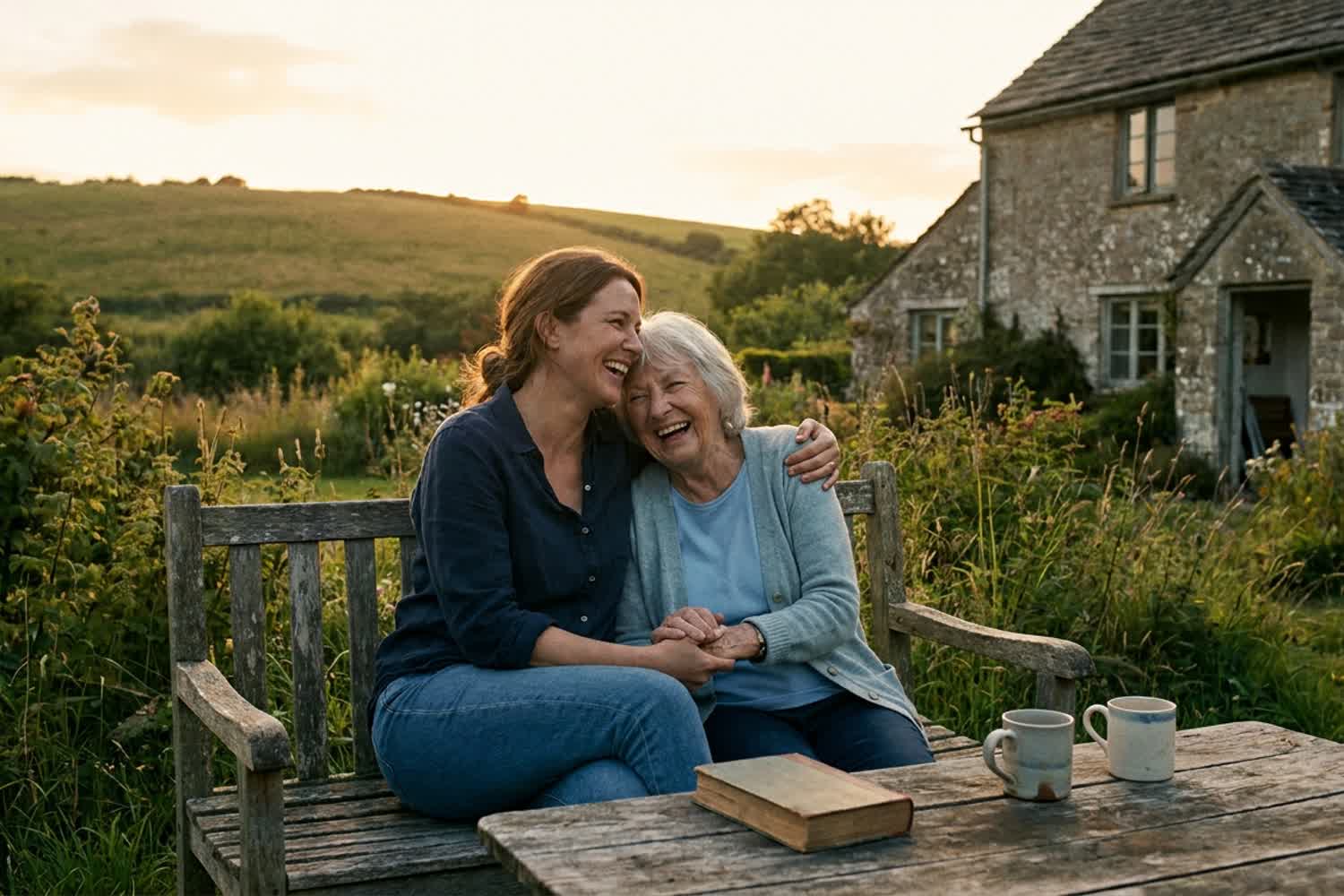
There is one day a year when the world stops – at least a little – to say thank you to those who, often in silence and without asking for anything in return, have done everything for us. Mother’s Day may seem, at first glance, to be one of those occasions invented by marketing. But its roots go back much further than any decorated shop window: they date back to pagan times, when ancient civilizations celebrated female divinities and the principle of fertility. A tribute to life itself, in short.
And life, not surprisingly, passes through a mother.
Today, in 2026, the concept of motherhood has evolved, expanded, become more nuanced and inclusive. The psychological and sociological research of recent years gives us an image of the maternal figure that is much more complex and rich than the traditional one: the mother is not only the one who nourishes and looks after, but is a presence that shapes our identity, our way of relating to the world, even our mental health.
Recent studies in the field of neuroscience have confirmed how the mother-child bond in the first years of life is literally foundational for brain development: the quality of early attachment influences the ability to manage emotions, build healthy relationships, and deal with stress throughout life. It’s not rhetoric: it’s biology.
But be careful: celebrating the mother does not mean idealizing her to the point of making her an unattainable icon. Behind every mother there is always, first of all, a person: with her strengths and limitations, her fears and her strengths, her contradictions. And recognizing it is perhaps the most mature – and most loving – gesture we can make.
Mother’s Day doesn’t ask for perfection. Asks for gratitude. It asks for a conscious look at who that woman we call mother really is – or who has played that role for us, because motherhood, we know well, is not just a question of blood.
Being a mother today also means dealing with a rapidly changing world, with often contradictory social pressures, with the weight of multitasking emotional which research now defines as one of the main female stress factors. Yet mothers continue, every day, to choose treatment. And this choice deserves to be seen, named, celebrated.
Every mother is special, in her own way. Not because there is a single model of perfect motherhood – and fortunately, given the damage that ideal has done over time – but because each one carries out her task according to her own vision of the world, her own values, her own inclinations. And this, in an era in which motherhood is finally starting to be freed from the stereotypes that have caged it for centuries, is something extraordinary.
Because being a mother is not an obligation nor a necessary identity definition for women. But when you choose – and it is always a choice, in all its forms – it brings with it one of the most powerful abilities that exist: that of nourishing, supporting, growing another human being. Materially, sure. But above all emotionally and spiritually.
So, in this May 2026, thank you mothers: for existing, for resisting, for insisting. Today, tomorrow and forever in our hearts.
You might also be interested in:
