
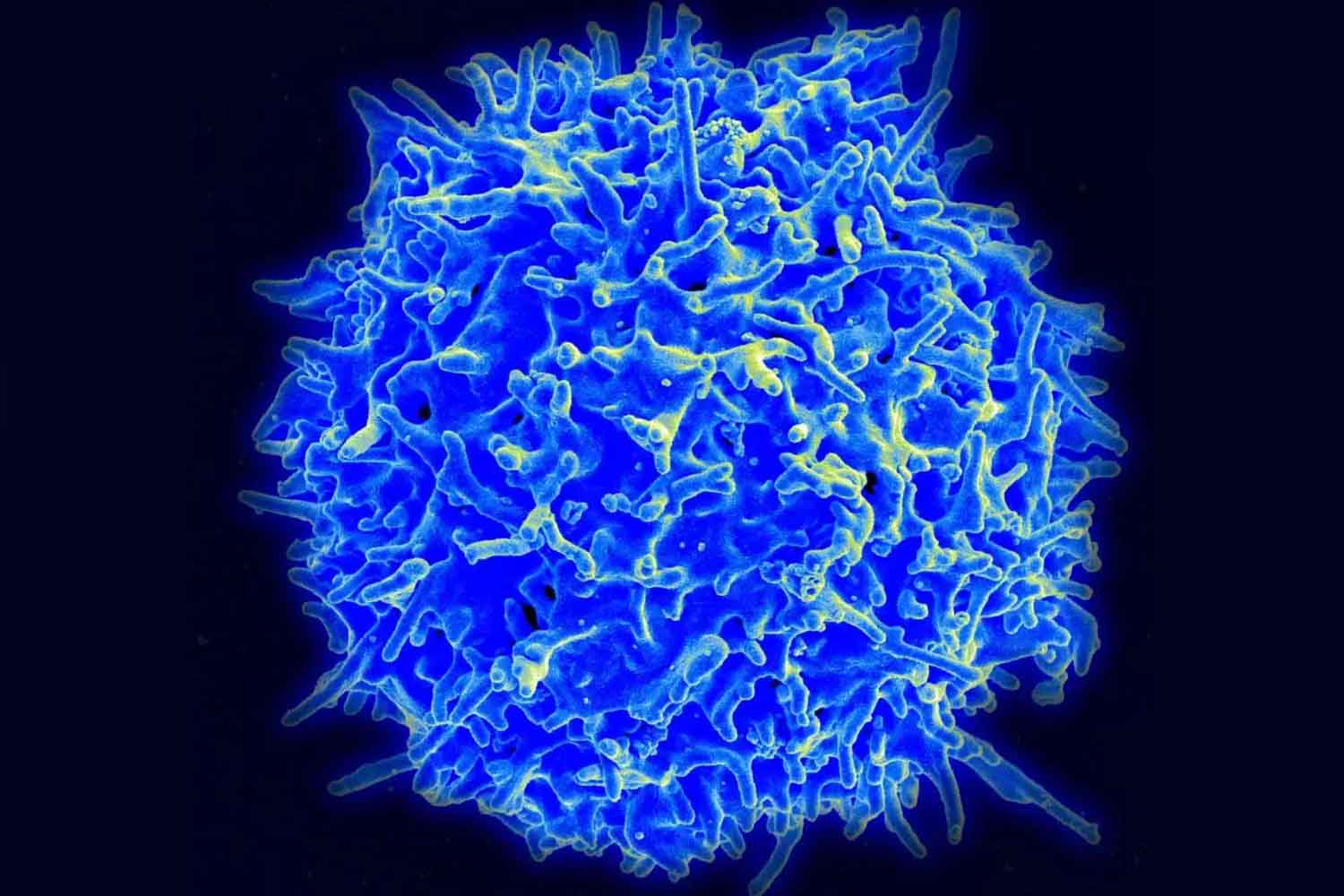
For years we have imagined aging as a one-way street towards the loss of energy, a slow process in which the immune system shuts down and leaves room for disease. Now this vision is shaky. A group of Israeli researchers has identified something that seems like a successful twist: some cells in our immune system become more active with age and learn to recognize tissue damage, turning into a surprisingly effective self-defense mechanism.
This discovery, published on Nature Agingfocuses attention on a rare type of helper T cells that, over time, changes identity. It’s as if they put on a new “work suit” and started patrolling the body in search of senescent cells, the infamous “zombie” cells that don’t die when they should and release inflammatory molecules capable of accelerating tissue decline.
How some T cells learn to recognize harmful cells
The researchers noticed that, in a context rich in senescent cells, a specific group of T helper cells begins to produce Eomesodermin, a gene linked to more active immune cells. It’s a bit as if the immune system detected a problem and decided to reconvert part of its troops: traditional CD4 cells thus assume a much more direct behavior, becoming real “eliminators” of damaged cells.
This transformation does not seem to depend on the age of the cells themselves, but on the environment in which they are found. When the presence of zombie cells increases, the immune system registers the signal and organizes itself accordingly, remodeling part of its defenses. However, when the load of senescent cells decreases, these transformations attenuate: an important clue that shows how the organism is much more plastic than we thought.
The most interesting part is what happens when these specialized cells are missing. The researchers described scenarios in which the absence of this subgroup leads to a noticeable acceleration of the aging process: a more fragile, more inflamed body and with a much higher presence of zombie cells. A sort of “maintenance void”, as if an essential service to keep the fabrics in order was missing.
A new idea of aging
Research coordinator Alon Monsonego highlighted something that could revolutionize the way we talk about aging. We are used to believing that getting younger means returning to an immune system identical to that of our twenties. The new hypothesis is very different: we don’t need super-immunity, but immunity suited to the moment of life. We grow, we change, and even our defensive system changes to help us face new needs.
This more dynamic picture of aging is also linked to another fascinating aspect. Some studies on supercentenarians (people who pass the age of 110 with surprising clarity) show that many of them have an unusually high number of T cells with “targeted” characteristics, very similar to those described in this research. It is as if longevity did not depend on a young immune system, but on a system capable of evolving.
There is a final implication that could open up a completely new path: the quantity of these specialized cells grows proportionally to the presence of senescent cells, becoming a concrete indicator of our biological age. Not the one reported on the identity card, but the one that talks about the real state of the tissues. Monitoring our progress, even at a young age, could reveal to us whether we are aging faster than average.
Medical applications are still distant, and much of what we know needs to be confirmed in humans. But this discovery offers a completely new look at the relationship between immunity and aging. For years we have thought of inflammation as a sign of decline. Now we discover that, within the folds of the immune system, there are tools that try to counterbalance it. A sort of internal maintenance that works as long as the body can sustain it, reminding us that aging is less passive than we thought.
You might also be interested in:
